
Legal lessons
Warren County students explore justice, freedom during Law Day celebration
Trending
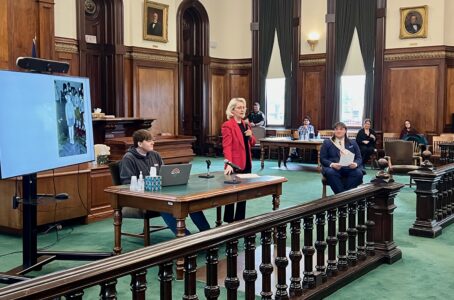
The event, organized by the Warren/Forest Bar Association, brought the students together for presentations and discussions led by legal professionals and community leaders highlighting this year's theme, titled "the rule of law and the American dream"
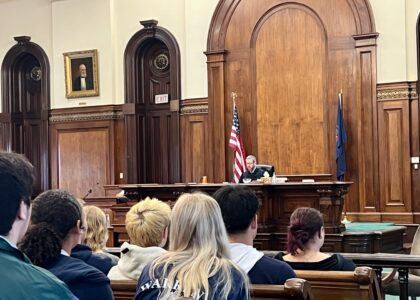
Opening remarks from President Judge Hammond outlined the responsibilities of the Court of Common Pleas and the importance of citizen participation. Students were encouraged to register to vote and serve on juries, both described as essential functions in maintaining a fair legal system.
"While our legal system is not perfect, it is the most comprehensive, effective, fair and impartial legal system anywhere, said Judge Hammond."
A keynote presentation highlighted the legacy of Robert H. Jackson, a Warren County native who helped prosecute Nazi leaders following World War II.
Kristan McMahon, president of the Robert H. Jackson Center, explained how Jackson left the U.S. Supreme Court to lead the American prosecution at the Nuremberg Trials.
She explained that, at a time when many favored immediate punishment, Jackson advocated for fair trials to establish a lasting legal record and demonstrate that even the most powerful individuals are subject to the law.
"They were not just punishing these men. They were establishing a rule that applies to everyone," McMahon told the students.
The trials introduced key principles that continue to shape international justice, including accountability for crimes against humanity and the rejection of "following orders" as a legal defense. These ideas remain central to institutions such as the International Criminal Court.
The program then turned to present-day issues, with Gladys Archer of the Warren Area Refugee Resettlement Network discussing local efforts to assist displaced families.
The organization formed in response to the Russian invasion of Ukraine and has since helped more than 90 families and 30 individuals rebuild their lives in the region.
Volunteers provide housing, transportation, language education and legal guidance, helping families navigate complex immigration systems. Archer explained distinctions between refugee status, humanitarian parole and asylum, noting that many legal pathways are temporary and highly regulated.
"A lot of times," Archer said. "We become their family, we become their community and we become their village."
She also highlighted the extensive volunteer effort behind the program, with hundreds of hours dedicated to supporting families and ensuring compliance with immigration laws.
The event concluded with a personal account from attorney Tatiana Malys, who grew up in communist Romania.
Malys described a childhood marked by strict government control, including mandatory school uniforms, censorship, and the absence of freedom of speech and religion. Citizens were required to follow state ideology, and basic necessities such as food were rationed.
"There was no rule of law," Malys told students. "You had no rights, only obligations."
She described religious practices being forced underground, and individuals risking punishment for expressing personal beliefs. Even everyday activities were tightly regulated, illustrating what life can be like without the protections of the rule of law.
The fall of the regime during the Romanian Revolution brought political change, but Malys noted that the lack of formal trials for many officials left gaps in accountability.
"Because there was no trial, people in Romania today look back and say it wasn't as bad as it truly was," she said, reinforcing earlier lessons about the importance of legal systems like those established at Nuremberg.
Throughout the celebration, speakers emphasized that the rule of law depends on active participation from citizens. Students were encouraged to pursue careers in law, engage in public service and remain informed about civic issues.
Braden Thomson, a senior at Warren Area High School, said that the experience taught him a lot about not only American law, but also what it is like in other countries.
"Hearing what other countries are like really puts our legal system into perspective," Thomson said.
He also said that he intends to take what he learned and use it to become more politically engaged.