
Rapp responds to recreational marijuana legalization hearing
Trending
The longstanding debate on whether to legalize recreational marijuana in Pennsylvania continues.
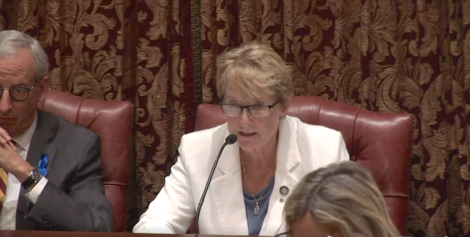
Rep. Kathy Rapp discussed the issue in the wake of a House Health subcommittee hearing.
"We heard from four experts testifying from different angles of this complex issue, but one statement from one of those experts really struck me," Rapp, the minority chair of the Health Committee said. "He asked whether we lawmakers can ensure that the health and safety of our children and young adults won't be compromised if Pennsylvania legalizes recreational marijuana use.
"I do not believe we can."
Rapp cited a 2019 bill that banned nicotine and vaping devices in schools as evidence.
"I wanted to ensure that our schools remained a safe place for our children to learn, free from exposure to these harmful products," she said. "Regretfully, my legislation stopped short of ensuring their safety. School districts across the Commonwealth complain that vaping on school grounds remains a problem.
"It's for this reason that I cannot support marijuana legalization."
This session's recreational marijuana bill, SB 846 that remains in committee, was brought forward by Philadelphia Democrat Sen. Sharif Street and Erie County Republican Sen. Dan Laughlin.
"Adult use of marijuana is supported by two-thirds of Pennsylvanians and has majority support in rural, suburban, and urban legislative districts," they argue in a legislative memo.
"This bipartisan approach is grounded in safety and social equity. This legislation addresses safety by setting the minimum marijuana consumption age at 21 years old and provides the appropriate deterrence to keep marijuana out of the hands of anyone under 21. It provides law enforcement the means to adjudicate driving under the influence and the authority to pursue and eradicate any illicit market. Furthermore, our bill bans any marketing directed toward children.
"The bill will provide workplace requirements regarding marijuana use for all those operating in good faith."
The Senators highlight that New Jersey and New York have implemented adult use and claim that it is "duty to taxpayers to seize the initiative and legalize marijuana concurrently with bordering states."
The memo cited Pa. Independent Fiscal Office projections that show legalization could result in between $400 million and $1 billion in new tax revenue for the state.
"Advocates keep telling me that legalizing cannabis will give the state the opportunity to regulate where it can be sold and at what age people can purchase it," Rapp said. "Unfortunately, our rules and regulations won't be enough to keep cannabis out of the hands of kids. You have to be 21 years old to buy nicotine products and vaping devices, yet our youth continue to be exposed.
"Aside from other pressing issues like mental health concerns, Cannabis Use Disorder and our lack of a test to determine whether someone is driving while high, I cannot support legislation that puts the children of the Commonwealth in harm's way."
Committee approves medical marijuana permit updates
Rapp's newsletter highlighted the Health Committee approving a bill to update the medical marijuana permitting program to grant additional permits to medical marijuana growers/processors and dispensaries.
At issue, according to the bill's legislative memo, is an inconsistency that allows some processors to sell directly to patients and prohibits others.
"The most evenhanded solution to this problem would be to issue two permits to all the independent Pennsylvania based grower/processors who do not currently have one. This will create a free and fair market and will allow these businesses to operate on the same playing field as their competitors," the memo states.
"Despite my 'yes' vote in committee, I have some serious concerns with this bill," Rapp said. First, this bill is touted as a "small business" bill, and while it certainly will help independent grower/processors who are struggling to sell their product to dispensaries, this bill does not create an open market."
She also questioned why the bill does not require "these entities to local dispensaries where there are currently none.
"Finally, under this bill, there will be only a one- or two-year restriction on change of control transactions. Big conglomerates will attempt to get control of these permits. I feel this bill needs to be debated on the House floor extensively before it will be ready to become law."