
Forest Service releases Rainbow impact report
Trending
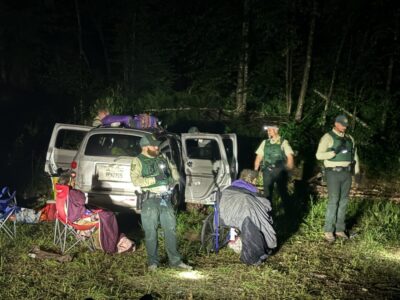
U.S. Forest Service officials estimate more than 1,700 people attended the Rainbow Family gathering in the Allegheny National Forest near Tidioute – though most left after the July 4 holiday.
“The incident peaked on July 4 with an estimated attendance of 1,756 participants,” the Forest Service said in an incident update released late Monday. “Currently, attendance is estimated at 120 participants. We expect some participants to remain on site for a few weeks.”
Forest Service officials said they will continue to patrol the area until all of those camping in the area leave.
The Rainbow Family of Living Light gathers annually on a national forest. The gathering took place in the ANF before starting in 1986, again in 1999 with an estimated 20,000 attendees gathered in Elk County deep in the forest and in 2010, with an estimated 12,000 attended the national gathering in Warren County. In 2021 there was a smaller regional gathering in the woods near Marienville. That event drew roughly 1,000, similar to the size of the 2026 gathering.
Gatherings of more than 75 people without a permit are deemed by the U.S. Forest Service as unauthorized, with a National Incident Management Team formed with tribal, state, county and local partners, sharing updates, setting safety measures and enforcing the law to reduce impacts to the land and nearby communities. Because no permit is filed the gatherings are classified as unauthorized noncommercial group incidents that can lead to citations for illegal camping, building unauthorized structures like latrines or ovens or engaging in other prohibited activities. Area closures are also common to prevent ecological damage or control crowds in specific forest sections where the group intends to camp. Anyone who remains in a closed area can face fines.
U.S. Forest Service officials said Monday the site chosen by the Rainbow Family caused “significant and measurable” impacts to national forest resources, including “disturbance to sensitive archaeological sites from digging one trench, removing rocks and other surface materials, and excavating a small pit in a marked avoidance area.”
The area also includes one federally endangered bat species – the northern long-eared bat – known to be located within the area and one proposed endangered bat – the tricolored bat – that has suitable habitat present. There is also suitable habitat for five Regional Forester Sensitive Species and confirmed areas of three Regional Forester Sensitive Species of plants in or near the area.
“Within the site was Queen Creek and Piney Run along with numerous other small creeks, streams and drainages that experienced impacts of increased runoff and sedimentation from compacted soils and vegetation removal,” the incident report states. “Numerous slit trench latrines, compost pits and gray water pits contributed to increased runoff and contamination of water sources. Water samples were collected prior to July 4 and will continue weekly for the next several weeks to document potential changes to water quality caused by this incident.”
The area is a popular recreation site, according to the incident report, with hiking trails, campgrounds and dispersed camping sites. Those visiting are asked to tread lightly in the area by avoiding new user-created trails and incident high-use areas. Forest Order 09-19-03-26-03 remains in effect through July 15 and requires dogs to be leashed and under physical control within the area under the order.
“The forest is aware of Forest Road 119’s condition and will be prioritizing necessary repair work,” the report states.