
Barnes, Pa., readies for 2028 bicentennial
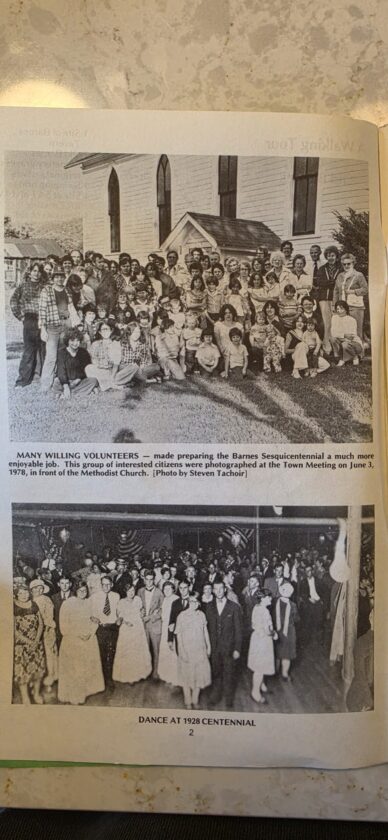
Shown in this photo are people celebrating Barnes, Pa. 1978 sesquicentennial event.
-
- Shown in this photo are people celebrating Barnes, Pa. 1978 sesquicentennial event.
-
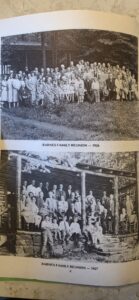
- The Barnes family is pictured in family photos taken in 1926 and 1927.
-
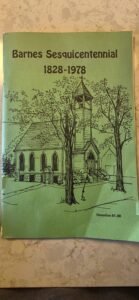
- Photos submitted to the Times Observer Pictured is the Barnes, Pa., sesquicentennial booklet put together in 1978.
Keep going. You move through a curve, once known as the “Dugway”, more recently called the “Dugout”, where the road narrows and the hills press in close and The ghost of a railroad in its background. Then, almost without warning, it opens up. The valley widens. The land levels out.
You are in Barnes, Pennsylvania. It does not announce itself loudly. It never really has.
In 1978, the community came together to mark 150 years of Barnes. A sesquicentennial. Not just a date, but a recognition of something that had lasted.
The celebration was not small. It was organized, funded, and supported by people who either still lived here or had long since moved away but never quite left. A 70-page bright green booklet was produced, sponsored by local businesses, documenting the people, the places, and the history that made Barnes what it was.
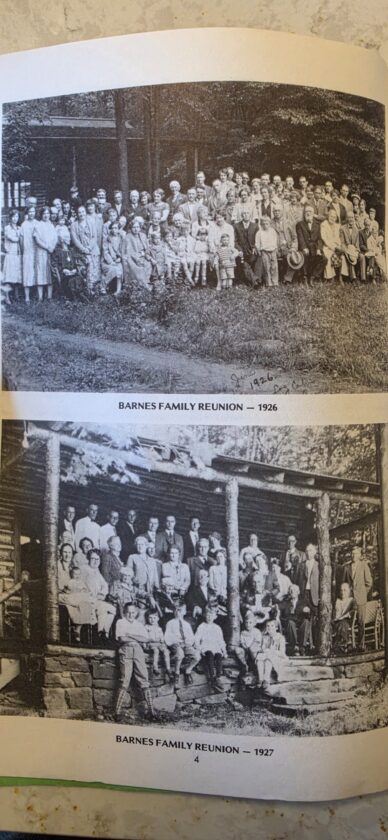
The Barnes family is pictured in family photos taken in 1926 and 1927.
Letters came in from across the country. Some shared stories. Some sent donations. All of them carried the same tone. Connection. One resident wrote, “For no matter if you lived in Barnes all of your life, or left this community many years ago, you visualize this scene to suit your favor.”
Another put it more plainly. “Not everyone comes from a place as pleasant to recollect as Barnes. It’s a good place to be from.” That idea shows up again and again – a sense of pride in being from Barnes.
The committee behind that celebration understood something else too. They were not just looking back. They were speaking forward.
In a message written for the future, Tom and Susie Curtin left what reads less like a reflection and more like a set of instructions:
“150 years after Timothy Barnes settled in the area, slowly and steadily homes have continued to go up and as time moves on more people call Barnes home. The cemetery grows larger and the list of people who have lived in the older homes gets longer. We do not know that if in 50 years, the logs will still be exported from our forests or the oil still be pumped from our wells, but we feel quite confident that those people who will plan the 200th birthday of Barnes will be every bit as proud, and feel as fortunate to be associated with this community as its citizens have for the first 150 years. We wish to offer the 200th committee some advice. Take lots of pictures of your community. Interview older citizens.”
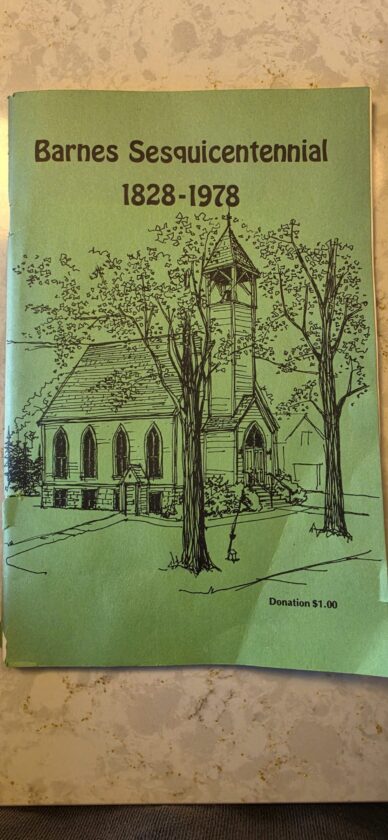
Photos submitted to the Times Observer Pictured is the Barnes, Pa., sesquicentennial booklet put together in 1978.
The pride in this place was not casual. It was built. For 1978 to matter as much as it did, there had to be something behind it. Something that made people return, write letters, send money, and give their time to a place many of them no longer lived. It comes from something deeper. Something that had already been written long before that booklet was printed or that celebration was planned.
Because Barnes did not begin in 1978. It did not begin with a celebration, or a booklet, or even a name. It began with land that was already known, long before it was settled. With streams that all seemed to lead somewhere. With early families who built, worked, lost, and stayed. With a way of life tied to the river, to timber, to whatever could be made from what was available. It began with people who did not have the option of leaving things unfinished.
The 200th is coming. Not as an idea, but as a date that is now close enough to plan for. And if the people who wrote those words in 1978 were right, then the question is not whether Barnes has a history worth celebrating.That part is already settled.The question is whether we have taken the time to understand it.
Part 2 will look at the history they were preserving in detail: the letters, the work, the risks and the families. Those are the moments that built Barnes long before anyone thought to celebrate it. And a look at the celebration and activities 1978 had, and what’s hopefully in store for the future.
Local News
Active intruder exercise to be held Monday at Eisenhower
The Warren County School District is hosting a multi-agency active intruder exercise at the Eisenhower campus on ...
Youngsville Life: ‘Alumni Lunch’ planned for July 14
Please email community news to Colette Nelson at Colettenel.ypl@gmail.com by Wednesday of each week to be included ...
Kane’s Art in the Wilds returns June 27-28
KANE - Art in the Wilds returns to Kane’s Evergreen Park for its 20th year on June 27 and 28. “For twenty ...
Leading the Pack
Bail modification denied in Spring Creek man’s case
A bail modification has been denied for a Spring Creek man who faces charges of aggravated assault and discharging ...
School district summer food program starts Monday
The Warren County School District (WCSD) will launch its Summer Food Service Program (SFSP) Monday. This ...