
Lawmaker pitches deferred community college tuition plan
Trending
A state lawmaker wants to boost the use of Pennsylvania's community colleges for those looking to add new skills.
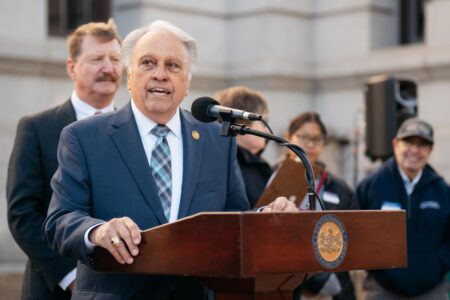
State Rep. Eddie Pashinski, D-Wilkes-Barre, is circulating a co-sponsorship memorandum for legislation he is currently drafting that will create a delayed payment plan for the state's 15 community colleges for students who are completing their two-year degree or certificate program in a high-need career path. Pashinski proposes delaying tuition payments, interest-free, until students find a job before they have to repay their tuition. Tuition would be repaid over the course of 10 years, with students required to live in Pennsylvania for 10 years or until their tuition is paid back.
"Without onerous debt payments, graduates and students will have more money to support their families, purchase a home, and help grow Pennsylvania's economy," Pashinski wrote in his co-sponsorship memorandum. "According to one study, 'adding one year to the average years of schooling among the employed in a metropolitan area is associated with an increase in real GDP per capita of 10.5 percent, and an increase in real wages per worker of 8.4 percent.' It's time for Pennsylvania to take the lead when it comes to addressing the student debt crisis, while simultaneously providing a better-educated workforce for employers."
Pennsylvania has community colleges in Bucks County, Butler County, Allegheny County, Beaver County, Philadelphia, Delaware County, Erie County, Harrisburg, Carbon County, Lehigh Carbon, Luzerne County,
Montgomery County, Northampton, Pennsylvania Highlands, Reading and Westmoreland County. The colleges partner with over 2,100 area businesses to assess their needs and ensure that the curriculum being taught on campus transfers to the workplace, according to the Pennsylvania Commission for Community Colleges.
Gov. Josh Shapiro had proposed limiting median-income college tuition to n more than $1,000 a semester at state-owned universities and community colleges, but that plan wasn't approved by the state Legislature.
Total community college enrollment has dropped by 37%, Shapiro said in 2024, while some community colleges, PASSHE universities and Penn State branch campuses have seen enrollment drop by almost 50% over the same time period.
Shapiro said the result is a gap between the number of jobs in Pennsylvania that require a high-quality degree or credential - such as nurses, teachers, and mental health professionals - and the number of Pennsylvanians who can fill those jobs. Shapiro said the state needs 61,000 more people with the right degrees or credentials to fill open jobs, but conservative estimates show that gap will increase to at least 210,000 within a decade.
Pashinski said that existing state efforts to match companies and potential workers are hindered by the prospect of taking on additional student loan debt, something Pashinski said is a factor in good-paying jobs across the state going unfilled.
"This is unacceptable," Pashinski wrote. "Every Pennsylvanian should be able to continue their education without fear of taking on outrageous amounts of debt."