
Wildlife finds home in city
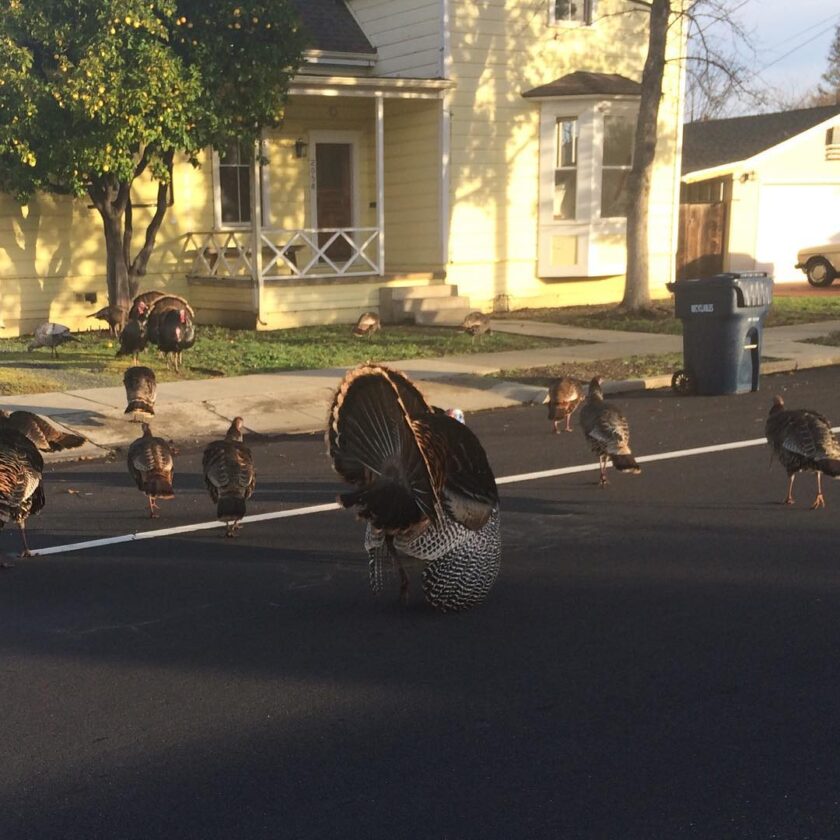
Photo by Aaron Anderer. Turkeys in Staten Island lack suitable space, often leading to blocked roadways. Fields in Western New York allow wild turkeys to forage without being noticed.
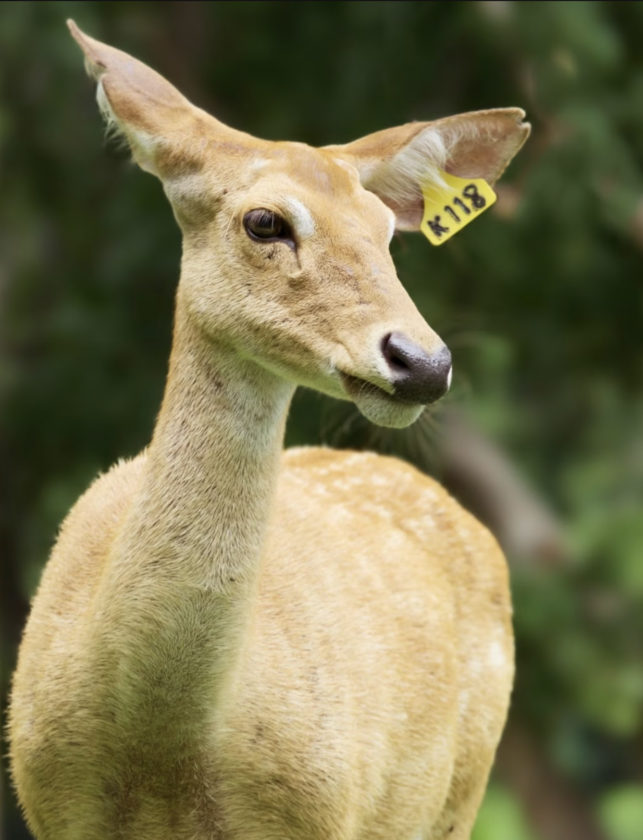
Photo by Kreingkrai Luangchaipreeda. In Staten Island, deer populations are managed through a vasectomy and tagging program, whereas in WNY, we implement a hunting season.
Photo by Aaron Anderer. Turkeys in Staten Island lack suitable space, often leading to blocked roadways. Fields in Western New York allow wild turkeys to forage without being noticed.
Photo by Kreingkrai Luangchaipreeda. In Staten Island, deer populations are managed through a vasectomy and tagging program, whereas in WNY, we implement a hunting season.
Trending
Visiting 'home' has a new meaning to me. Growing up in the 'greenest' of the five boroughs of New York City has its own perks, including being on the cusp of forest and oceanside habitats. Working in environmental education has given me a new lens in observing the small pockets of forest between the densely constructed neighborhoods in Staten Island. To some, many are surprised to know that there is more wildlife in the city than you think.
Staten Island and Audubon Community Nature Center have similar ecological makeups, as both are in and around wetlands. With Staten Island located on the cusp of the Atlantic Ocean, many of its wetlands are based on saltwater. Western New York is inland, meaning its wetlands are created by freshwater.
Areas that surround these wetlands are each built very differently. Wildlife in the city is confined to the limited natural landscapes they can call home. Less space means more competition for species who prefer specific habitats such as wetlands, forests, or fields. This habitat fragmentation impacts biodiversity on Staten Island. Mount Loretto Unique Area is 241 acres of nature preserves in Staten Island, but the surrounding spaces are heavily occupied by homes and businesses. This means wildlife populations are very dense since it's the only natural space in the immediate area. Audubon is essentially an uninterrupted space, consisting of farmland or scattered homes surrounding the property lines. 570 acres of continuous wetlands at Audubon extends into the vastness of landscape around it.
With limited availability for space in NYC, humans and wildlife have had to share the land in a different way than we do in WNY. As a result, wildlife in the city has been forced to coexist with human presence on Staten Island, which has dimensions of a mere 8 miles wide by 13 miles long. To some residents, this is a cause for curiosity and wonder, but to others, it is a cause for concern. Many instances of wild turkeys blocking doorways to homes or standing on top of vehicles have become a nuisance to some. In the late 1990s, turkey populations were fewer than 100. Fast forward to 2018, this number has risen to 250. In current day, these flocks are continuing to grow by the hundreds. In NYC, there is no regulated hunting season, unlike in WNY. This allows for very few population management strategies to be implemented in the city.
The most prominent management strategy there is the Deer Impact Management Plan, which began in Staten Island in 2016. This process included tranquilizing male deer and conducting a vasectomy to decrease reproduction in the species. After, these deer were tagged with unique numbers, and some were equipped with radio collars to track their movements. Since this project has been underway, deer populations in the city have gone down almost 50%. A heathy population for deer would be 10 per square mile. Staten Island had 34.2 per square mile and went down to 20 in 10 years. In contrast, we have a population of whitetail deer at Audubon and the surrounding areas which are locally managed by hunting seasons. Audubon implemented a deer exclosure study in 2006 and 2018 to see how foraging behavior affects plant life. Within this study, we learned that we had 36 deer per square mile on the property in 2017. In WNY, it is difficult to see how high deer populations are, given they have much more space to graze in large fields and forests. Staten Island's landscape is packed with narrow and crowded streets, buildings, and homes. This forces deer to wander into roadways and to feed in residential backyards. Seeing deer in WNY versus NYC both have very different implications.
White-tailed deer prefer to forage and feed on native plants, and with the current populations, the overconsumption of native plants in turn encourages invasive species to thrive. This is a result that has been observed on Staten Island, where invasive mugwort has been growing and has covered the understory. Mugwort is avoided by deer, since they favor younger native plants. In Western New York, these connections are not noticed as strongly since deer have more space to forage. If you are curious to see the differences in forest plant growth between ones that are foraged by deer and ones that are blocked from foraging, visit Audubon's deer exclosures located in Red Pine forest, by Hugh Tower, and just past our Bluebird Field.
With New York being a large state, one end looks very different than the other. Western New York has its own influence on the animals that live here, whereas New York City's ecology exists in its own ways. Wildlife in the city has a way of finding methods to overcome changes in an environment, whether those changes are human-made or natural.
Audubon Community Nature Center builds and nurtures connections between people and nature. ACNC is located just east of Route 62 between Warren and Jamestown. The trails are open from dawn to dusk and birds of prey can be viewed anytime the trails are open. The Nature Center is open from 10 a.m. until 4:30 p.m. daily except Sunday when it opens at 1 p.m. More information can be found online at auduboncnc.org or by calling (716) 569-2345.