
Snow – and lack thereof – has been news since the dawn of newspapers
-
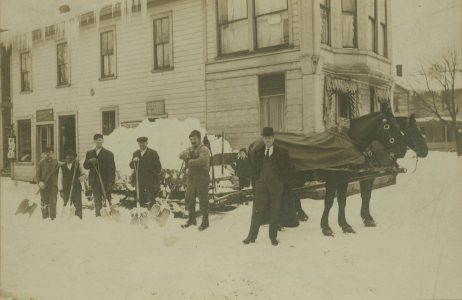
- Photo courtesy of the Warren County Historical Society A 20th century image of a team hauling snow away in what was evidently the most efficient means at the time by which to do so. Snow – 3 Photo courtesy of the Warren County Historical Society Feet-high drifts along (I think) Market St. in Warren.
-
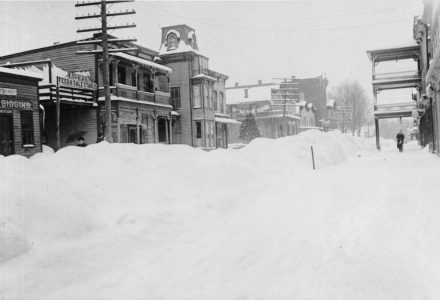
- Photo courtesy of the Warren County Historical Society A look at snow drifts in Tidioute Borough in an undated photo.
-
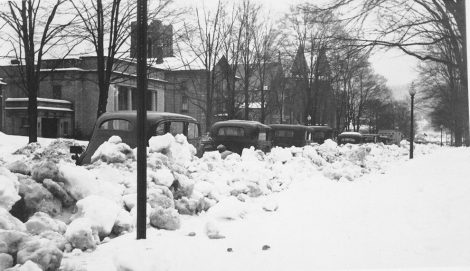
- Photo courtesy of the Warren County Historical Society Feet-high drifts along (I think) Market St. in Warren.
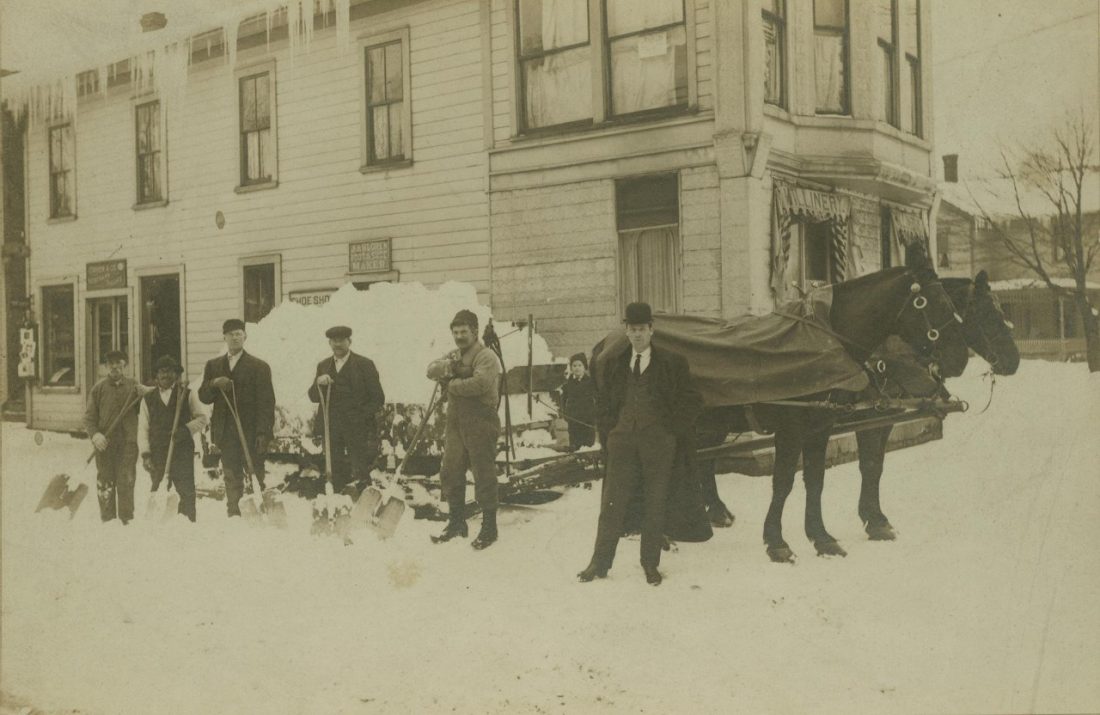
Photo courtesy of the Warren County Historical Society A 20th century image of a team hauling snow away in what was evidently the most efficient means at the time by which to do so. Snow - 3 Photo courtesy of the Warren County Historical Society Feet-high drifts along (I think) Market St. in Warren.
The weather has been a headline since the dawn of newspapers.
We may not have been graced with a white Christmas this year and many of us probably don’t even like snow regardless of the month but, as a 1974 Warren Times Observer article so articulately said, “whether or not you like snow makes little difference in Nature’s scheme of things.
An entire poem to the frozen precipitation can be found in an 1870 county newspaper. But it was published in July so that can probably be chalked up to griping about the summer heat.
The same page in the Warren Ledger in Jan. 1877
“About seven feet of snow has fallen this winter so far, as we are informed by one who has taken the measurements,” said one report while another siad 94 inches (nearly eight feet) had fallen between Nov. 24 and Jan. 25 in Pittsfield.
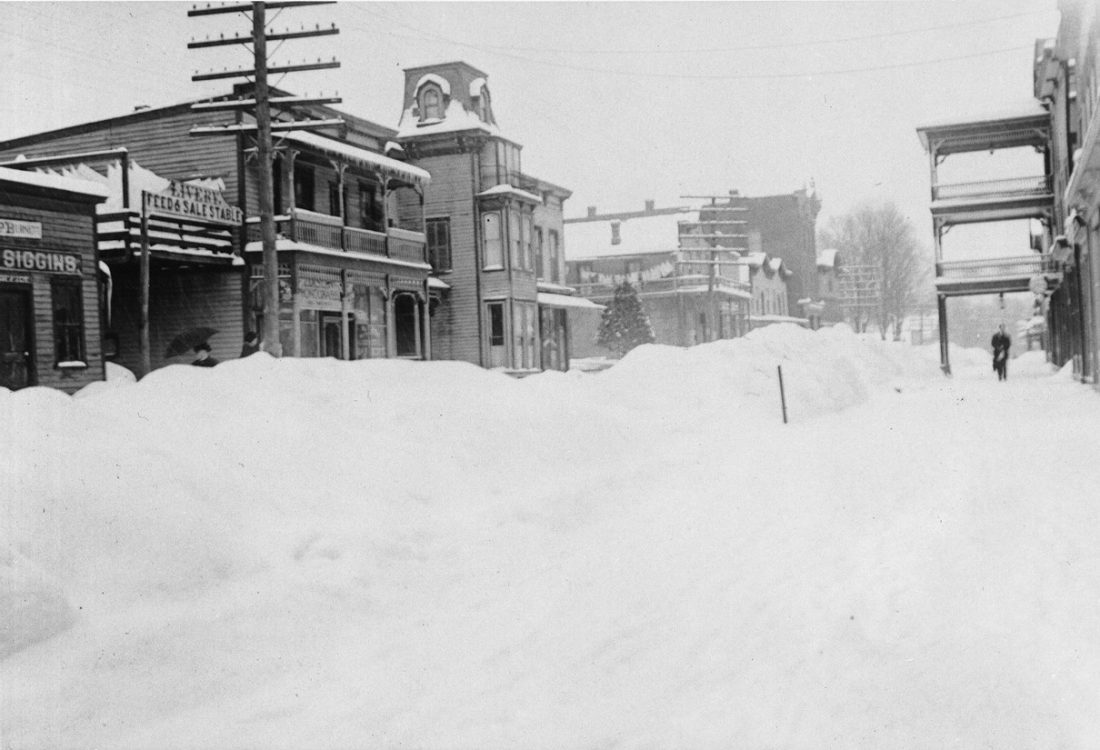
Photo courtesy of the Warren County Historical Society A look at snow drifts in Tidioute Borough in an undated photo.
Readers in the 1870s were concerned about precipitation for many practical reasons.
“The rain on Monday and Monday night last gave a good settling to the snow, and put water in the cisterns, most of which had long been dry,” a report said. “The weather turned out cold Monday in the night, since which time travel has been improved. Before the thaw the roads afforded a poor footing for horses.”
Too much snow was tough going for the horses. Too little in the rain and mud would be problematic. A “good settling” to the snow must have been just right.
The wind that comes with the snow that causes drifts is often more problematic than the falling snow itself.
“This morning the Scandia stage driver, on account of the huge snow drifts on the Quaker hill road, was compelled to several times let down fences and drive through the fields while coming to Warren,” the Evening Democrat reported in March 1899. “The snow is several feet deep in some places and the roads are impassable.”
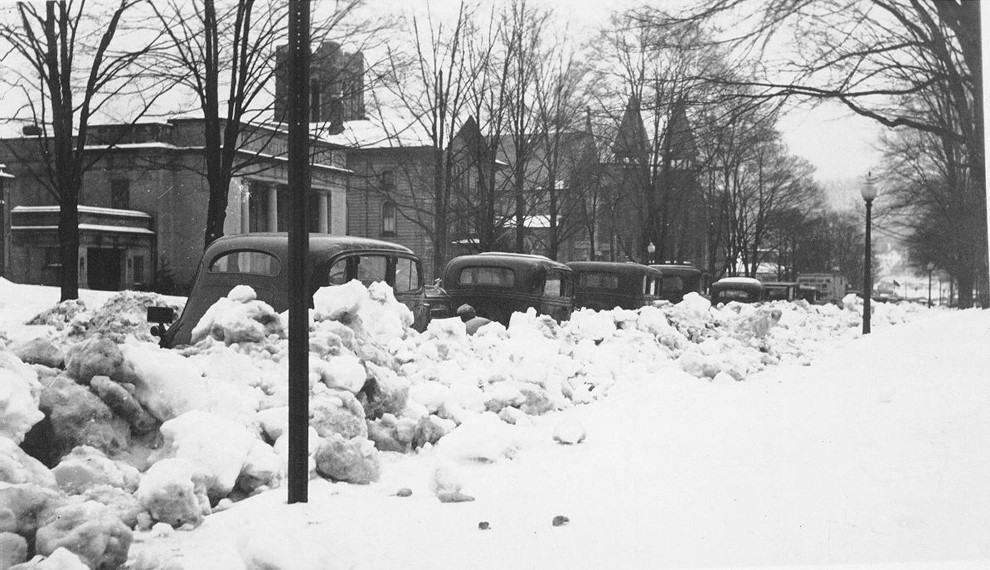
Photo courtesy of the Warren County Historical Society Feet-high drifts along (I think) Market St. in Warren.
There was some hyperbole in snow related headlines in the 1910s.
The Warren Mail under the headline “GREAT FALL OF SNOW BREAKS ALL RECORDS” reported in Jan. 1914 that “street car and other traffic was interfered with, and it was some time before the streets were broken through and the tracks cleared. Lumbermen and others who have team work to do in the woods rejoice that sufficient snow has fallen to make good sleighing. About 18 inches of snow fell (one weekend) and great banks lined the sidewalks and the street railway tracks.”
Four years later, though, the editors were left to try to explain a season with a decided lack of snow, such a season coming around for the first time in 45 years.
“At this time last year Warren was covered with a foot of snow. In some places there was more. Along the roads of the county and the interurban route to Jamestown there were snowdrifts nearly six feet high,” the report said. “This year spring weather has lingered into December. Residents who have lived here all their lives can remember but one winter compared with this. That was in 1873 when on Christmas day it was actually too warm for comfort. That year not a flake of snow fell until after January 1.”
The lack of snow led to some medical posturing – remember, 1918 was the height of the influenza pandemic.
“Some say that one cause of the influenza is the wonderful change from the cold and severe weather of last winter. Last winter here had comparatively no illness, while the present open season has been a disastrous one in many respects. Influenza and pneumonia have scored a record.”
That’s where the conjecture begins.
“Cold winds and cold air have a purifying effect on the atmosphere. The farmers say they prefer a cold winter to an open one. They claim that the snow and cold weather are important agents in the economy of nature,” the article states. “Snow being a non-conductor of heat, protects the roots of the grasses and the winter grains from severe frosts.
Snow, too, is not as worthless a thing as it appears to be when it covers the streets and sidewalks of Warren. It is of great use when it piles up on lofty mountains where gradual thawing in spring and summer feeds streams which carry fertility and wealth to extensive districts. The people of Warren complained bitterly of the weather last year, but they were really better off than this year from a sanitary and economical standpoint.”
They spoke with a geologist and meteorologist that attempted to explain the mild winter, chalking it up to a “question of which way the wind is blowing. Some months it blows almost entirely from one direction and sometimes it blows almost entirely from another, he declared.”
After a convoluted definition of how winds work, he concluded with the following: “Last year the wind blew nearly all winter from the polar regions. This year until now it has come mostly from a southern direction. So according to the law of averages it may switch then the winter is half over and from then until spring this section may get a winter somewhat resembling the winter of last year.”
Snow or no snow, we don’t really get a choice. That was the crux of an argument in the 1974 Warren Times Observer article.
“We just barely had a white Christmas in Sheffield this year. The blanket of snow that still remained on Christmas Day was tattered and torn, with patches of green grass showing through,” it read. “Just how valuable snow is to Kinzua Country is a debatable question….Like rain, it falls on both the just and unjust. You can escape it by fleeing to southern Florida or you can refuse to be intimidated by the ‘white rain’ and tough out the winter at home.”