Hutchinson: The budget plan needs work
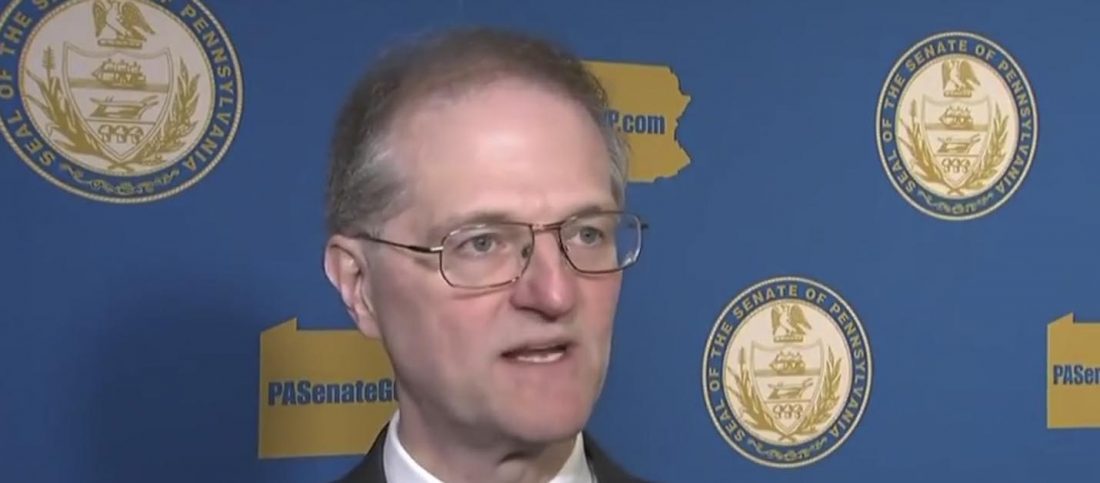
Scott Hutchinson
Gov. Tom Wolf has “abandoned all fiscal discipline” with his 2022-23 budget proposal, at least according to State Sen. Scott Hutchinson.
The Associated Press said the spending proposal would increase about 13 percent year over year, increasing the total budget size from $38.6 billion to $43.7 billion in total. The plan does not include increases to the sales or income tax.
Hutchinson, the Senate’s Finance Committee chair, responded to the proposal on Thursday in the wake of Wolf’s budget address.
“Unfortunately, the governor’s proposal, as I heard it today, he is abandoning all fiscal discipline,” he said. “It’s not based on reality and it really is spending one time money to balance something over the long term and we will not get that federal one time money ever again.”
The Associated Press said total spending for the current fiscal year is projected around $41 billion which includes $3.5 billion in federal pandemic aid.
“These are days of opportunity for our commonwealth,” Gov. Wolf said. “That’s because, at long last, our fiscal house is in order. Over the past seven years, we’ve turned a $2-3 billion structural budget deficit into a $2-3 billion budget surplus. We’ve built our Rainy Day Fund to more than $2.8 billion — more than 12,000 times what it was when I took office.”
This mark’s Wolf’s last budget proposal before he leaves office and said he’ll be the first governor since 1987 to turn over a budget surplus to his successor.
The Associated Press said a surplus of $6.4 billion is anticipated at the end of this fiscal year with $4 billion of that surplus to help cover the 2022-23 proposal.
“We are no longer digging out of a hole. We’re ready to build,” Wolf said. “And this year’s budget does exactly that, by making new investments that will build a brighter future for Pennsylvania families?.”
A lengthy summation of the proposal highlights increases in early education, K-12 schools and investments in higher education; minimum wage increases to $12 per hour on July 1, 2022 escalating to $15 by 2028, reductions in the corporate net income tax rate as well as investments in a litany of others area.
Hutchinson was critical of using federal aid dollars to create new initiatives.
“So we should not be adding new programs,” he said. “We should not be tricking recipients of this money into thinking that we can sustain these programs because this is an unsustainable budget.
“I think we have to go back to the drawing board.”
Hutchinson added that the budget proposal is also “very much smoke and mirrors” because of overestimated revenues.
“We are also underestimating the growth in these expenditures that is mandated in many of this programs,” he said. “So I think it really is something that we have to start from scratch and talk about a more fiscally prudent, disciplined approach through our process in the next couple months.”
The state’s fiscal year runs from July 1 through June 30.
Local News

Bicyclist taken to hospital after mishap
Commissioners agenda includes 911 recognition
The Warren County Commissioners will meet at noon Wednesday in the Jackson Courtroom of the Warren County ...
Temporary signal installed on Scandia Road
The Pennsylvania Department of Transportation (PennDOT) is advising drivers to be alert for temporary traffic ...

Team efforts

Warren, McKean county businesses eligible for facade work