
No tax hike likely for school budget
Trending
The Warren County School District is on track to pass the budget for the 2026-27 school year without having to increase taxes.
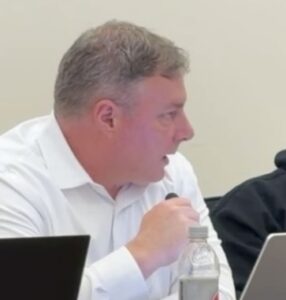
Department heads brought their requests down from earlier discussions and achieved the $1 million savings that was being requested, according to Michael Kiehl, district business services director and treasurer, during Monday's board meeting.
While the current proposal will have a projected $1.9 million deficit, this is a decrease from the original nearly $3 million in the previous proposal from March. The only changes from that were from several small cuts in order to reduce the deficit. Major cuts to programs were not part of the plan
"This year, we went with the proposal of making a lot of small cuts to get where we needed to be," Kiehl said.
Aiming at maintaining personnel, all 330 teachers and paraprofessionals will remain and there is only one administrative cut by way of attrition
"By maintaining our teacher workforce, our hope is that we are going to really be able to make an impact in those early education years and reducing class sizes," Kiehl said.
Kiehl said that with the support of the administrative team, looking at the overall budget, "Everyone stepped up and contributed a little bit to help us to get this number."
Savings came from a variety of strategies including negotiation of health insurance cost increases that were projected; Highmark decreased by 0.5%. The early purchases of technology and curriculum were adjusted and reduced, helping to save the district from higher costs over time. Superintendent Gary Weber added that the timeliness of those purchases were important since expenses in those areas are on the rise continuously.
Board member John Wortman shared the improvements since last year with the long term planning, drawing attention that the general fund balance would run out during the 2030-2031 school year, which is two years later than previously projected.
After Weber wrote and sent a letter to advocate more money from the state, Kiehl received a complicated response from the state about basic education funding. Many factors go into the calculation leaving an expectation that the district will receive less than a 1% increase in state support for 2026-27. Kiehl said that it is not enough due to increases in medical coverage and salaries as well as inflation.
Weber said the state's funding formula presents challenges that are ongoing for the district. Warren County receives nominal increases from state funding.
"The student weighted funding relies on poverty levels, tax capacity, and rural factors," Weber said. "Essentially, what happens is we're middle of the road. We're a rural area, losing enrollment. And so what's happening is the state is passing the buck to the local taxpayers."
Even though half of the students in the county are economically disadvantaged, in comparison to urban areas, the percentage of school students considered to be economically disadvantaged is higher than urban areas.
"One of the situations we run into is that we have moderate poverty, moderate income, and a limited tax base," Weber said.
According to the Forest Service USDA website https://www.fs.usda.gov, the Secure Rural Schools (SRS) program provides funding to rural counties for schools, roads, and public services. Rural counties with large amounts of untaxable federal land have a limited local tax base. The Secure Rural Schools program provides funding derived from Forest Service revenues, including timber sales, grazing, and special use permits, to help maintain schools, roads, and other municipal services in over 700 counties across the U.S.
Weber said one-third of Warren County is made up of federal and state lands that cannot be taxed.
"Even though the SRS funding used to bring in over a million dollars for the district, we're running about $250,000 now, so we're not netting anything from the national forest like we used to," Weber said. "And you know, for us, what that's resulted in over time was increased class sizes and a reduction in paraprofessionals."
The district has had to increase class sizes and staff due to rising special education and mental health needs yet state funding has not kept pace.
“Behavioral needs are such that they’ve increased and mental health has been passed on to us. So, you see, a lot of the staffing that we've done in the past several years has been related to mental health." In summary, the district is taking these things on, yet not receiving adequate state funding in return," Weber said.
As far as tax increases, Weber said that they are trying to keep that under control, noting that concerns remain about the growing number of Warren County residents being 65 or older. The population decline is a major part of the analysis considering future budgetary concerns. The Center for Rural Pennsylvania puts out predictions that the district monitors and takes into consideration, along with several other factors, on how funding will have long term impact on financial stability.
In an effort to avoid a tax increase for the next fiscal year, the budget is being carefully managed by cutting costs while securing grant funding.
"I feel like we are on pace for passing this budget on time, and at our June board meeting," Kiehl said. "I just want to highlight in the May board meeting, we will be bringing a proposed final budget so that we can advertise appropriately to pass the budget at the June board meeting."
Upcoming WCSD meeting dates include May 4 for the regular school board meeting and May 18 for the next committee of the whole meeting, both held at the Central Office building in Russell.