
School COVID vaccine ban advances
Trending
One of Warren County's state senators is likely to find herself in the middle of the next battle over COVID-19 policies between state Republicans and Democrats.
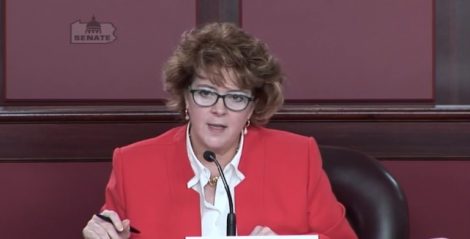
State Sen. Michele Brooks, R-Erie/Crawford/Mercer/Warren, recently introduced Senate Bill 937. The bill passed the Senate Education Committee by a 6-4 vote with six Republicans voting in favor and four Democrats voting against. There was no debate during the meeting.
"As we continue monitoring the ongoing reviews of the COVID-19 vaccines by the federal Centers for Disease Control and Prevention (CDC) and the Advisory Committee on Immunization Practices (ACIP) for emergency use authorization, full FDA approval, boosters, and even indications for use in children; it is imperative that we acknowledge parental decision in this process," Brooks wrote in her legislative memorandum. "According to the CDC, children birth age to 15 months are recommended to receive 10 immunizations, most of which include three or four total doses throughout that first year and a half of their lives. Depending on a parent or guardian's decision and pediatrician's advice for receipt in line with the CDC recommendations, there are numerous 'Catch-up vaccination' processes to ensure that children are fully vaccinated in preparation for school around age five."
Masks in schools have been a contentious issue, with state legislators challenging an order by Pennsylvania's acting health secretary that requires masks inside K-12 schools and child care facilities. That order was thrown out Wednesday by a state court that said she lacked the authority, though the Wolf administration put the decision on hold by filing an immediate appeal.
The proposal still needs to be passed by the whole Senate as well as the state House of Representatives. If it is passed by the legislature, it faces a likely veto by Gov. Tom Wolf.
Earlier this year, Wolf vetoed legislation to ban so-called COVID-19 "vaccine passports" in some cases and to restrict the health secretary's actions during health emergencies. The measure split both legislative chambers along party lines.
One of the bills would have kept colleges and universities that receive state money from mandating proof of COVID-19 vaccination to enter buildings, attend class in person or undertake any activity. State and local governmental entities would have been similarly restricted, and governments would not have been allowed to include coronavirus vaccine status on ID cards.
"What we consistently heard from many individuals is that they felt that was government overreach and that was something that they were not comfortable seeing," said state Sen. Kristin Phillips-Hill, R-York,
In Wolf's message to the Legislature announcing the veto, he called the bill contradictory, misguided and irresponsible, putting at particular risk residents of long-term care facilities and those with compromised immune systems. He warned that medical providers and the wider public would have been prevented from getting important information about vaccination rates and vaccine efficacy, because the bill would have limited the Health Department's ability to collect vaccine and immunization information for the Statewide Immunization Information System.
"As we have seen with COVID-19 and other disease outbreaks, public health response measures are critical in saving lives of vulnerable residents," Wolf wrote.