
Sorry Hoss, but deer think you stink
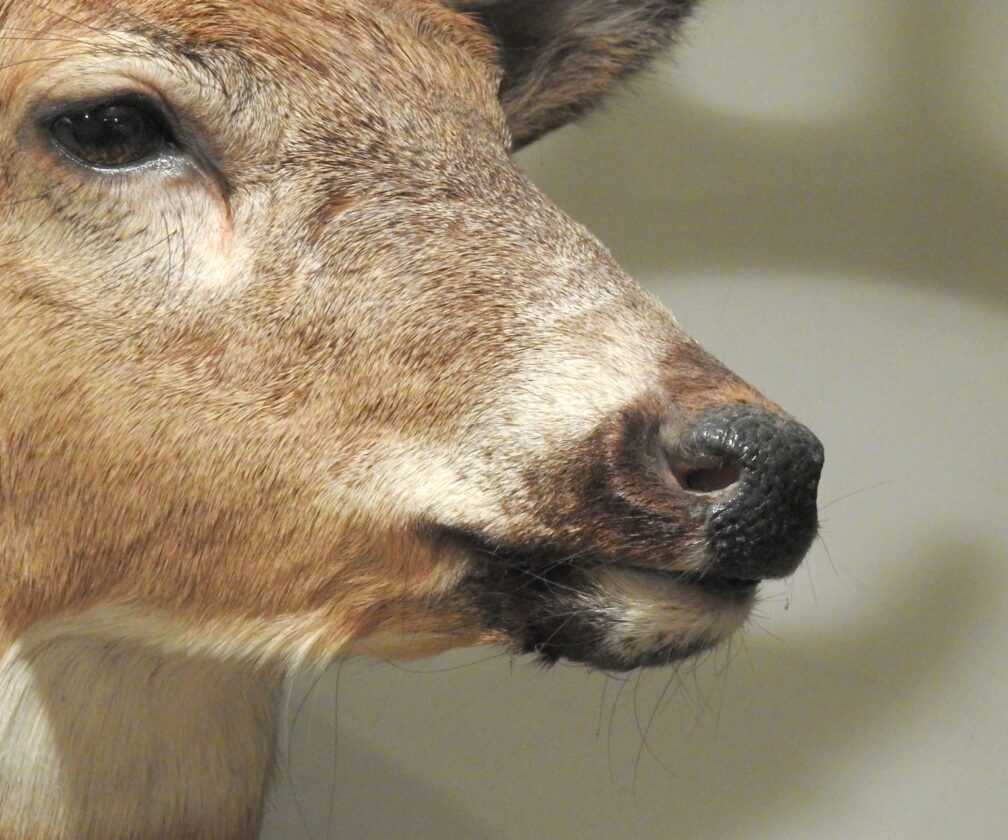
Photo courtesy of Steve Sorensen The white-tailed deer has a particular set of skills, among them a superior nose. No matter what you do, he will smell you.
When Hoss saw that people were avoiding him, he asked Little Joe, “Do I smell bad?”
Joe turned toward Hoss and sniffed, “You smell like you usually do.” The names tell you I’m talking about Bonanza, the second-longest-running Western on American television. And like Hoss, we all have our usual smell.
When I watch those old shows I often wonder how badly people smelled in the days of scarce water, a scorching sun, close quarters with horses and cattle, and a month between baths. Saloon girls knew how to cover up their own smell for carousing men, but man-smell was beyond help.
Whether or not the nose mattered to cowboy romance, you notice when that girl in the office just sprayed her big hair. You enjoy the aroma of a wood fire. Downwind of Burger King you’ll be reminded that a flame-broiled burger is ready for you.
You sniff the milk in the fridge to know if it’s spoiled. You hate that smell of gasoline you spilled on your hand. You need to deal with that musty smell in the basement. You know when the dog needs a bath.
Speaking of dogs, even the most house-bound dog has a powerful sniffer. Hounds are equipped with dog-dom’s best noses. Beagles, bloodhounds, blueticks, even dachshunds. If you come for a visit, Remy, my sausage dog, will smell you even if she can’t see you. Send her outside in the morning to do her “business” and she knows if a raccoon walked across the porch during the night. If an indoor dog can do that, what can a trained hunting dog do? When I was a kid I used the tail from a dead rabbit–one whiff told Mitzie it was time to hunt. A hound with a good nose is wonderful to watch.
The scent detection ability of wild animals is even better. The best of them can pick up a days-old scent buried under a foot of snow. Deer, bears, coyotes, and more have the best noses on earth. Cats, maybe not so much. Or at least human scent doesn’t push their alarm button.
The scent companies will tell you that if you expect success, you need to eliminate your odor, but you won’t do that by dousing yourself with a spray you bought because of powerful advertising. If you understand the sources of human scent, you’ll realize it’s almost impossible to eliminate. Your body odor, though maybe not as bad as Hoss’s, is not the only scent you need to address. Here are two scent sources almost always overlooked.
Skin cells–Much of the dust that collects on our furniture is made up of dead skin cells shed from the people who live in the house. Those skin cells flake off everywhere we go. If you doubt that, wear a black T-shirt for a day and turn it inside out when you peel it off. You’ll see more skin cells than you could ever count clinging to the fabric. How many have fallen off through the day? How many have you left in the woods? Enough that any bloodhound (or deer) could track your every step.
Breath odor–Human scent permeates the air you expel from your lungs. Good oral hygiene will make you inoffensive to other people, but if you insist on exhaling nothing can prevent deer from noticing the scent of your breath. A mouthwash might help cover it, but you can’t deodorize your lungs.
That’s why eliminating human scent is impossible, and believing we can do it underestimates wild noses. Every time you step into the woods you leave your scent where deer and other animals will find it. Sorry Hoss, but deer think you stink. Your success will mostly depend not on a scent elimination strategy, but on the same strategy the old-timers depended on summed up in that old familiar phrase, “Play the wind.”
ııı
When “The Everyday Hunter” isn’t hunting, he’s thinking about hunting, talking about hunting, dreaming about hunting, writing about hunting, or wishing he were hunting. If you want to tell Steve exactly where your favorite hunting spot is, contact him through his website, www.EverydayHunter.com. He writes for top outdoor magazines, and won the 2015, 2018 and 2023 national “Pinnacle Award” for outdoor writing.
Local Sports

Powerhouse Gymnastics hosts invitational at YMCA

Region 5 slugfest

Knights top Union City on Senior Night
Sorry Hoss, but deer think you stink

Senior night drama
Warren County girls wrestlers post win over General McLane
The Warren County girls wrestling team took care of business on Wednesday as it defeated the General McLane ...