More to life
Appalachian Trail hike has changed how Russell native views the world
-
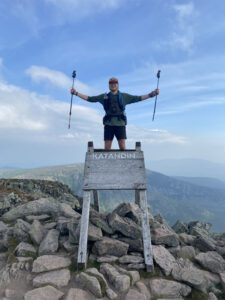
- Submitted Photo Russell native Derek Childs celebrates on Mount Katadhin in Maine after completing a 2,200-mile thru-hike that took him 134 days to complete.
-
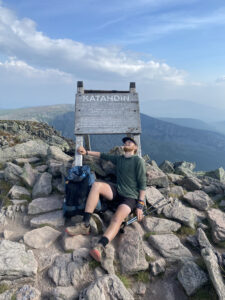
- Submitted Photo Russell native Derek Childs relaxes after finishing his 134-day hike on the Appalachian Trail.
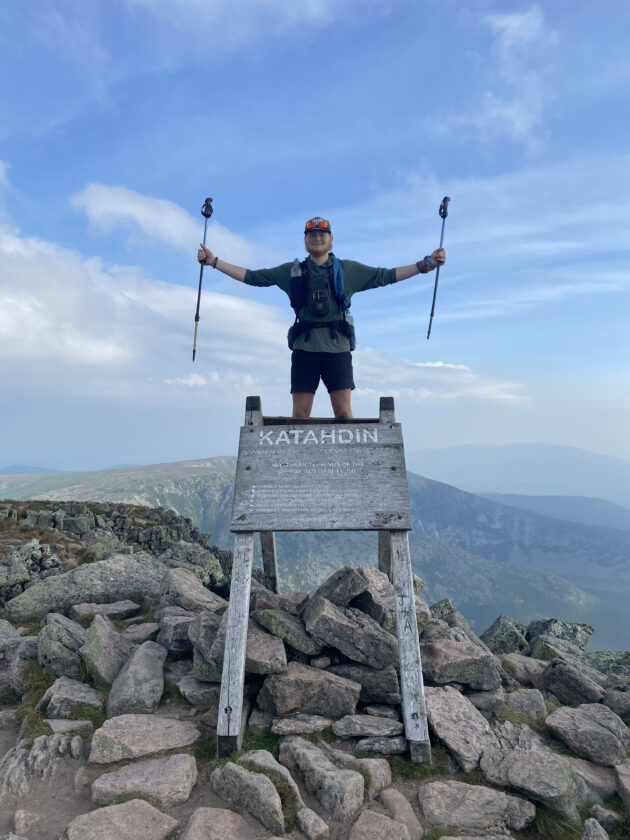
Submitted Photo Russell native Derek Childs celebrates on Mount Katadhin in Maine after completing a 2,200-mile thru-hike that took him 134 days to complete.
When 19-year-old Russell native Derek Childs sets his mind to doing something, he will finish it, and he might just learn an awful lot about himself in the process.
For Childs, he set a goal to hike the Appalachian Trail, the longest thru-hiking trail in the world, 2,200 miles of varying weather and terrain that changed in each state and took him up the east coast of the United States. Thru-hiking is when you start at one end of the Appalachian Trail and do not get off the trail until a hiker has reached either the northern or southern end. For Childs, he chose to start in Georgia and finish in Maine.
It was March 30 when Childs began his journey in Georgia and it was August 10 when he finished. After saying goodbye to his parents, Larry and Christina, he began with the simple goal of completing the hike by mid-September.
“I knew it was going to be tough, I just didn’t realize how tough,” Childs said. “My first couple of weeks I had rainy day after rainy day, but before I knew it I was crossing into North Carolina and the great Smoky Mountains, which were one of my favorite parts of the entire hike.
For Childs, who began the hike at around 190 pounds and finished at 155 pounds, one of his battles was to figure out how to keep his protein count high as he burned an average of 6,000 calories per day. On a big day that number approached 9,000 calories.
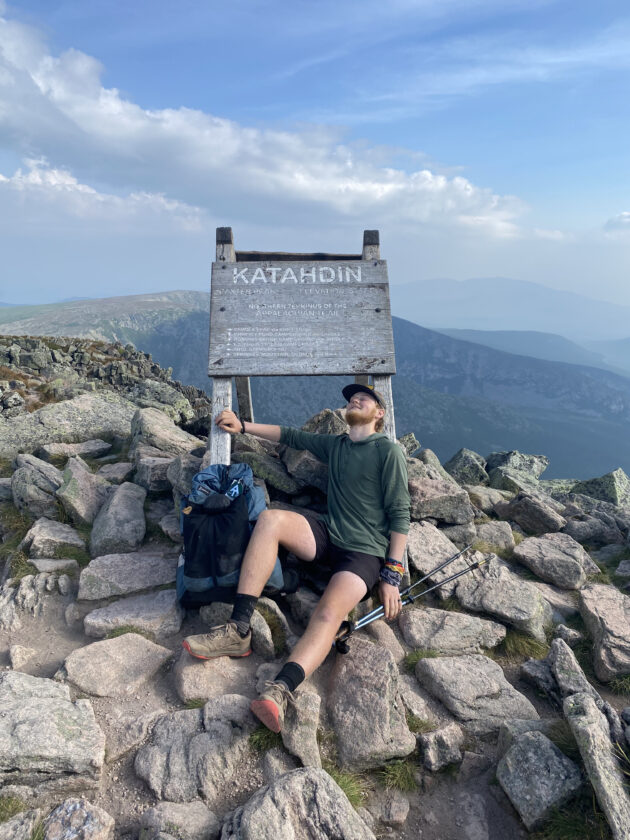
Submitted Photo Russell native Derek Childs relaxes after finishing his 134-day hike on the Appalachian Trail.
A typical day on the trail for Childs started around 8 a.m. and finished around 6 p.m. He averaged 20-25 miles per day, with a high of 42 miles one day and a low of 3 miles on another.
“I learned pretty quick to listen to my body,” he said. “When I felt good, I kept going, but when I needed to rest I did. I stayed healthy, for the most part. Nothing major.”
For thru-hikers, it is a tradition to acquire a trail nickname that is chosen by fellow thru-hikers along the route. For Childs, it was one of the funniest events that happened during his hike.
“I had stopped to get some water in Virginia and there were some wild horses nearby,” he said. “I took my pack off and one of the horses picked it up. I literally had to have a tug of war with the horse to get it back. I guess a few people saw that and gave me the trail name ‘pony boy.’ Laughing at the memory, Childs would not confirm or deny that a video of this existed.
After hiking through West Virginia, the summer heat came on and it was there that the mental battle began for Childs. “That was the part of the hike I was the least prepared for. The isolation and the mental fatigue really challenged me. I leaned heavily on a quote from Jim Penley, who was my football coach, is a teacher at Eisenhower and is a veteran of endurance hiking. (The quote is), ‘80% of the time the hike will not be pleasant, but 20% of the time it will almost feel religious,’ and he was right.”
There was also what is commonly referred to by thru-hikers as “trail magic.” Childs told story after story of how communities along the way would feed, leave coolers of ice water out, offer rides to towns or directions to a laundromat.
“The towns really support the hikers and help to create a community atmosphere for all of the hikers,” Childs said.
The trail magic helped with the monotony of the hike and Childs was also able to receive packages along the way from his family, which helped his spirits. He also had a visit from three of his friends from home.
“It was a great day when Tucker Lindell, Cameron Jakubczak and Jason Rohlin met me,” Childs said. “It was just a day to relax and remind me of home. It came at the perfect time. I really appreciate what they did.”
The home stretch of the hike may have been toughest for Childs.
“Southern Maine was, without a doubt, the most physically demanding,” he said. “It was really rocky and, for a little over a week, I was really isolated. No phone service, just alone with my thoughts.”
What kept him going?
“I could see Mount Katadhin, the finish line,” Childs said. “It was the highest point on the trail at that point. I just kept pushing.”
He also leaned heavily on his wrestling background from his time at Eisenhower.
“I knew what it felt like to be tired, hungry and sore, but I remembered from wrestling that the end result would be worth it,” he said. “I just kept on going.”
During the last week Childs also had the help of other thru-hikers on the trail.
“There weren’t many of us, but we pushed and leaned on each other to finish strong,” Childs added.
Childs’ pace allowed him to finish the hike a little more than a month early. He learned along the way that only .1% of the hikers who finish the hike complete it in less than 135 days. A determined young man, he finished in 134 days.
What’s next for Childs?
He said maybe he’d like to get into ultra-marathons, or possibly Ironman events, but plans for more hiking are definitely in his future.
“I haven’t spent any time in the western states. Maybe I’ll hike the west coast.
For now, however, he’s happy to be home, and so are his family and friends.
“This trail changed how I will view the world from now on,” he said. “It taught me that there is so much more to life than just living it.”
Local Sports

Warren County boys defeated in District 3 title game

Extras again
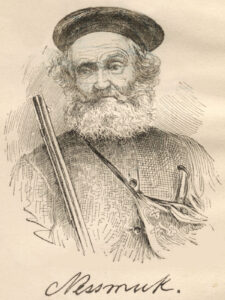
Twain and Nessmuk
Briefs
Trap leagues This week in the Warren County Trap League, Pine Grove downed Corry 339-331, Sheffield topped Sugar ...

Stateline celebration