
Twain and Nessmuk
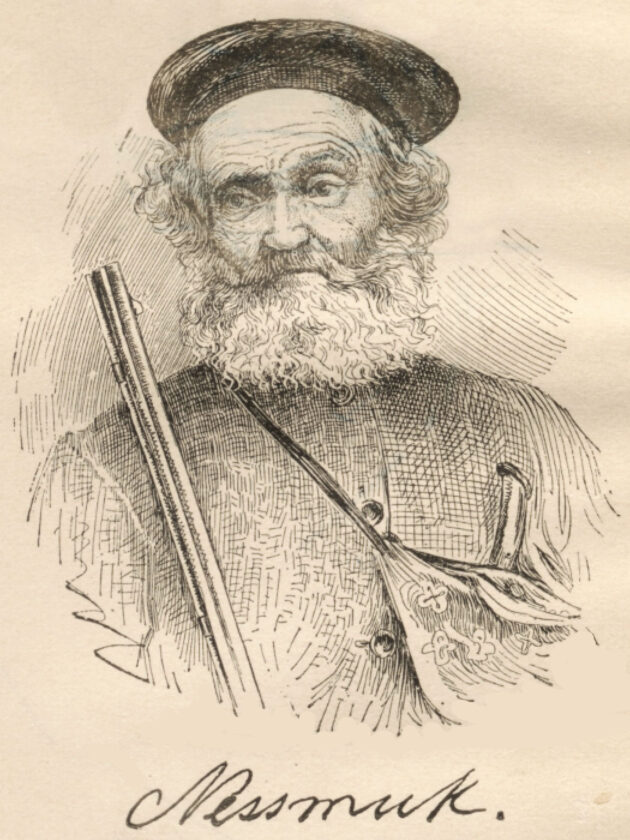
George Washington Sears, also known as “Nessmuk.”

George Washington Sears, also known as “Nessmuk.”
Trending
Twain? Almost everyone knows who he was. Nessmuk? Not so much.
Most readers know Mark Twain was the pen name adopted by Samuel Langhorne Clemons (1835-1910). George Washington Sears (1821-90) chose Nessmuk as his pen name, a tribute to the Narragansett Indian who taught him his outdoor skills.
Sears was born 14 years earlier than Clemons and died 20 years sooner, so their timelines leave a half century of overlap, and about 35 years as adults. They may not have been personally acquainted, but they likely knew of each other through their writing.
Twain was famous long before he died, and his fame won't be fading soon. Known from shore to shore in America as well as in Europe, he published dozens of books. You don't have to be educated to name at least one, and four out of five people would probably name "The Adventures of Huckleberry Finn" (1884). A high-water mark in American literature, it's often called "the great American novel."
A dozen years before Twain's fictional Finn began his foray down the mighty Mississippi, he published a nonfiction account of his own personal efforts in a silver mining camp in Nevada. He called the book "Roughing It," and in hardly any time at all, that phrase became synonymous with the strenuous life away from civilization.
Nessmuk's renown was limited to his region, from northern Pennsylvania to New York's Adirondacks. Though he also traveled more widely, he mostly "flew under the radar" as we might say today. Can you name a book written by Nessmuk? He wrote only two. Twelve years after Twain's "Roughing It," Nessmuk published his own book about camp life. He called it "Woodcraft," and it's still in print.
Nessmuk seems to have thought Twain got it exactly backwards. For Nessmuk, it wasn't camp life that was rough. What made life rough was our tumultuous streets and homes, our agitating industries and entertainments, and our perplexing associations with both nemeses and friends.
Nessmuk believed our homes and communities, our employments and responsibilities, and those darn people are the daily challenges and burdens that make life rough. For Nessmuk, escaping civilization was not "roughing it." Daily life is the roughness we must disentangle from. Getting away restores calm to our lives. Camp life isn't roughing it. Camp life is "smoothing it"!
A look into the personalities of these two men might give us a hint about that difference. Twain was famous in his lifetime, widely traveled, broadly experienced, and a colorful character. People call him a humorist, but being funny wasn't just a way to entertain as it is for many funnymen. For Twain, humor was more of a means than an end. His humor drove his social and political commentary. He was good at ruffling feathers, at roughing people up.
Nessmuk, by contrast, was a gentler soul. While Twain was flamboyant and targeted the masses, Nessmuk was subtle and contemplative.
The difference between "roughing it" and "smoothing it" probably reflects their personalities. If the two men had been subject to the Myers-Briggs Type Indicator survey (a personality assessment that came long after these men were gone), Twain would have been labeled an extravert, and Nessmuk an introvert.
Twain was energized by travel and interaction. He thrived on conflict. Nessmuk was drained by the same, most comfortable with close friends. Nessmuk did not avoid controversy, but conflict was not something he went looking for. His social criticisms were a by-product of his antipathy for those who made life stressful, who were industrializing the nation at the expense of the people and the forests, and who turned ordinary stresses of life into "roughing it" and made "smoothing it" necessary.
Keep in mind that this was more than 140 years ago. Compared to our times, those days were virtually stressless, but for Nessmuk they were "worry and hurry." He would have considered our era a dangerous stress fest.
Where Twain was fully engaged, Nessmuk was often withdrawn. The two men could have been doing the exact same thing for exactly opposite reasons and results. Thus, one man's roughing it was the other man's smoothing it. I'm with Nessmuk on this one.
(My acquaintance with Nessmuk began with Jimmy Guignard's article "Hunting Nessmuk" in Mountain Home magazine, June, 2021 and Gale Largey's movie "Nessmuk: In Defense of Nature in the Pennsylvania Wilds," available on YouTube. Both men are professors at Mansfield University, Mansfield, Pennsylvania.)
ııı
When "The Everyday Hunter" isn't hunting, he's thinking about hunting, talking about hunting, dreaming about hunting, writing about hunting, or wishing he were hunting. If you want to tell Steve exactly where your favorite hunting spot is, contact him through his website,
www.EverydayHunter.com. He writes for top outdoor magazines, and won the 2015, 2018 and 2023 national "Pinnacle Award" for outdoor writing.