
Water issues impact mobile home park
Trending
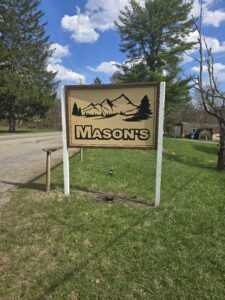
Driving on Jackson Run in Conewango Township, you wouldn’t know it was there if not for the yellow sign at the end of the road. Turn onto the drive and down the hill and you’ll enter a different world. It’s like a little city. In fact, it’s even called a city -- Masons Mobile City.
There’s a story that has been unfolding there spanning the past several months but yet, very few people have heard about it. It involves fear, a lack of accountability according to residents, and a lack of clean water. Residents at Masons Mobile City have spent months unable to safely drink their tap water, as state regulators now order sweeping fixes to a troubled system cited for violations including a failure to monitor for arsenic.
A Pennsylvania Department of Environmental Protection (DEP) enforcement order issued April 7, requires major upgrades to the drinking water system, following more than a year of documented violations -- including failures to monitor for arsenic, unauthorized system modifications, and ongoing public health concerns, according to the DEP enforcement order.
The park is divided into two different water systems. One, known as the upper part, serves residents across the creek that runs through the park. The lower part of the park is the trailers that you see first upon entering the park. The upper part of the park has been on a Boil Water Notice since Nov. 21 while the lower part of the park has been on a Do Not Drink order for that same time period. There are nine occupied homes under the Do Not Drink order.
A resident interviewed said, “Last year we had no water at all for 38 days. We are just poor trailer trash who are being taken advantage of. We can’t afford to move.”
The order identifies Masons Mobile City MHP as the public water supplier and lists associated ownership and responsible parties in connection with the system, according to the document.
The enforcement action follows a series of inspections and compliance efforts dating back to early 2024. Records cited in the order include a full inspection on Feb. 23, 2024, additional follow-up actions throughout 2024, a Level 2 Assessment in November 2025, and a Notice of Violation issued Jan. 6, after required corrective actions were not completed.
Public health restrictions began earlier, on Nov. 21, 2025, when DEP issued field orders requiring notification to residents. Customers served by the south system (Water Treatment Plant 302) were placed under a Boil Water Notice, while those served by the north system (Water Treatment Plant 301) were issued a stricter Do Not Drink Notice, according to the order. Those notices have been reissued multiple times, including in January and February 2026, and must continue every 30 days until the state determines the water is safe.
The system serves approximately 150 people through two separate distribution systems, one serving about 10 connections and the other about 55 connections, according to the order. Among the violations cited, regulators found the system failed to conduct required annual monitoring for arsenic at a key entry point, despite using arsenic treatment filters. While the order does not confirm unsafe arsenic levels, the lack of testing meant officials could not verify whether the water met safety standards, according to the order.
DEP also cited broader operational failures, including deteriorating and poorly maintained equipment, a lack of backup power capable of maintaining service during outages, and unauthorized modifications to wells and treatment systems without required permits. According to the DEP order, modifications were made that bypassed all treatment at one of the facilities, raising concerns about whether water was properly treated. In some cases, those changes altered or bypassed treatment processes, placing the system out of compliance with state law.
Another park resident in the upper part of the park said, “The water sucks. Big Time. We frequently get water main breaks and the water shuts off for whatever amount of time it takes to fix. … Usually a day, a few days, sometimes a week or so. It’s ridiculous!”
Several violations were classified as "significant deficiencies," meaning conditions could allow contamination to enter the water supply or otherwise pose a risk to public health. The order further indicates the system may not meet required treatment standards for virus removal, requiring upgrades to achieve "4-log treatment," a level designed to effectively eliminate viruses from drinking water, according to the order.
The order also requires the operator to provide bottled water to customers served under the Do Not Drink Notice and to document those purchases through monthly submissions to the state, according to the order.
Extensive monitoring and reporting requirements are also mandated. These include daily disinfectant testing at entry points, weekly distribution system monitoring, monthly bacteriological testing, and scheduled testing for nitrates, industrial chemicals, and emerging contaminants. Required monitoring also includes PFAS compounds such as PFOA and PFOS, as well as dioxins, polychlorinated biphenyls (PCBs), synthetic organic chemicals, and disinfection byproducts such as trihalomethanes and haloacetic acids, according to the order.
The system must meet a series of deadlines. Within 30 days of the order, a chlorine monitoring compliance report must be submitted. Within 45 days, a complete permit application must be filed outlining how the system will meet treatment standards.
After state approval, construction must begin within 30 days and be completed within 120 days. Once an operating permit is issued, the system must be placed into service within 14 days, along with updated operation, maintenance, and emergency response plans, according to the order.
Monthly progress reports to the DEP are required beginning April 10, as the state continues oversight of the system, according to the order.
DEP officials state that the violations constitute a public nuisance under Pennsylvania law and could result in civil penalties if not corrected. The operator has 30 days from receipt of the order to appeal.
Water issues have not stopped the lot rent from increasing. In 2017, monthly lot rent was $185. From 2017 to 2026, the rent increased yearly under two different owners.
“(The previous owners) had it for a year and I think they had it for a year and (then) raised the rent $100, but they filled in potholes and paved the roads,” one long term resident said.
Starting in May, the lot rent will be $505 a month, which includes $35 a month for sewage. The letter announcing the increase, obtained by Jeff News on Facebook, cites the demolition of old and abandoned homes and the completion of several projects on the park’s water system as reasons for the increase. They described ongoing work with an engineer and the DEP to make long term and costly repairs to the park’s water system. Yet for several homes, the water remains undrinkable and for the remainder, it must still be boiled.
Many will read this and think “why not just move?” For many in trailer parks, it’s not that simple. First there is the expense of moving the mobile home, which can run into the thousands of dollars. Second, the owners of Mason Mobile City also own several of the other parks in the area like Wilderness Park in Clarendon and River Estates in Starbrick, along with Pleasant Valley Mobile Home Community in Youngsville. These parks have also had similar rent increases recently. This is an issue that trailer park residents across the country are dealing with, as large private equity firms swoop in and purchase parks and almost immediately raise the rent.
What would you do if your community was dealing with water that was not drinkable? More than likely you would speak up and demand action. Residents that Jeff News spoke with are afraid to speak up for fear that they would be faced with eviction down the line. Like many communities, Warren County is facing a lack of affordable family housing. Residents that I spoke to are elderly and on fixed incomes, poorer families with children, and the disabled.
“They’re trapped,” remarked another tenant, shaking his head and looking away.
Stuck and trapped are words heard over and over again. Many would rather stay quiet and without good water, rather than be faced with a possible scarier outcome: retaliation and eviction.
Jeff News on Facebook reached out to park ownership for a statement and received a four-page reply that notes the private water system has significant age and complexity that "requires ongoing upgrades." In addition, Superior Management Solutions, on behalf of Mason MHP LLC said they have completed "multiple improvements within the community and are continuing to invest in both infrastructure and overall property conditions."
The company also noted issues with vendors in correcting the ongoing problems.
It says its focus, for the time being, is: working with the DEP to address requirements; improving the reliability and safety of the water system; and continuing to invest in the long-term quality of the community.
"We are committed to resolving these challenges and positioning Masons Mobile Home Park as a stable and improved community for current and future residents," noted the statement.
Residents are advised to follow all boil water and drinking restrictions and, where applicable, use bottled water or other safe alternatives until regulators determine the system meets all drinking water standards.
Follow Jeff Haight, official home of Jeff News, on Facebook at https://www.facebook.com/jeff.haight.315