
Statewide registry may snuff out blighted property owners
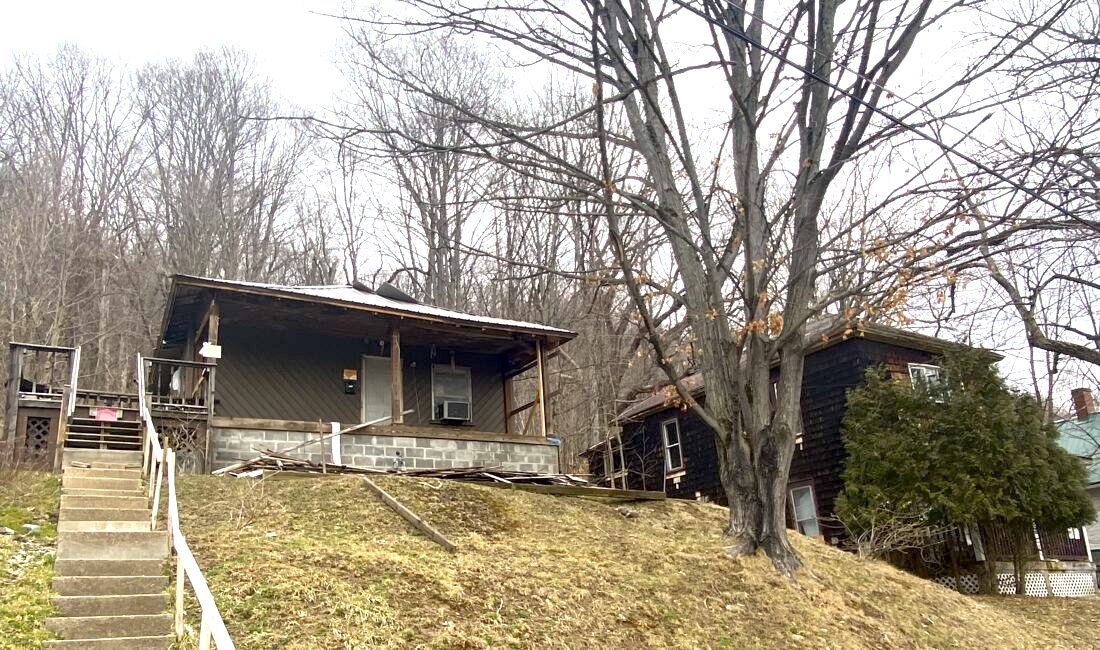
Times Observer file photo by Josh Cotton Pictured is a Warren home that was to be demolished after it was designated as blighted.
As small rural townships and large cities across Pennsylvania struggle with managing blighted properties, the General Assembly sees ways to empower local leaders to take action.
One step would be to create a statewide registry of blighted properties, taking the onus off some localities that lack the funds or labor. The list would also identify offending owners who have, so far, remained relatively anonymous thanks to poor recordkeeping.
The legislation would create a Property Maintenance Code Violations Registry to be managed by the Department of Community and Economic Development.
“This is really motivated by trying to help those communities in Pennsylvania that are sort of at their wits’ end,” said Rep. Jim Sturla, D-Lancaster, the bill’s sponsor. “Looking at ways to generate dollars for them to, in one sense go after – and when I say go after — to engage with the owners of those properties that say, ‘Either you clean it up or we end up fining you to the point where we will take you to court and eventually get you to a sheriff’s sale.'”
The registry isn’t the first crack the General Assembly has taken at blight in recent years. Last year, dozens of counties saw a provision for their countywide demolition fees expire. Another bill approved last year expands the types of tax incentives and abatements that can be used to rehabilitate properties.
A quick fix for property blight, however, isn’t on the table. Sturla anticipates more state-level action will be needed.
“If all we do is stem the tide, at least we’ve gotten that much accomplished,” he said. “Because blight begets blight. And I want to stop the blight and start to reverse it.”
Finding the bad actors who profit from blight and devalue neighboring properties, Sturla said, can be a big first step. Flagging these owners for the benefit of municipalities, banks, and realtors could encourage better behavior.
“This is one of these things where there are people that make a living out of just abusing property and draining every last cent out of them, and then walking away,” Sturla said. “Because it’s hard to keep up with them and it’s hard to prosecute them on anything … I don’t want those bad actors in my town or any town in Pennsylvania.”
For rural areas, a statewide registry would do work that they can’t afford to do. Land banks – which take on and remediate blighted properties – can work in wealthier or more urban areas, but may do little for the needs of rural Pennsylvania, as The Center Square previously reported.
Some cities, meanwhile, have taken more action on blight. In Erie, the city council passed an ordinance to charge registration fees for blighted properties — and levy fines for properties that don’t do so. Leaders there also support a statewide blight registry.
“It’s terrific to see the state take responsibility for this,” Erie City Council President Chuck Nelson said. “Data has become currency in this current economy and this appears to help support communities and their efforts to revitalize.”
The end goal, Sturla said, is not to move the responsibility for blight to the state, but to aid localities in fixing the problem.
“I want to at least give those towns the hope that they can see light at the end of the tunnel,” Sturla said.
Local News

Engine of excitement
Purse inspections part of theater ‘policy’
Hospice planning Summer Wonders Raffle
Hospice of Warren County is excited to announce their Summer Wonders Raffle. Residents can take a chance on ...
‘Coffee Connection’ event set for Youngsville
The Warren County YMCA is partnering with the Bean Bank in Youngsville for a “Coffee Connection” for all active ...
Overdose Prevention Program is expanding in rural counties
Pennsylvania Department of Drug and Alcohol Programs (DDAP) Secretary Dr. Latika Davis-Jones highlighted Tuesday ...
House passes digital advertising tax
The state House of Representatives has passed a digital advertising tax - though what kind of reception the ...