Brooks, Mastriano propose fentanyl testing in hospitals
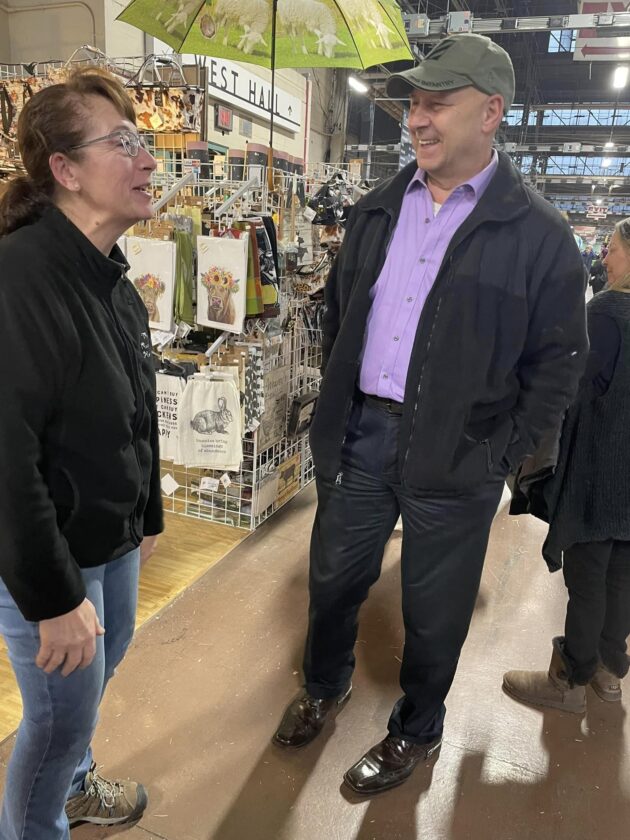
en. Doug Mastriano, R-Chambersburg, is pictured at the state Farm Show recently.
Sen. Michelle Brooks and Sen. Doug Mastriano want hospitals to include fentanyl testing when trying to diagnose a patient’s condition.
Brooks, R-Greenville, formerly represented part of Warren County in the state Senate, though redistricting shifted her constituency to Crawford, Lawrence and Mercer counties. She and Mastriano are circulating a co-sponsorship memorandum for legislation that would make sure fentanyl testing is included in drug toxicological testing at all hospitals.
“Testing for fentanyl can play a key role in saving someone’s life,” Brooks and Mastriano wrote in their memorandum. “It can alert a provider that a patient has fentanyl in their system, warn a patient they have ingested fentanyl, or connect people to treatment or a prescription for naloxone. Most current routine hospital drug screens do not capture fentanyl use and some patients are unaware that they are using fentanyl, as it is increasingly found in methamphetamines, cocaine, and counterfeit drugs such as Xanax.”
Brooks and Mastriano said there are low-cost testing options available to hospitals.
“Fortunately, rapid fentanyl testing does exist,” the senators wrote. “There are three low-cost reagents currently approved by the FDA that can be used with a chemical analyzer to determine if an individual has fentanyl in their system.”
Mastriano was successful in shepherding Act 158 into law in 2022. The law requires first responders — including law enforcement and emergency medical services — to report overdoses into an electronic statewide system that will be developed and maintained in consultation with the Department of Health. Standardizing use of a statewide system will help local officials identify emerging trends, mobilize an emergency response and alert law enforcement and EMS to the existence of fentanyl-laced drugs in a particular region. In 2021 alone, the CDC said more than 100,000 people died nationwide from fentanyl and opioid overdoses, a 15% increase over the year before. Pennsylvania ranks third nationwide for overdose fatalities.
He also introduced Senate Bill 1295, known as Tyler’s Law, which would impose a 25-year mandatory minimum for fentanyl distribution resulting in death. The sentence would only cover monetary transactions and wouldn’t apply to drug users that share with friends and family or seek medical help when another individual is overdosing. The legislation was not passed through the Judiciary Committee during the 2022 session, and will be reintroduced for the 2023-24 legislative session.
Local News
Pellegrino’s aims to become year-round gathering place
What began as years of clearing brush and building trails by hand has grown into a new vision for gathering in ...

Chautauqua Belle celebrates 50th birthday on Chautauqua Lake
City holds hearing on grant priorities
City of Warren officials held a hearing seeking public input as they begin planning for the 2026 Community ...

Report provides glimpse into Bush Industries’ final days
In the Lehigh Valley, the power bill is on the ballot
The largest structure proposed in Pennsylvania's 7th congressional district is a building that will, once ...