Planners settle on ammo storage regulations
The Warren City Council has tried to pave the way for ammunition production in the city limits.
A draft ordinance presented to the city’s Planning Commission on Wednesday, according to one member though, would have essentially restricted that kind of business development.
Commission member Mike Suppa had previously expressed concern about the safety of an ammunition entity being located by United Refining but was told it was not a concern as the building could be made blast-proof.
He raised the issue again on Tuesday.
City staff’s recommendation presented in April was to allow the wholesale storage of ammunition by special exception, meaning it would require approval by the Zoning Hearing Board. The recommendation would also limit such development to industrial areas and not within 500 feet of residential areas, schools, parks, churches and other communal areas.
“If the buildings are blast-proof,” Suppa said, without concerns about flammability, “then why does it need to be 500 feet (as a buffer?) That seems onerous to me.”
The commission recognized quickly that the options for where to locate such a facility are few and far between.
“I’m trying to conceive of where you can place it,” Commission member Ray Pring said.
“There really isn’t a good place within the city limits,” Commission chair Angie Dart added.
Suppa said that it “seems like these regulations almost ensure” such development can’t occur in the city, counter to city council’s expressed intent for examining the issue. “It just doesn’t connect the dots to me.”
“We’re not able to say, ‘You can’t do it at all,'” Randy Rossey, the city’s director of codes and planning, said. “(We) have to give guidelines.”
“Where would you actually be able to do this?” Pring asked. “I’m not sure how to cure that.”
Suppa asked if there was a “rush to pass this so it can go to council” and called the 500 feet “way overly restrictive.”
Rossey said that language was taken from other ordinances where municipalities have implemented such regulations.
“I’m comfortable with the 500 feet honestly,” Dart said, suggesting that schools and daycares are different from industrial zoning. Which is “more geared to that kind of development and that kind of risk.”
She said if there is “going to be a place, it’s going to be down there” by the refinery.
The commission ultimately approved a recommendation with a 250 foot distance and after action on the 500 foot restriction failed for lack of a motion.
Local News
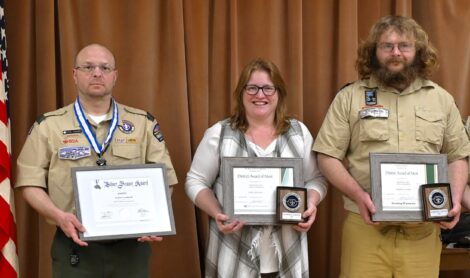
Chief Cornplanter Council holds volunteer recognition dinner
Documents reveal depths of Tidioute water crisis
More than two months after a boil water advisory was first issued for customers of the Southwest Warren County ...

‘Empowering’ example
State invests $21M to support victims of crime, prevent youth violence and delinquency
This week, members of the Pennsylvania Commission on Crime and Delinquency (PCCD) approved more than $21 million in ...
Domestic incident led to felony gun charges
A domestic incident in February led Warren police officers to get the federal Bureau of Alcohol, Tobacco and ...