Feds seek comment on forestry project
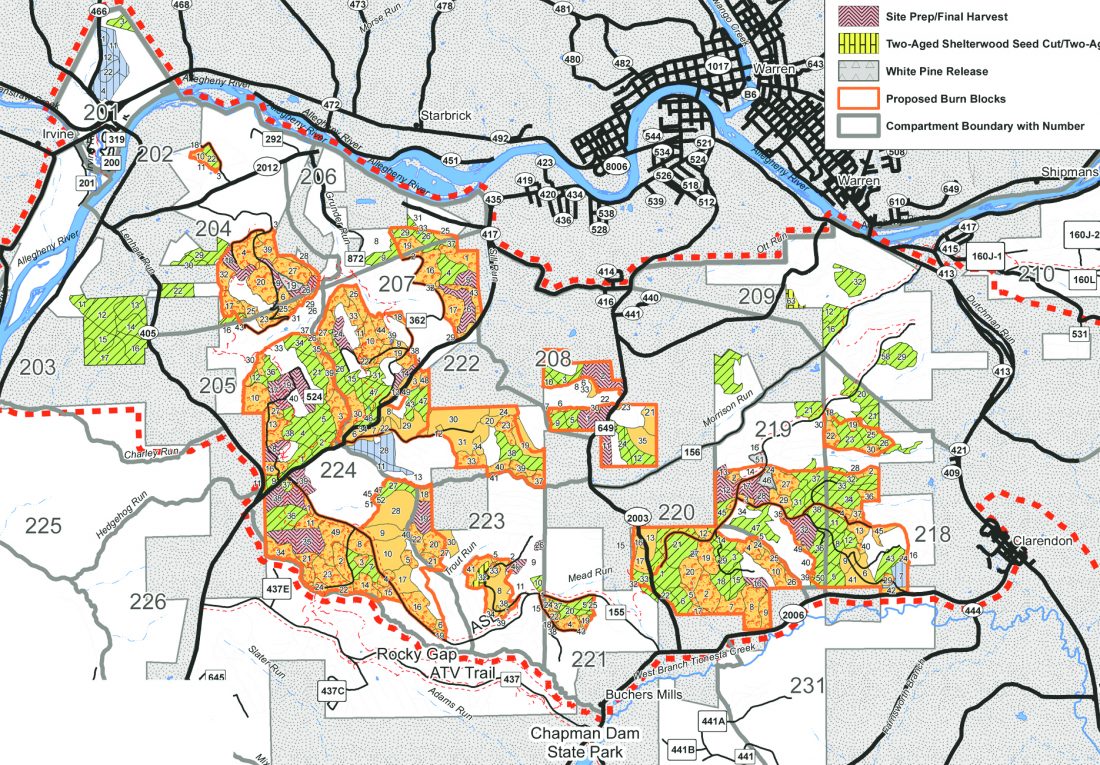
Photo from the Allegheny National Forest This map shows the scope of the ANF’s Pleasant Project which will utilize a myriad of tools to meet several objectives such as improvements to forest health and combating non-native invasive plants.
Federal officials have released a draft environmental assessment for a project aimed at improving the health of the forest that includes land in several Warren County municipalities.
The proposal — a draft environmental assessment — is out for review for the project which comprises over 44,000 acres in Brokenstraw, Conewango, Mead, Pleasant and Watson townships.
“The purpose of Pleasant Project is to improve forest health, reduce nonnative invasive plants, restore stream conditions, improve wildlife habitat, and maintain the transportation system for access, and safety,” the draft assessment states.
The project comprises a total of over 44,000 acres acres
“The majority of treatments are proposed within a 24,427 acre area that includes 13,020 acres” of federal lands, a scoping document previously explained. The total area is “much larger” to “encompass additional invasive weed treatments proposed in the Allegheny Islands Wilderness and Hickory Creek Wilderness.”
The ANF proposes the following actions in the area: improvements to forest health through tree harvesting and reforestation; oak restoration; prescribed fire; treatment of non-native invasive plants; wildlife habitat improvements; and aquatic habitat and stream improvements. Transportation actions include adding roads to the Forest Service transportation system, road management changes, and improvements to existing roads.
Silviculture treatments (silviculture means, essentially, the growing of trees) include 1,990 acres of tree harvesting and over 2,500 acres of prescribed fire.
An additional 8,550 acres are identified for non-native invasive plant treatments. That can include manual treatment such as pulling and digging, mechanical treatments such as brush-cutting and mowing as well as herbicide treatment.
Transportation elements include 1.3 miles of new forest road, 13.2 miles to be resurfaced and over 10 miles being added to the National Forest Transportation System.
Local News
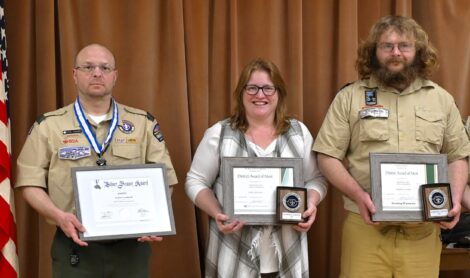
Chief Cornplanter Council holds volunteer recognition dinner
Documents reveal depths of Tidioute water crisis
More than two months after a boil water advisory was first issued for customers of the Southwest Warren County ...
‘Empowering’ example
State invests $21M to support victims of crime, prevent youth violence and delinquency
This week, members of the Pennsylvania Commission on Crime and Delinquency (PCCD) approved more than $21 million in ...
Domestic incident led to felony gun charges
A domestic incident in February led Warren police officers to get the federal Bureau of Alcohol, Tobacco and ...