
Panel hears from hospital CEO on vaccine
-
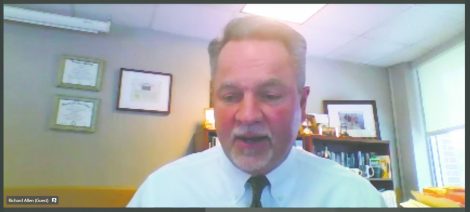
- Photo from pahousegop.com live stream Warren General Hospital CEO Rick Allen testifies virtually.
-
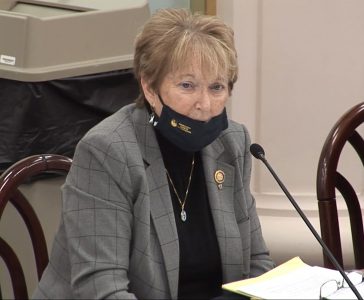
- Photo from pahousegop.com live stream State Rep. Kathy Rapp, chair of the House Health Committee, presided over a public hearing on Tuesday aimed at gathering information on the distribution of the COVID-19 vaccine.
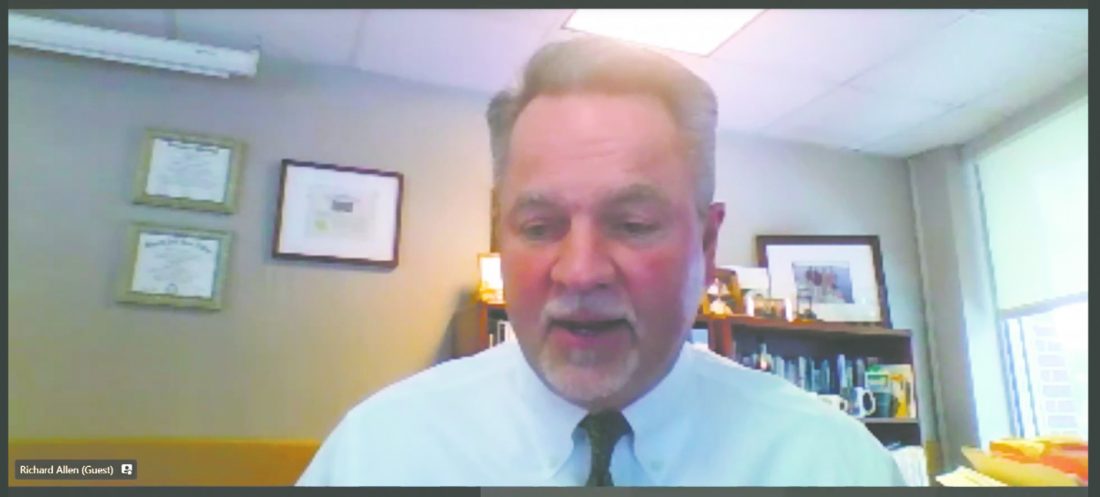
Photo from pahousegop.com live stream Warren General Hospital CEO Rick Allen testifies virtually.
Supply isn’t meeting demand.
That means that many people across the county who want the COVID-19 vaccine have to wait — even if they’re in a group that’s eligible to receive the inoculation.
But are there other factors at play than simple economics?
A state House Health Committee hearing on Tuesday aimed to get at those issues.
State Representative Kathy Rapp, who chairs the Health Committee, said the hearing was meant to be a baseline with subsequent hearings likely to follow.
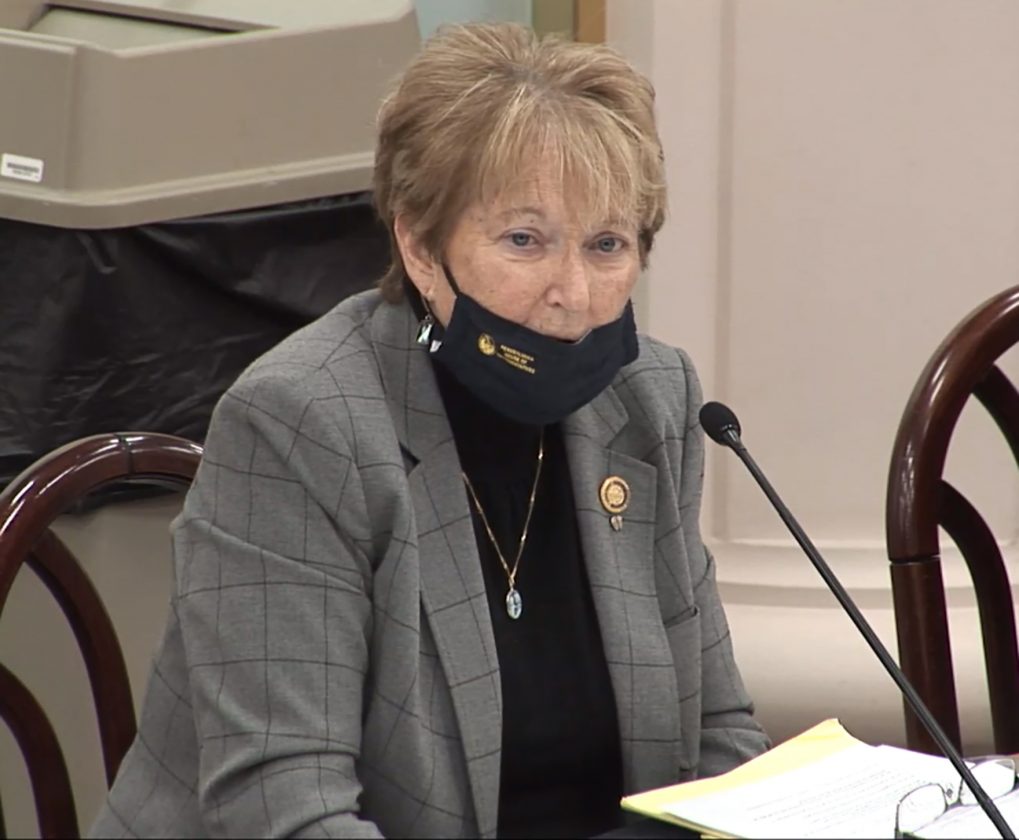
Photo from pahousegop.com live stream State Rep. Kathy Rapp, chair of the House Health Committee, presided over a public hearing on Tuesday aimed at gathering information on the distribution of the COVID-19 vaccine.
Representatives from an Allegheny County health clinic, the Department of Health and CVS and Walgreens provided testimony.
So too did Warren General Hospital CEO Rick Allen.
“We are now down to a very manageable number of COVID positive inpatients,” he told the committee, in the wake of a December and early January peak.
He said that planning for vaccination started with county Public Safety staff last fall.
“Like many community hospitals, Warren County does not have a dedicated health department,” he said, suggesting there is a void in communication and resources “in the face of these uncharted pandemic waters.”
Allen was also critical that there has not yet been clear guidance on the state’s vaccine plan, telling the committee that while sites have been selected in Warren County for mass inoculation it’s unclear how the vaccine would be acquired or who would administer it.
He shared that the first shipment of the Moderna vaccine that WGH received was a total of 600 doses for the hospital’s 644 staffers. He told the committee that approximately 70 percent of the hospital’s staff has been vaccinated. All were offered the option.
Planning had started to shift from the 1A to 1B phases when on Jan. 19 the state moved all people 65+ into the phase 1A.
“This change was significant,” Allen said, and set off “an immediate rush to the phones, in person visits to our hospital and an overload of emails. Everyone over 65 in Warren County wanted their faccine and wanted it immediately.”
That change by the state made 10,000 seniors eligible in Warren County alone.
“Hospitals such as ours,” he said, “are apparently responsible and will have an extremely difficult time… to administer this number of vaccine. Help is required.”
He emphasized to the committee that the hospital will continue to vaccine “as supply and resources allow” but raised several key questions that need answered: In communities without a health department, who is in charge and making decisions regarding mass or public inoculation? What is WGH’s role? How will the information be shared publicly?
Rapp said she was aware of a neighboring county that ran a clinic, receiving “far more doses of the vaccine than Warren County.
“Several of our county residents have flocked to the other county for vaccines,” she added.
Allen said he heard about that clinic that resulted in approximately 2,000 vaccines being administered.
“All in all, my comment would be ‘Good,'” he said. “We want to get the vaccine out.”
However he said it does “create confusion” and said he has a “fear” that county residents will put their name on lists in multiple counties and at multiple sites.
He said the hospital is receiving “multiple, multiple calls daily” and has been taking names and working on consent forms, discouraging residents from traveling out of county for the vaccine.
Allen said WGH ordered 2,000 doses a couple weeks ago and received 400.
“We do what we can and we move forward,” he said, describing the shipments as like opening a Christmas gift.
He said there’s been no explanation for the discrepancy. “I’m assuming… whomever is in charges (says) ‘Here’s an allocation and that’s all we can do.'”
Representative Kate Klunk of York County asked Allen what the state can do to assist.
“What are you asking of us?” she asked.
“Communication is critical,” Allen said. “We can’t turn to the health department,” suggesting that local Department of Health representatives have more “clear direction.
“If they had resources to set up clinics within the community to inoculate… then they could be a supporting agency like counties with health departments. In the alternative, if it will fall on us… as the hospital serving our county, then clearly we need that communication and that direction.”
He said WGH would accept that responsibility but would need resources and vaccine as well as the authority to communicate to the public.
“We still run a hospital here. Although we’re doing quite well, that’s because we have a lean and mean staff,” he said, noting they don’t currently have staff to handle large amounts of vaccinations.
“We would have to build those resources up, get the vaccine and begin rolling it out,” he said. “The vaccine is free. The materials are free. We’re not getting paid to do this.”
Rapp said that she’s sure there will be follow up hearings in the near future.
She said people are anxious and that there is a “certain level of panic.”
“Those of us in our communities need to work together with our providers (to) make sure people have information if they choose to be vaccinated (and) what the process is to follow through with that.”
Local News
Bush Industries closing its doors
Chautauqua County man facing child porn charges

Debate rages on use of taxpayer money for security at Shapiro’s private home

Comedian Billy Gardell to perform at Struthers
Annual Bike Rodeo, Free Books fest set for Saturday
The Warren Police Department, in partnership with the Warren Lions Club and Warren Cycle Shop, will host its third ...
One felony charge dropped against city man
An unlawful contact with a minor charge was dropped against a Warren man at his formal arraignment recently in the ...