
‘Grand Old Dame’
Former city resident Edith O’Hara, 103, dies

Photo courtesy of the OáHara family Edith O’Hara is flanked by her daughters, Jenny (left) and Jill, during a trip to their former home in Idaho.
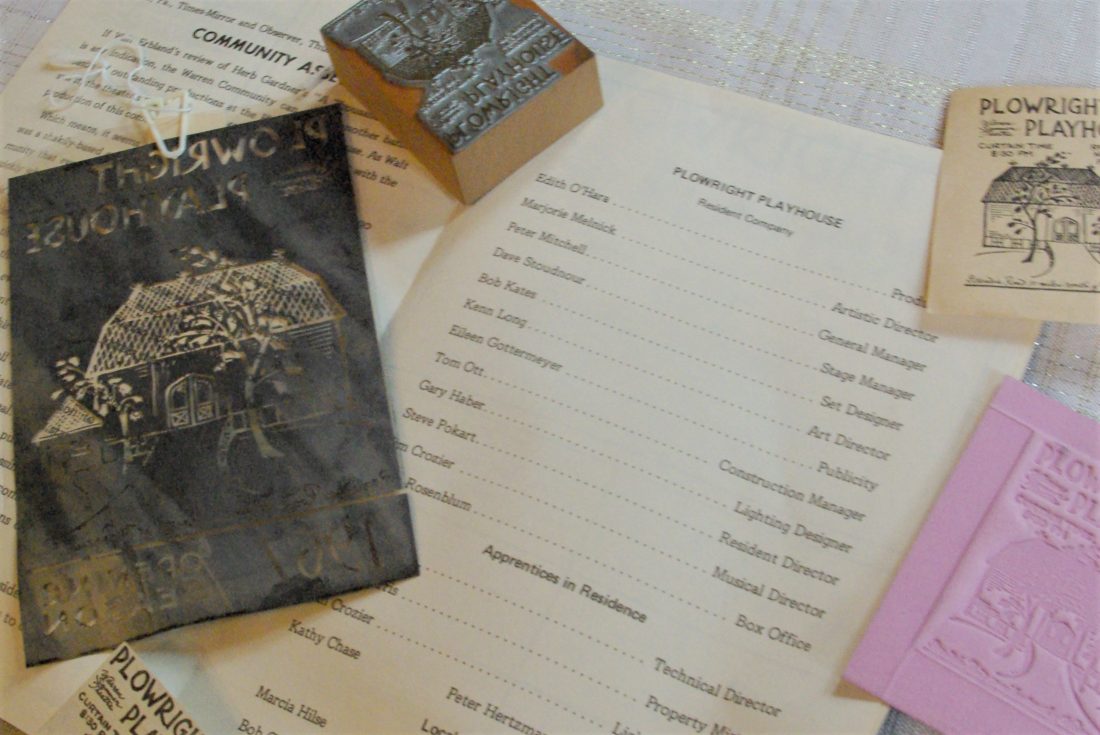
Photos courtesy of the Warren County Historical Society. Pictured is a playbill and other local theater memorabilia featuring Edith O’Hara
Photo courtesy of the OáHara family Edith O’Hara is flanked by her daughters, Jenny (left) and Jill, during a trip to their former home in Idaho.
Photos courtesy of the Warren County Historical Society. Pictured is a playbill and other local theater memorabilia featuring Edith O’Hara
Trending
Before Edith O'Hara moved to New York City and started the 13th Street Repertory Company, she started a youth theater program in Warren and opened the Plowright Playhouse in Scandia.
O'Hara died at the age of 103 this month in the apartment on the third floor above her Off Off Broadway theater. She had been an influential leader for nearly 50 years and the New York Times recognized her with an obituary story, including information from previous interviews.
Born in Idaho, Edith Hopkins had little exposure to theater, according to the New York Times. Then, in seventh grade, she played George Washington in a school play. That experience kindled a life-long passion for theater.
She shared that passion when she came to Warren.
"She was the first theater for children," Suz Haupin, a student of O'Hara's in the 1950s said. "I think I was in grade school when I first started children's theater in her house on Conewango Avenue."
Haupin, like many of the students in the theater, grew up with and was friends with O'Hara's children – Jill, Jenny, and Jack.
They all went to Warren High School and went on to careers in the performance arts.
Jill O'Hara remembers living on Upper Conewango Avenue and having nature all around.
"That was near woods and a stream," she said Thursday. "Even in the winter I would be wading in the stream."
"It was a real small town feeling," she said. "I just loved that."
Before she went on to become an actress, Jill O'Hara had her first public performance in Warren County – possibly at the Warren County Fair.
"My first singing performance there was at an annual fair," she said. "I played the guitar and I sang."
"There were still crates of chickens on the stage from the judging," she said, and those chickens joined in "every time I hit a high note."
"That's what I loved about Warren," she said.
The family moved from Upper Conewango to a home near Beaty-Warren Middle School, and then to Second Avenue.
Wherever they lived, the children's theater also found a home.
"She was always very interested in theater and wanted to be involved in it," Jill O'Hara said.
Her mother told the New York Times that the theater was initially a way to help children speak more clearly. She "thought the kids needed help with their pronunciation and diction."
It may have started that way, but it became much more.
"Edie was always taking in kids, putting their self-esteem back together," Haupin said. "She was great with kids. Not judgmental about your talent. She just brought out the best in whoever was part of her theater."
Jill O'Hara had moved away to begin her career when her mother moved her local theater efforts out of the house and into a larger venue.
She opened a theater in Joe Plowright's barn on Scandia Road and called it the Plowright Playhouse.
"This project, which such a short time ago was a shakily-based experiment, is achieving a permanence in the community that even its most ardent boosters couldn't have hoped for so quickly when they swung open the doors to the converted barn," a story in the June 12, 1969, Times-Mirror and Observer said. "This reflects credit on those who planned, initiated, and financed the undertaking. It applauds with more vigor than the clapping of a thousand hands the abilities demonstrated by those who acted in, directed, and managed the earlier productions at more than a little personal inconvenience… But above and beyond all this, the Plowright Playhouse has provided a much needed and appreciated dimension to the attractiveness of Kinzua Country's 'tourist' appeal. It has staged the type of entertainment which has not only pleased its public but has furnished much food for thought on some of our most pressing social problems… In short, the Plowright Playhouse can be considered a community asset in every respect. We wish it luck in all the years to come."
The Plowright is where Charmaine Check, who has been a fixture in the Warren theater community for decades including as youth music and theater director, met her.
Charmaine was from Erie. She didn't grow up in O'Hara's children's theater. Her sweetheart, later her husband, John, had.
"John was in her children's theater," Check said. And he brought her to Warren.
"When I started dating John, we went up to Plowright to see the Fantasticks," she said. "I do remember meeting her. John had to take me over and introduce me."
Over the years, they kept in touch. "John and I went to New York a couple of times, caught up with Jenny, tried to catch up with Jill."
She regrets not visiting the 13th Street Repertory. "We never made it down to the theater," she said.
Check and Haupin held O'Hara in high regard.
"A grand old dame," Check said.
"Amazing. Just amazing," Haupin said. "She had a passion for theater. She would die for it."
O'Hara lived the theater and chased her dream to New York City, opening 13th Street Repertory in 1972.
"She went on to fill her dream," Haupin said. "She was sadly missed here."
The 13th Street Repertory Company has been described as "an initial stop" and "a nurturing place" according to the New York Times story.
"That theater was filled with aspiring actors and writers," Haupin said. "Edie started that theater out of nothing. Same thing with that barn."
O'Hara also lived at the theater.
"She lived on the third floor," Haupin said. "She walked that, up and down, every day. She was still doing that at 95."
The theater and its grand dame were featured in the New York Times in 2017 in a piece called 'The Little Theater that Could.'
"She's done terrific things," Haupin said. "She started here in Warren."