Then & Now
Warren’s 1914-’15 Jordan Tabernacle
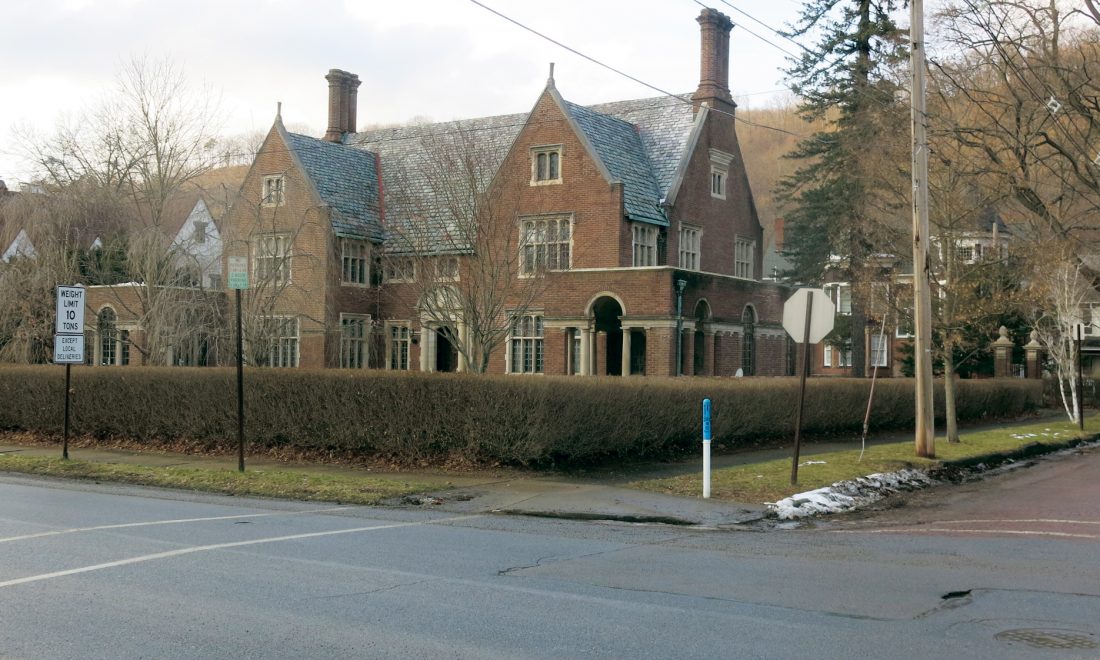
Photos submitted to Times Observer/Warren County Historical Society Our look into this started when Brian Ferry and I were looking for our next “Then-Now” subject. I had stumbled across a photo of the “Jordan Tabernacle” in the postcard collection of the Warren County Historical Society. The Historical Society knows it was located at Third and Poplar and that it stood in the 1910s prior to the Logan-Wallace House (seen prominently in the “Now” photo), constructed between 1918 and 1920.
-
- Photos submitted to Times Observer/Warren County Historical Society Our look into this started when Brian Ferry and I were looking for our next “Then-Now” subject. I had stumbled across a photo of the “Jordan Tabernacle” in the postcard collection of the Warren County Historical Society. The Historical Society knows it was located at Third and Poplar and that it stood in the 1910s prior to the Logan-Wallace House (seen prominently in the “Now” photo), constructed between 1918 and 1920.
-
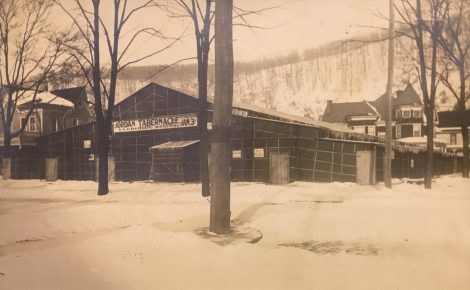
- Photos submitted to Times Observer/Warren County Historical Society Our look into this started when Brian Ferry and I were looking for our next “Then-Now” subject. I had stumbled across a photo of the “Jordan Tabernacle” in the postcard collection of the Warren County Historical Society. The Historical Society knows it was located at Third and Poplar and that it stood in the 1910s prior to the Logan-Wallace House (seen prominently in the “Now” photo), constructed between 1918 and 1920.
A period of religious fervor in Warren in 1914 and 1915 also appears rooted heavily in the prohibition movement.
And that church-state line looks further blurred by an attempt from the apparent evangelist to run for a seat in the General Assembly.
Regardless of how you view the Jordan Tabernacle, there’s no denying that it’s an interesting factoid in our community’s history.
Our look into this started when Brian Ferry and I were looking for our next “Then-Now” subject. I had stumbled across a photo of the “Jordan Tabernacle” in the postcard collection of the Warren County Historical Society.
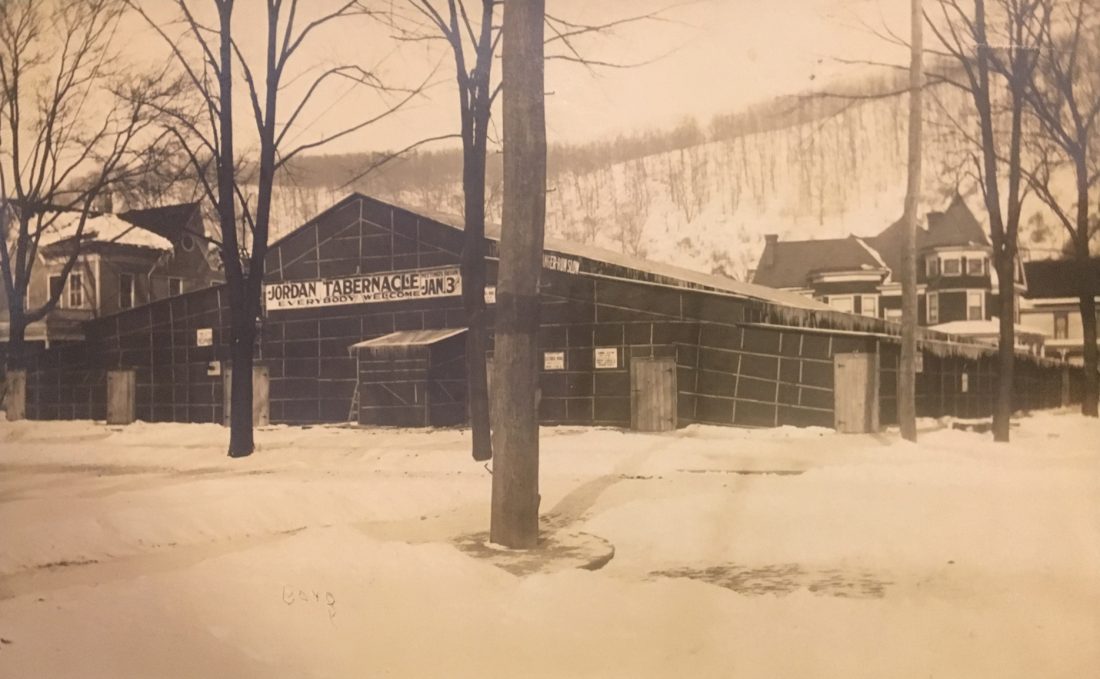
Photos submitted to Times Observer/Warren County Historical Society Our look into this started when Brian Ferry and I were looking for our next “Then-Now” subject. I had stumbled across a photo of the “Jordan Tabernacle” in the postcard collection of the Warren County Historical Society. The Historical Society knows it was located at Third and Poplar and that it stood in the 1910s prior to the Logan-Wallace House (seen prominently in the “Now” photo), constructed between 1918 and 1920.
The Historical Society knows it was located at Third and Poplar and that it stood in the 1910s prior to the Logan-Wallace House (seen prominently in the “Now” photo), constructed between 1918 and 1920.
The Christian Advocate reported on the tabernacle in Jan. 1915.
“Warren, Pa. Has Been Deeply Stirred by a six weeks’ union evangelistic tabernacle campaign under the leadership of Evangelist C.G. Jordan and his strong party, composed by R.E. Mitchell, Mrs. Rae Muirhead, and A.C. Joy,” the report states. “Over 1,600 persons, including new converts and reclaimed Christians, ‘hit the trail’ and signed decision cards, and of this number about 900 have united with the churches up to this time.
“Our three Methodist churches, under the leadership of the Revs. White, Barr and Galbraith, entered most enthusiastically into the campaign and are receiving large numbers of new members; 500 have united with these churches in the two weeks since the tabernacle meetings closed and many more are coming. As one of the after-effects of the campaign, a hard no-license fight for Warren County is now being waged.”
The meetings appear to have occurred on more than one occasion — within January and February 1914 and 1915.
The Expositor included an item in October of 1914 that stated that the Warren campaign of Charles G. Jordan and Ralph Mitchell “expected to close their Warren, Pa. Campaign. February 14, but because of the great interest and for the sake of the value of the anti-liquor election on February 22, Mr. Jordan consented to stay until Feb. 21.
“Before one of the evening meetings, 5,000 men and women paraded to the tabernacle to the music of four bands, in a demonstration against liquor.”
That anti-liquor march appears to have occurred on Feb. 2, 1914, though the record isn’t entirely clear.
A Warren Evening Times report from Feb. 13, 1915, refers to the “great last weeknight” and encouraged people to come prepared” for a “grand final service.
“Of the many persons who last came down the aisles of Jordan’s Tabernacle, practically all came without the aid and encouragement of their friends.”
The Expositor report also noted that “their third meeting closed at Warren, Pa., February 14, with about 1,800 decisions.”
“Decisions” probably refers to Christian conversions.
Prohibition efforts appear to have been a key element of the tabernacle meetings.
The Congressional Record of the 63rd Congress — 1913-1915 — also notes a petition received by the “tabernacle builders for Jordan evangelistic campaign, Warren, Pa.” that was “praying for the passage of the national prohibition resolution…”
The Lyceum Magazine reported that a “Dr. Charles G. Jordan” a “well-known evangelist farmer” was attempting to run for the state legislature, though it’s not beyond the realm of possibility that this is a different person.
If anyone has any additional information on the Jordan Tabernacle, feel free to get in touch with me.
Local News
Gas prices surge 43 cents in 3 days
It was a nice break while it lasted. After a two-week break, gas prices shot up 43 cents a gallon over the ...
Library events feature Mother’s Day Tea, soap-making class
The Warren Public Library has announced two upcoming community events in May, offering residents opportunities to ...

Prom with Purpose

Founders Day drawing brings $500

Cummins increases 2026 revenue guidance