General William Irvine’s Land Grant
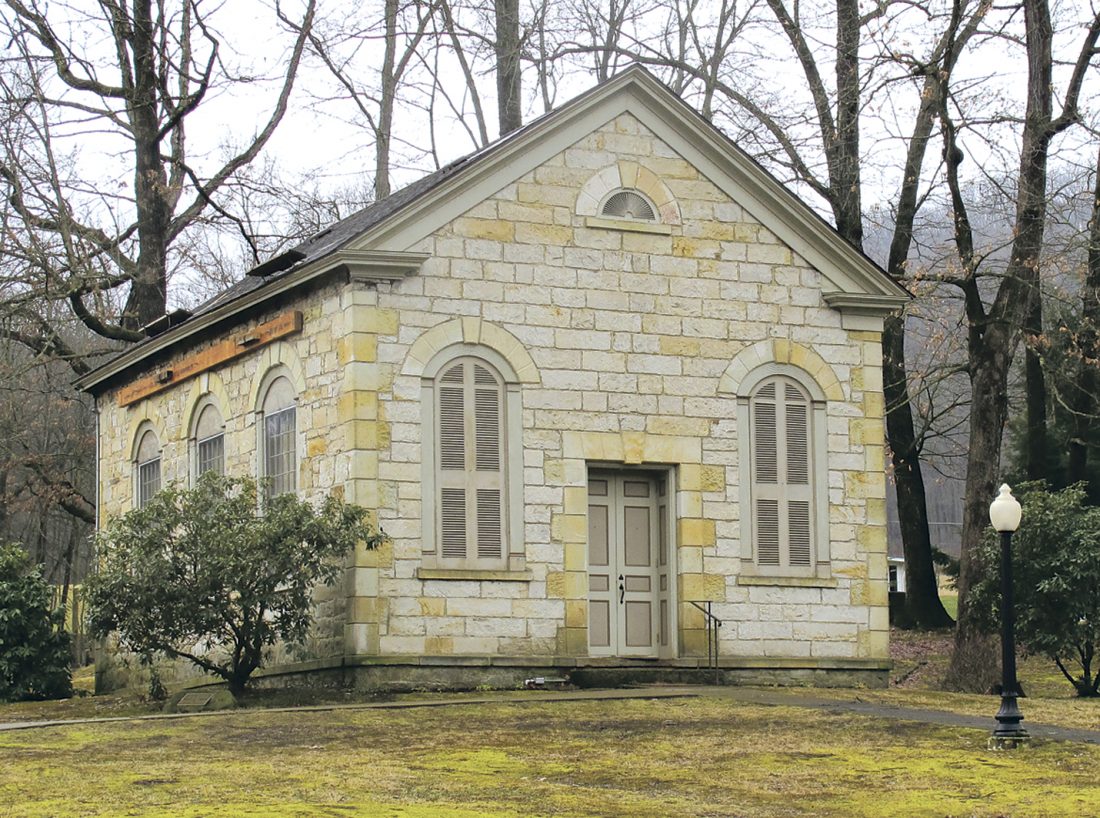
Times Observer file photo The Old Stone Church in Irvine
Many towns, cities and villages have been named after people who originally settled an area. Sometimes those names stick. Such is the case with Irvine.
Irvine is an unincorporated community in Brokenstraw Township located near the junction of routes 6 and 62, approximately 6.4 miles west of Warren.
Historically, the village and post office have been called Irvine, and the railroad stop, Irvineton.
According to research from the late Ernest C. Miller, both were named for Brigadier General William Irvine.
Irvine was born in Ireland, served as a surgeon in the British Navy and emigrated to Carlisle, Pa., in 1793. During the Revolutionary War, he commanded the 6th Pennsylvania Regiment and was commandant of Fort Pitt for some years. In 1795, he surveyed the Donation Lands in northwestern PA and discovered the area known as Irvine. In 1792, he obtained warrants for several tracts and these holdings were surveyed in 1795.
According to “Bits from the Brokenstraw Valley, Old Time Tales of Warren County,” John Andrews settled on a tract of land on which the Irvine Mansion stood around 1798, built a sawmill near the spot and the first distillery in the county, at the mouth of what is known as “Still House Run.” The first squatter on the tract above this and the mouth of the creek, was John Holman, in 1795, but finding soon after that Gen. William Irvine had a warrant for it, sold out to him for a rifle, and floated off in a canoe to a point on the river below.
In 1797, Callender Irvine, William’s first son, then a young man, undertook efforts to create the settlement and perfect the title his father had secured, aided only by his faithful servant, known to history as “Black Tom.”
The first house built and land cleared was where the Irvineton depot stood, which was abandoned for higher ground after the “pumpkin flood” of 1805. In the fall of 1805 the entire Brokenstraw Valley was swept away by a flood, called the “pumpkin flood” because it carried away large numbers of pumpkins.
Callender Irvine was a lawyer, Indian agent, and finally Commissary General of the United States. While he developed his Warren county lands, Callender’s only child, who became Dr. William A. Irvine, resided at the estate.
He arrived in the Brokenstraw area in 1825 and for the next 61 years engaged in a long series of improvements; he erected buildings, houses, barns, and maintained a general store and a grist mill. Some of his lands produced oil following the Drake Well in 1859, and he was connected with transporting barrels of crude oil from the lower oil field to Irvine for rail transportation to eastern points.
Unfortunately, all of his enterprises lost money and he was deeply in debt to his father-in-law all throughout his life.
William Irvine’s daughters were Margaret, from whom no Irvine descendants survived, and Sarah, who married Dr. Thomas Newbold in Erie in 1863. The couple had five daughters but only one of them, Elizabeth, ever married. She married Edward L. Welsh in September 1889. Finally, with the death of Miss Esther Newbold at the Irvine house during April 1963, at the age of ninety, the Irvine property passed to her older sister’s heirs, Mrs. Caryl Roberts and Mr. John L. Welsh, Jr.
The property, still consisting of more than one thousand acres, the main Irvine house and several of the tenants’ houses, plus valuable timber tracts, was sold to the National Forge Company of Irvine, Pennsylvania, in 1966, for probable use in company expansion projects. National Forge had it razed in 1973.
Local News
State invests $20 million for school safety, mental health support
Last week, the Pennsylvania Commission on Crime and Delinquency’s (PCCD) School Safety and Security Committee ...

Manufactured homeowners, property owners in limbo as legislation stalls

Knights, Eagles soar together at ceremonies
WCCS announces merit, principal’s lists
Warren County Christian School announces its Merit and Principal's List students for 4th quarter. Merit ...
Historic Pithole City opens for summer season