
A look at the 1895 centennial of Warren
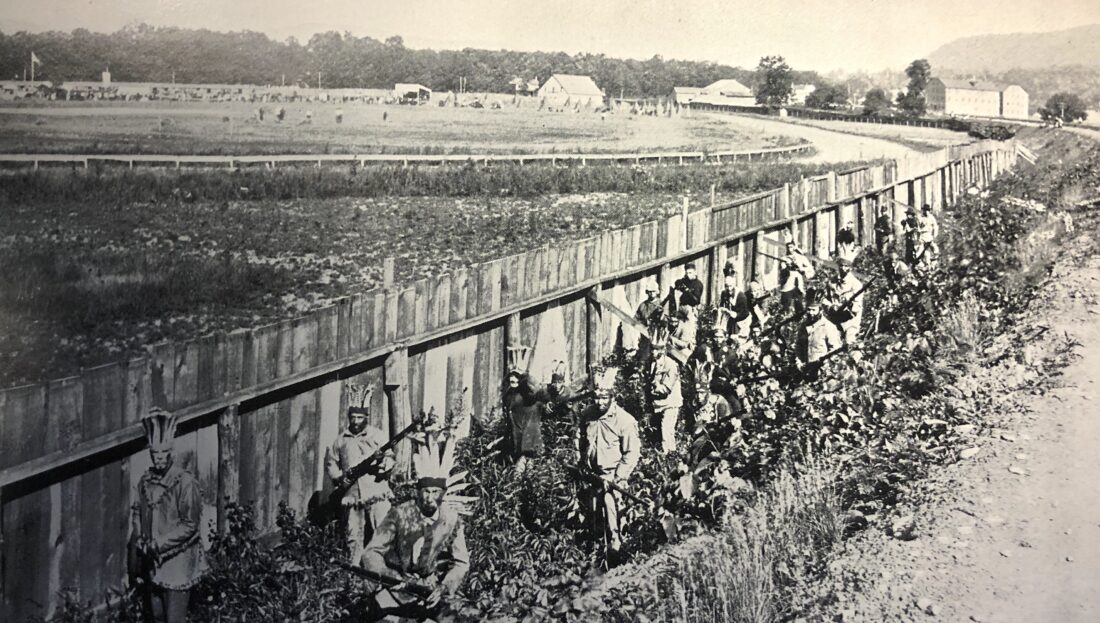
Photo from Warren Centennial An image of one of the “sham battles” that was part of the Warren centennial celebration in 1895.
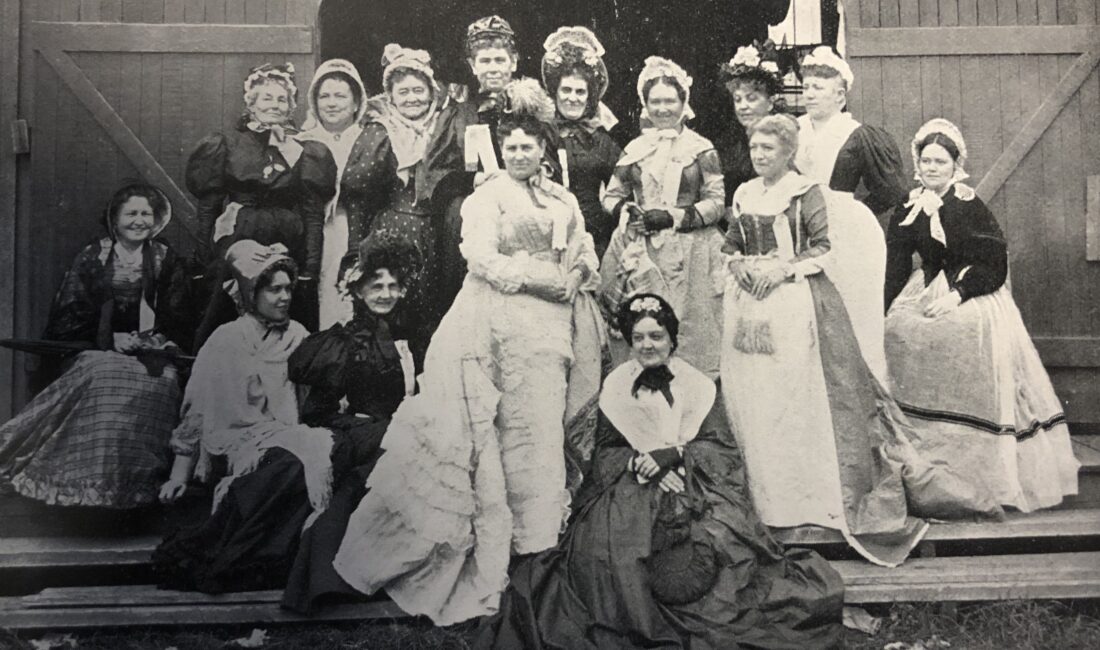
Photo from Warren Centennial A photo of unidentified members of the centennial’s planning committee.
Photo from Warren Centennial An image of one of the “sham battles” that was part of the Warren centennial celebration in 1895.
Photo from Warren Centennial A photo of unidentified members of the centennial’s planning committee.
Trending
So how do you celebrate a centennial?
Warren's 1895 answer? A parade, lots of gunpowder, speeches, fireworks and baseball.
What could be more American than that?
The Warren Mail on July 18, 1895 gives us a day-by-day breakdown of the festivities.
Before we get into that, a word about why 1895 was the centennial year – legislation was approved in the spring of 1795 authorizing Gen. William Irvine and Andrew Ellicott to perform an initial survey of Warren – 525 lots at 58 feet by 223 feet each. That work was undertaken later that year. Those lots were sold, with marginal success, the next year as far away as Philadelphia, Carlisle and Pittsburgh.
The Warren Mail summarized the centennial celebration as "A GLORIOUS SUCCESS!' and "Three Days of Happy Celebration – Pleasant Weather, Big Attendance of Delighted People, Grand Display of Exhibits, Good Speeches."
"Warren's great three-day Centennial celebration is a three-fold success," the Mail concluded. "A success in attendance, in attractiveness, in the valuable results obtained, and lastly a financial success."
They described the "principal features" of the centennial as an "Indian village, the immense number and great variety of exhibits, new and old, the sham battles, the street parade – largest and most complete every held in Warren, and finally the fireworks, which fittingly closed three days of merry-making without accident or jar."
Part of the goal apparently had been to be able to make a donation to the Warren Library and a $2,000 donation was made. The value of that donation in 2023 dollars is over $70,000.
The Mail then provided a day-by-day recap of the events which "opened pleasant and warm and the fairground was the centre of a busy crowd."
After a slate of speeches (which I already wrote about here) "all then matched to the Indian village where the chiefs of the Cornplanter and Seneca tribes were waiting on a platform…. The grandson of Cornplanter, Solomon O'Bail, 80 years old but still active, then made a short talk through the interpreter, Harrison Halftown, who afterwards translated President Stone's short speech into the Indian language."
The afternoon of day one "was occupied by sight-seeing, Indian games, old fashioned baseball, a sham battle commencing at 4 p.m. in which the white settlers were chased by Indians from the field into the blockhouse after a vigorous fight, being finally rescued by the soldier boys of Co. I, NGP."
Yes, a block house was apparently built just for this merriment.
"After supper the old-fashioned school pleased a large audience, the Indians entertained a large crowd and the well-lighted buildings afforded good chance for sightseeing."
The second day, July 3, brought "a much larger crowd of people" including a delegation from Franklin, Pa. "and also the arrival of more Indians, including the big chiefs from the Allegheny and Cattaraugus reservations."
More old-fashioned baseball was played and a reunion meal was held for residents who lived in Warren in 1840 and before.
"Another sham battle was also held between the Indians and white settles, assisted by the military, which proved very satisfactory. Nobody killed and nobody hurt, but much powder wasted," the Mail rather sarcastically noted.
"The Indian dances, singing school and dancing hall were the principal attractions of the evening, and the day closed peacefully."
Thursday, July 4, "brought the largest number of people ever in Warren, estimated at 20,000, exceeding the expectations of all. The day was fired in by the booming of cannon and firecrackers, and preparations for the big parade were seen all around. Additions were made to the decorations of bunting and flags which adorned Warren's business block and half dozen arches on Water, Second and Third streets added greatly to the occasion."
For reference sake, Water St. then is what we now know was Pennsylvania Ave.
The parade ran on Second and Market and the Mail published the lineup.
Perhaps the most interesting element of the coverage were several "CELEBRATION NOTES" that give us a better feel for the event than much of the coverage does.
"The kodak fiend was numerous." There must have been many photos taken.
"The fireworks were the finest ever seen in Warren."
"That 'tired feeling' was very common Friday 'after the ball.'"
"The only serious accident during the whole celebration was the burning of a lot of fireworks about midnight of Thursday in front of F . R. Scott's store" which started a fire, though the loss was covered by insurance.
Apparently, the event – especially on July 4 – strained the transportation system in uncommon ways.
"Every part of the county and Jamestown, Kane, Titusville, Oil City, Corry, Franklin and other neighboring cities were largely represented in the crowd which was too much for the railroads to handle with ease and comfort Thursday."
"Jamestown sent about 600 people who greatly enjoyed our centennial, but many of whom did not arrive home until 4 a . m. Friday, tired and sleepy, all on account of the inadequate facilities of the D. A. V. & P. railroad in handling a large crowd."