
A few short stories in advance of Sunday’s Spring Creek bicentennial celebration
‘Bustling little town’

Photo courtesy of Spring Creek Township An quasi-aerial photo looking down on Spring Creek at about 1900.
-
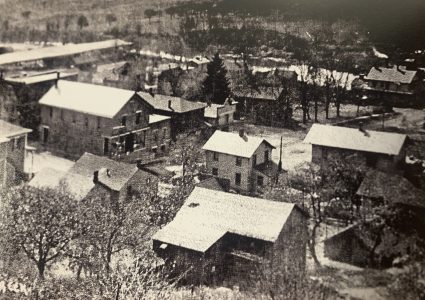
- Photo courtesy of Spring Creek Township An quasi-aerial photo looking down on Spring Creek at about 1900.
-
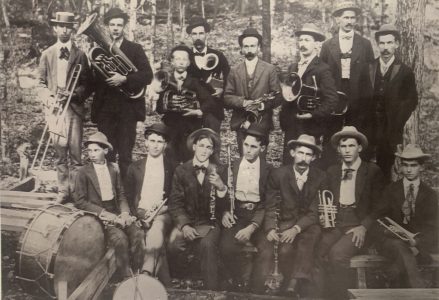
- Photo courtesy of Spring Creek Township The Spring Creek town band.
-
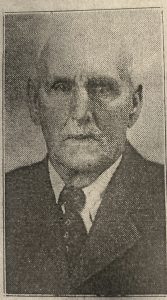
- Photo courtesy of Spring Creek Township John E. Bell, a W. Spring Creek man who fought for both the Blue and the Gray.
With a few weeks of stories on Spring Creek history in the rear view mirror, this one will just be a collection of several shorter stories I’ve gathered over the last several weeks.
LITTLE AFRICA
According to the Warren County Historical Society, free African Americans lived for a time in community in Spring Creek Township as part of the Underground Railroad.
Given the need for a certain degree of secrecy, or at least a lack of notoriety – especially in the wake of fugitive slave laws where slaveholders and their agents could come into free states to locate their former slaves and re-enslave them – it’s not surprising that I couldn’t find much on the history of the settlement.
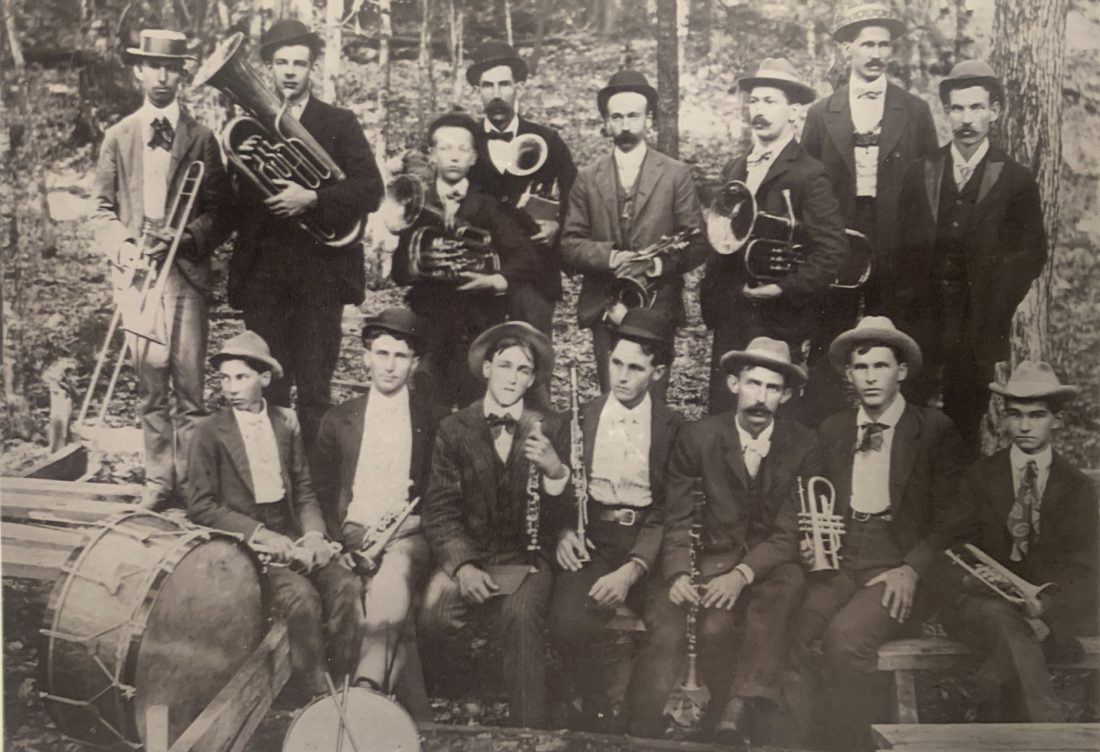
Photo courtesy of Spring Creek Township The Spring Creek town band.
That, however, doesn’t make the idea of the place any less interesting.
A blog post at authorcygnetbrown.com details that the fugitive slave laws pushed the community to head north. Safety could be found in crossing the Canadian border.
“The blacks who crossed the border, continued to help other slaves escape north by maintaining “Little Africa” as a place of refuge,” that post states. “Former slaves who escaped north in the spring would plant crops that the slaves in the summer would cultivate and the slaves of the autumn months would then harvest. This provided slaves who went through there in the winter and those of the following year with sustenance.”
‘(B)USTLING
LITTLE TOWN’
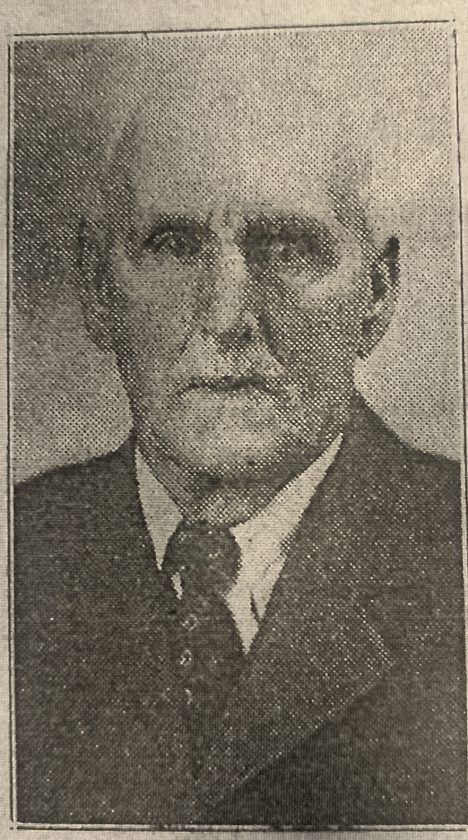
Photo courtesy of Spring Creek Township John E. Bell, a W. Spring Creek man who fought for both the Blue and the Gray.
A clipping in the township’s archive from an unidentified newspaper includes the semi-aerial photo of the town around the year 1900.
“It is difficult to (imagine) today passing through the quaint village of Spring Creek the bustling little town that once existed there,” that caption explained.
“At the turn of the century this little community boasted two churches, two general stores, a drug store, hotel, livery, ice house, railroad station and telegraph office, carriage shop, post office” and several other businesses including Beck’s tannery, pictured upper left in the photo at the top of this page.
BLUE AND THE GRAY
John E. Bell of West Spring Creek died in 1939.
He bought a farm in the area and was invested in the timber industry for many years.
But his early adulthood is quite the contradiction.
This also comes from an unidentified 1930s newspaper article that Spring Creek Township obtained at some point.
He bears the rare distinction of fighting for both the Union and the Confederates, both the Blue and the Gray.
Another unattributed newspaper article tells the story.
Bell was born in Atlanta in 1847, trained as a shoemaker and plied that trade for Confederate soldiers at the outbreak of the Civil War. He was conscripted into Confederate service in September 1863 — no older than 16 — and assigned to guard duty in and around Atlanta.
A “John E. Bell” appears in the National Park Service’s soldier database as serving in the Georgia light artillery unit.
He was taken prisoner at the Battle of Preach Tree Creek (where famed county native George Cobham was killed) in late July 1864.
“Mr. Bell took the oath of allegiance to the Federal government at Louisville, Ky., on August 16th,” the article states and then made his way to Kalamazoo, Michigan.
There, he enlisted in the 9th Michigan Cavalry “with which he returned to the South, fate oddly carrying him back to the scenes of his boyhood around Atlanta,” the article ironically notes.
That same NPS database also lists a “John E. Bell” in the 9th Michigan.
He supposedly captured a former Confederate comrade who asked him why he was in a blue uniform and responded “That is my business, not yours.” (These stories are often exaggerated and there’s no way to know whether the scenario actually played out as he reported.)
He last saw his family in Georgia on a train car while part of the cavalry. He would, the article states, never see them again.
He learned about the same time that the last seen of his family was aboard a freight car near Jonesboro, Ga., while they were moving south.
This was the last Mr. Bell ever seen or heard of any of his kinfolk.
He participated in Sherman’s March to the Sea, had a horse shot out from under him and spent time in hospitals before his July 1865 discharge, the article explains.
“Mr. Bell spent two years in Michigan following the close of the war and then moved to a farm at West Spring Creek, where he has since resided, engaging in the lumbering business for many years,” the report states.
Bell is buried in the West Spring Creek Cemetery.