State Police investigating local crypto scam
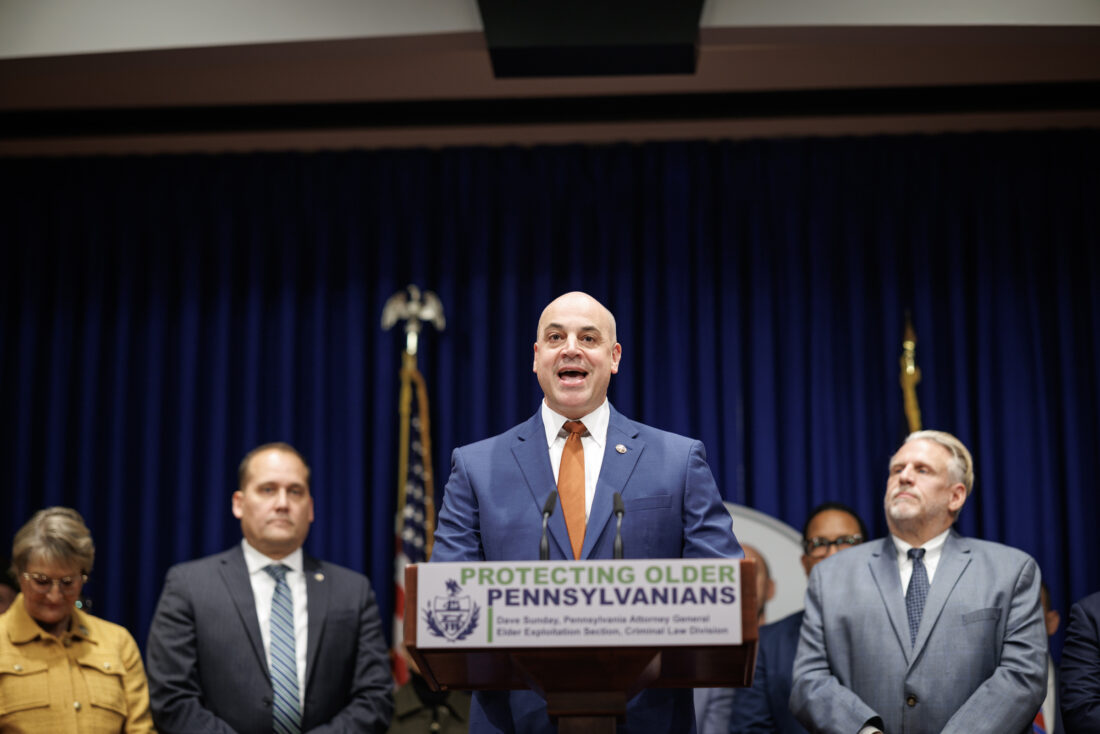
Attorney General Dave Sunday announced the launch of the Office of Attorney General’s Elder Exploitation Section in November. The section is an expansion of protections and services for seniors, with focus on deterring financial theft and holding offenders criminally responsible.
The State Police at Warren are investigating a cryptocurrency scam that has defrauded an elderly couple from Sugar Grove.
According to a news release Monday, the couple was contacted by an individual claiming to represent a legitimate authority. They were told to withdraw cash from their bank and deposit it into a Bitcoin ATM, or cryptocurrency kiosk, in order to protect their money.
“Residents are reminded that no legitimate government agency, bank or company will ever ask for you to pay fees, fines or resolve issues by depositing cash into a Bitcoin ATM,” the State Police said in the release. “Please be aware of unsolicited calls, texts, emails or pop ups claiming your accounts are compromised.”
State Attorney General David Sunday warned earlier this year that scammers are now using Bitcoin ATMs, or “BTMs,” as a means to gain access to people’s money. Scammers will target consumers with urgent messaging — such as “protect your money” and “take care of any criminal charges” — during the scam. Unsuspecting consumers may also be persuaded to act because scammers have personal information, such as knowledge of their bank or financial institution.
After coercing a consumer into making large cash withdrawals, the cyber criminals tell the consumer to deposit the funds in a Bitcoin ATM. Following that deposit, the cyber criminals ask the consumer to scan and send a QR code, which gives the criminal access to the funds – and in most cases, makes it impossible to get the money back.
Many of the financial scams start with a telephone call, text message, email, social media message, or an alert on your computer.
“Scammers will try to alarm, scare, and persuade you to take sudden action — before you are able to stop and realize you are being scammed,” Sunday said. “My office is offering advice on how to protect yourself from these elaborate deceptions.”
Sunday’s tips include:
– Never click on links or respond directly to unexpected calls, text messages, emails, or computer pop-ups. If you think the message could be legitimate, you should contact the company or agency directly. Never call the number provided in the message: go directly to the agency or company website to find contact information.
– Scammers want to rush you, so stop and check it out. Before doing anything, talk with a trusted family member or friend. Real law enforcement and real bank personnel would never rush you. If someone insists the person remain on the phone or instructs someone to mislead a bank or financial institution, it is a scam.
– Never withdraw cash in response to an unexpected call or message. Only scammers will request someone pay vast amounts of money in cash. Never send money through a Bitcoin ATM.
– Real businesses and government agencies would never ask for payment in Bitcoin, gift cards, or through wiring money – anyone who asks for funds this way is likely a scammer.
– Urge banks to put more protections in place to prevent scams. Bank employees often know how to spot a scam because people rarely withdraw large sums of cash. The bank has the right to refuse a withdrawal if they suspect a person may be a victim of fraud. If a bank asks you questions about a transaction, they are trying to keep money and information safe.
Americans were duped out of more than $5.6 billion in 2023 through fraud schemes involving cryptocurrency, the FBI said in a report released Monday that shows a 45% jump in losses from 2022. The FBI received nearly 70,000 complaints in 2023 by victims of financial fraud involving bitcoin, ether and other cryptocurrencies, according to the FBI. The most rampant scheme was investment fraud, which accounted for $3.96 billion of the losses.
Scammers will often make contact through dating apps or social media to build trust over several weeks or months before suggesting cryptocurrency investing, the FBI said. Once the relationship is built, they convince the targets to use fake websites or apps to invest their money, sometimes even allowing the victims to withdraw small amounts of money early on to make it seem legitimate.
In some cases, those victims are then targeted by bogus businesses claiming they will help the victim recover the cryptocurrency they lost, according to the FBI.
FBI officials say Americans of all ages can be a target of such scams, and should be extremely cautious when presented with investment opportunities from people they’ve never met in real life.
The Associated Press contributed to this report.
Local News

Poll: Most US adults aren’t making year-end charitable contributions

Arbor House hosts giving table, Caroling at the Tree by Candlelight

State Police investigating local crypto scam
Retail theft cases up 16% statewide
Retail theft offenses in Pennsylvania increased by 16% from 2023 to 2024, hitting a five-year high. The ...

Bucket Brigade to serve free pizzas on Christmas