
County projects receive state funding
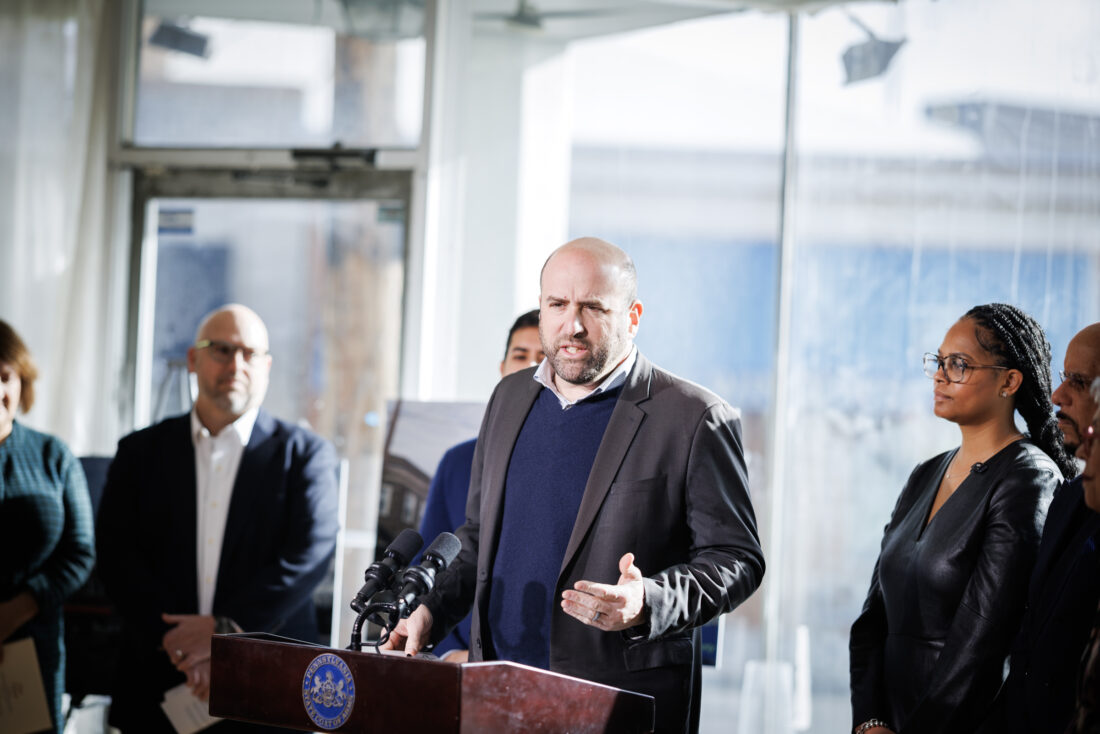
Rick Siger, state Department of Community and Economic Development secretary, is pictured during a news conference last week in Bala Cynwyd in Montgomery County.
Two Warren County organizations will receive state funding through the Neighborhood Assistance Program.
Through the NAP, businesses can receive tax credits of up to 95 percent on contributions they make to a qualifying community project. The NAP has five main components: Neighborhood Assistance Program (NAP), Special Program Priorities (SPP), the Neighborhood Partnership Program (NPP), Charitable Food Program (CFP), and the Enterprise Zone Program (EZP).
The Warren-Forest Counties Economic Opportunity Council will receive $22,500 to help build four new, fully accessible housing units in downtown Warren. The money, according to the state Department of Community and Economic Development, is to address a lack of affordable housing in Warren. The units will serve low-income, vulnerable and disabled individuals. Northwest Bank is listed as a project contributor. The project is required to serve a distressed area or support neighborhood conservation. Projects must fall under one of the following categories: affordable housing programs, community services, crime prevention, education, job training or neighborhood assistance. The funding can provide up to a 65% tax credit for a project.
Also receiving funding is the Rouse Estate Board of Directors, which received $78,000 to purchase a new ADA-accessible transit bus to replace an aging van. The bus will provide safe transportation for low-income seniors and individuals with disabilities, increase access to health care and support more than 750 trips each year. Project contributors include Superior Tire and Rubber Corp. and Whirley Drinkworks. The funding is through the Enterprise Zone Program, which provides tax credits to businesses or private companies investing in rehabilitating, expanding, or improving buildings or land located within designated enterprise zones.
The funding was announced Monday by Rick Siger, state Department of Community and Economic Development secretary. The Neighborhood Assistance Program is designed to help low-income individuals and improve distressed areas in Pennsylvania communities. The Neighborhood Assistance Program’s funding was doubled from $36 million to $72 million in the 2024-25 enacted state budget, and Gov. Josh Shapiro included the additional funding in 2025-26 state budget proposal.
The program, which provides tax credits to businesses that contribute to nonprofit organizations’ efforts to revitalize communities, will support 405 projects across the state.
“The Shapiro Administration is committed to strengthening our communities because we know that the entire Commonwealth thrives when our neighborhoods are healthy and vibrant,” Siger said. “These Neighborhood Assistance Program projects will deliver meaningful benefits for individuals and families, support low-income areas in ways few programs can, and promote the vital public-private partnerships that put communities on a path to fiscal health and long-term prosperity.”
Local News
Court decision forces change to second-degree murder sentencing
Cruise-In, craft show planned for fairgrounds
Report finds alternative energy mandates cost ratepayers $3.3B
As Pennsylvanians grapple with rising electricity costs, the debate over how to keep power both reliable and ...
Starting to sizzle
Patriotic quilt contest planned for county
Former detective out of jail, sentence modified
Former Warren County Chief Detective Thomas J. Kibbey was released from the Warren County Jail this week after ...