
‘Casting Of The Lots’
Candidates draw for ballot position for primary
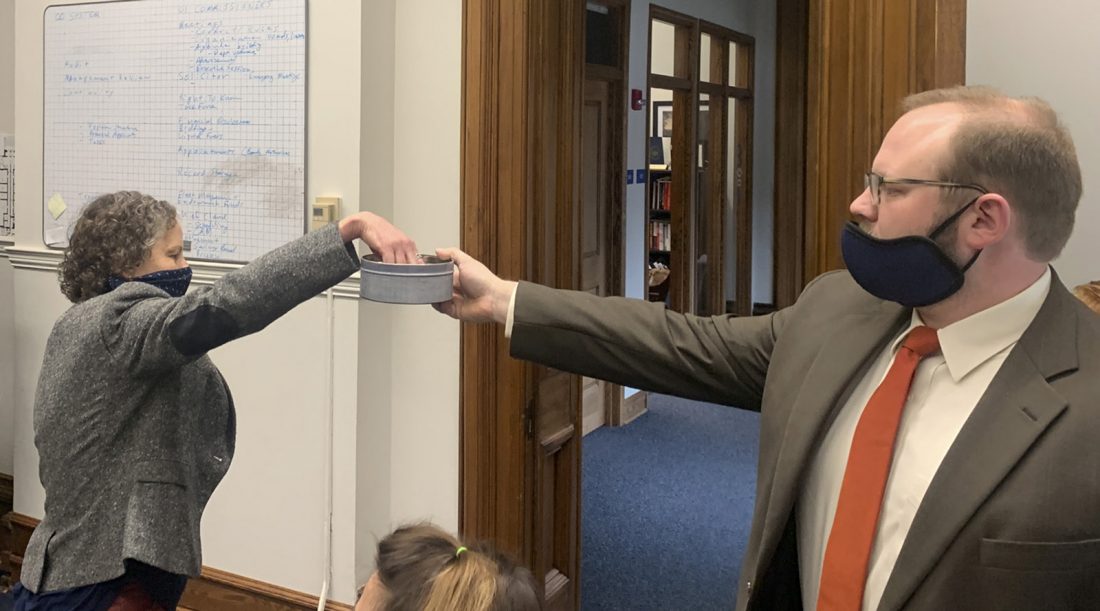
Times Observer photo by Josh Cotton Wendy McCain pulls a numbered red-ball out of the tin Warren County has used to determine ballot position for decades on Wednesday. McCain is one of four Republicans — Jared Villella, Sam Harvey and Joe Michaels are the others — seeking the Republican nomination for three available seats on Warren City Council.
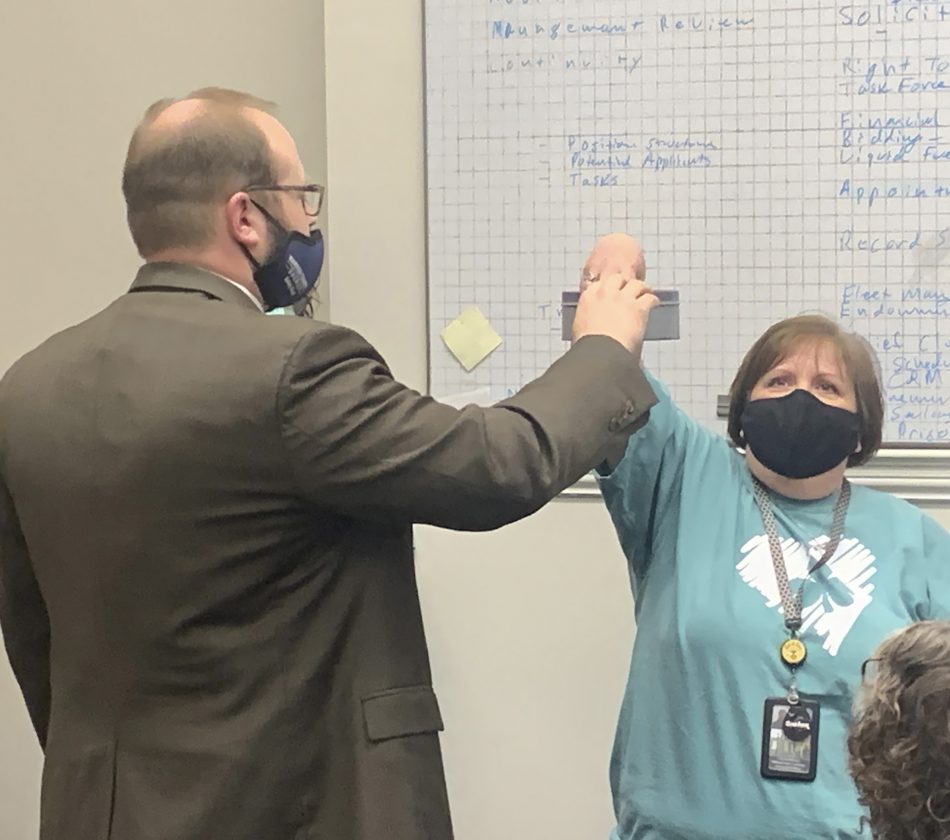
Times Observer photo by Josh Cotton Lisa Burkhouse draws for ballot position on Wednesday. Burkhouse is one of three candidates — along with Stephanie Eastman and Lauri Sekerak, seeking the Republican nomination for register and recorder during the upcoming May primary.
Times Observer photo by Josh Cotton Wendy McCain pulls a numbered red-ball out of the tin Warren County has used to determine ballot position for decades on Wednesday. McCain is one of four Republicans — Jared Villella, Sam Harvey and Joe Michaels are the others — seeking the Republican nomination for three available seats on Warren City Council.
Times Observer photo by Josh Cotton Lisa Burkhouse draws for ballot position on Wednesday. Burkhouse is one of three candidates — along with Stephanie Eastman and Lauri Sekerak, seeking the Republican nomination for register and recorder during the upcoming May primary.
Trending
"Casting of the Lots" sounds much more dramatic than it really is.
What it meant on Wednesday at the Warren County Courthouse was drawing ballot position for the upcoming May municipal primary.
Commissioner Ben Kafferlin said he found an item in the Pennsylvania Code from 1925 that mentions the "Casting of the Lots" to determine ballot position but it doesn't say just how the process is to be handled.
Warren County uses a tin that dates to at least 1967 based on a note on the lid as well as a series of balls with numbers on them.
Each candidate in attendance drew a small red ball from a tin. Each ball was marked with a number that will correspond to the listing of their name on the ballot. County staff drew for those not in attendance.
Other counties handle it differently.
"Some roll dice," Rivett said. "We have our little red balls."
The most visible offices that were drawn on Wednesday are county Register and Recorder on the Republican ticket, Warren City Council on both tickets as well as seats on Youngsville and Sugar Grove Borough councils.
Several election positions are also contested, including inspector of elections posts in Warren's southeast precinct, Southwest Township and Watson Township.
Does ballot position matter? It might.
The University of Virginia Center for Politics published an article that looked at the research done in this area and drew some interesting conclusions.
That article acknowledges that a candidate's "platforms, personalities and party affiliations matter most, along with the circumstances of the election year" and that the "theory has always been that the most desirable position on the ballot for any candidate to be listed first."
A review of the research did indicate that "there is an advantage to being listed first on the ballot,"according to the article. "Voters who do not have well defined choices prior to voting appear to latch onto the first name on the ballot for each office, a phenomenon we might call 'first-listing bias.'"
However, the extent of the benefit remains harder to pinpoint.
"In some elections, a first-listing produces just a handful of votes, though they can make the difference in an extremely close election," the article indicates. "In other elections a first listing can generate votes up to five percent of the overall tally, according to some studies."
A separate study from Sam Houston State University found the "ballot order effect" to equal or exceed 10 percent in down-ballot races -- not president, senator, governor, etc.