EMS officials target testing
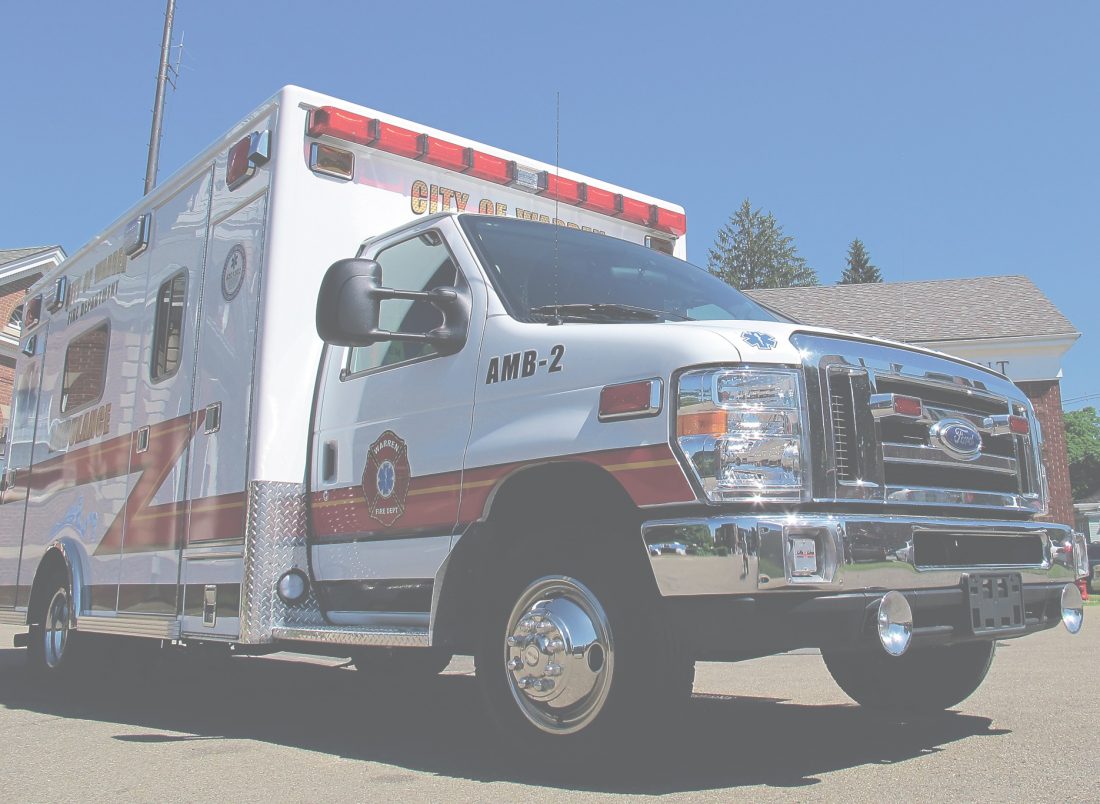
Times Observer file photo EMS officials continue to grapple with the scope of the challenges the crisis provides. Last week, that included discussion on the pass rates of the test needed to be certified as an EMT.
It’s no secret that there are a host of factors that have contributed to challenges that the emergency medical services system in Warren County now faces.
One target that local officials would like to see is the basis for the testing required to become an EMT or paramedic.
The test is provided by the National Registry of Emergency Medical Technicians.
But that wasn’t always the case.
“Back in the old days, training was done at the county level,” Sheriff Ken Klakamp said during last week’s COG Fire Services Committee meeting.
The shift to the National Registry standard was “not state law. It’s a regulation.”
“We had a heck of a lot more first responders,” Klakamp said, before that change. “They’re hurting the system because of that.”
Pass rates for the rest according to the National Register website have varied between 68 and 70 percent in the last few years.
“Many years ago, someone made a book on how to pass the paramedic exam,” Todd Steele, EmergyCare director of operations said, explaining that the state went to the National Registry exam due to the expense of developing and maintaining its own test.
“It became a way for the Department of Health to save money,” he said.
Paul Pascuzzi said it might not be a big issue in cities.
“In rural Pennsylvania, it’s a big deal,” he said. “It’s a really big deal.”
Steve Hoffman, city fire’s operations and training officer, said “this is not just an EMS problem.” He noted from a training perspective that getting classes big enough to be taught here is a challenge and is the “nexus of the hole” in this part of the state.
He said such regulations can stranglehold the system.
The pitch was made during the meeting to Mary Kushner, who works on State Senator Scott Hutchinson’s staff.
ACT 91
Local municipalities can provide a tax credit up to 20 percent on property or an earned income tax break for volunteers.
A new Act — 91, enacted on Oct. 29 — expands that idea.
It “enhances and allows counties and school districts to also provide the same… credits,” Pascuzzi said. “(The) tax credit will really be a big draw for recruitment and retention for the volunteers we have.”
Local News
State seeks federal support after crop freeze
Gov. Josh Shapiro and Pennsylvania Agriculture Secretary Russell Redding visited Cherry Hill Orchards in Lancaster ...

‘Amazing’ showing
Longhouse Scenic Drive work resumes Wednesday
Paws Along The River celebrates 95 years
The Paws Along the River Humane Society is celebrating its 95th year as a nonprofit and what better way to ...
Hessel Valley Lutheran Church to host benefit for Clever family May 16