
‘Caching’ when times are lean
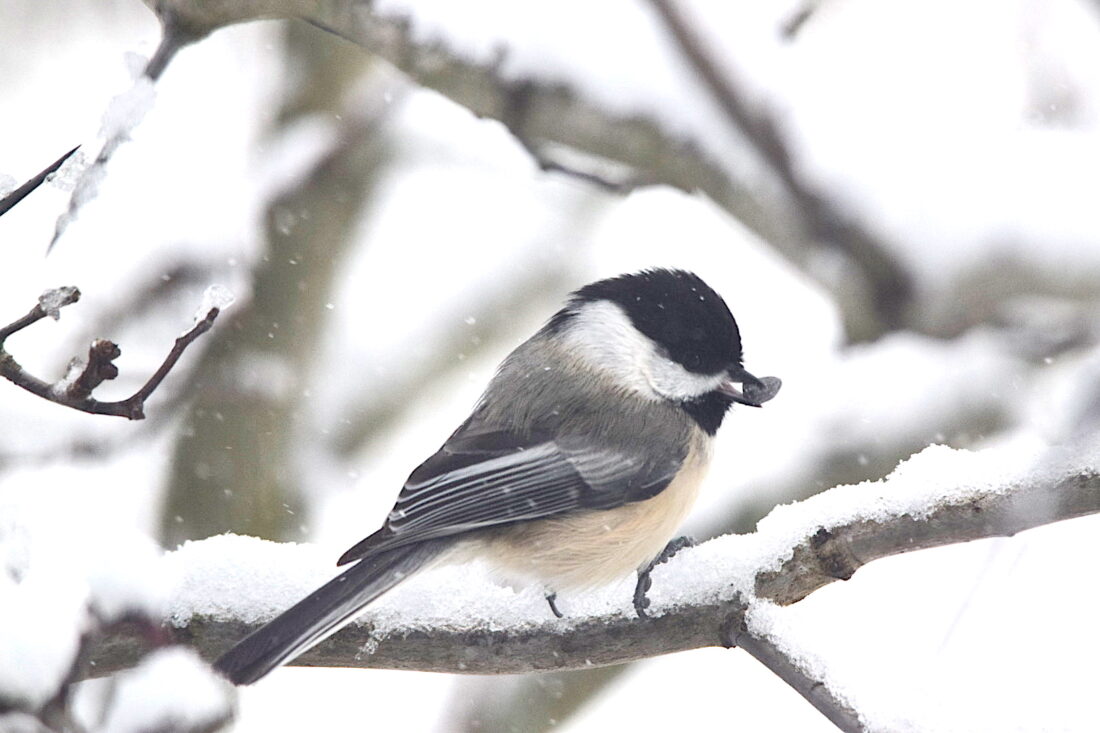
Photo by Charlotte Schmaltz A Black-capped Chickadee holds a seed in its beak.
Winter is in full swing, but despite the cold and snow there are still animals that are active. Lately when I arrive at Audubon Community Nature Center in the mornings, I’ve been looking out the large window at the bird feeders.
As I watch the birds and squirrels, I notice some of them collect food and carry it away instead of eating it on the spot. In some cases, animals will collect and store extra food, saving it for later or times of scarcity. This behavior is called ‘caching’ and can be observed in several animals, including squirrels and certain bird species. Oftentimes this food is hidden so other animals, usually the competition, won’t be able to find it. Caching food is especially important for animals that live in places with winters like western New York. By storing plenty of food in advance, these animals decrease the chance of starving and increase their chance of survival. These caches also include foods that aren’t freshly available in the winter.
When thinking of animals preparing for winter, you most likely envision a squirrel with a bunch of acorns; however they aren’t the only ones who do this. Even some predators will cache food. For example, a predator might catch prey that it can eat over multiple days and will hide it so it doesn’t get stolen between meals. Caching helps predators and other animals store food that they might not be able to eat right away or are unable to finish. Saving food for later decreases the amount of energy they spend getting food overall. On the other hand, squirrels will do a lot of long-term caching, building up stores to eat over the winter when food isn’t as readily available.
Many rodents display some kind of caching behavior. Even large rodents like the American Beaver will store bark to eat over the winter. One of the easiest to see examples of caching is from backyard squirrels and chipmunks.
They will stuff their cheeks full of seeds and nuts before bringing them to their hiding place. Even though they both collect and hide food, Red and Gray Squirrels are a great example of different styles of caching food. They both eat similar things, including seeds like acorns or the ones in pinecones, but they take two different approaches to storing it. Red Squirrels tend to have many caches in different places, each with a bit of food, whereas Gray Squirrels stick to a few large caches that store large amounts of food.
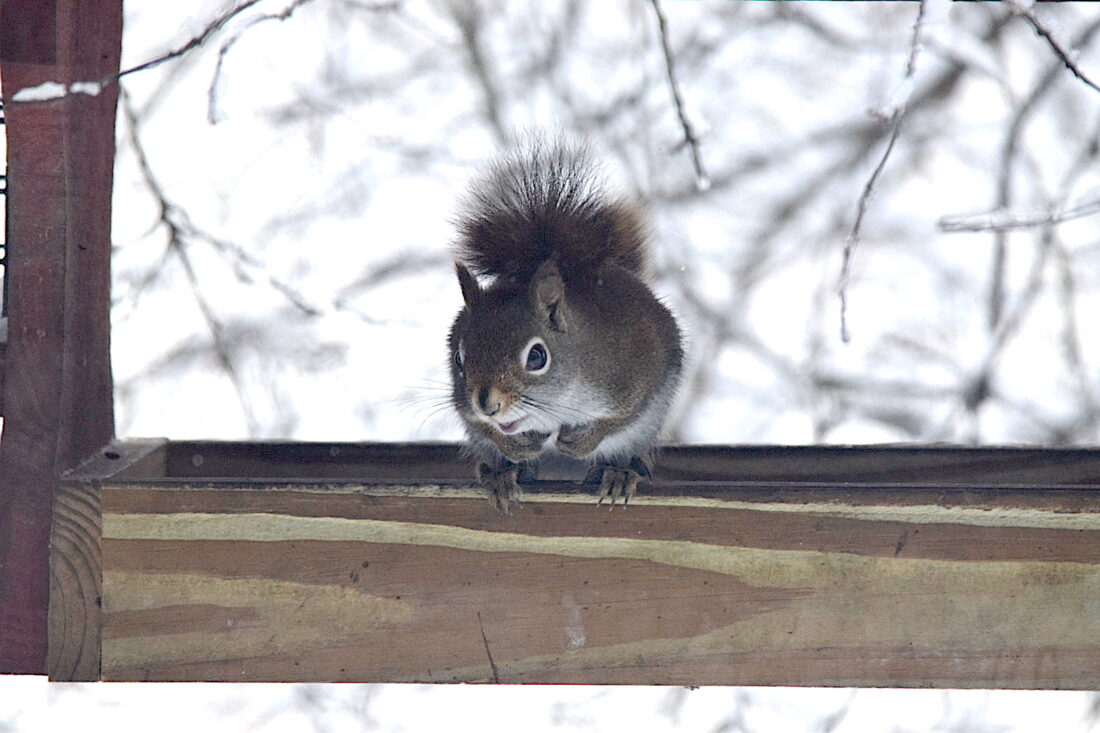
Red Squirrel surrounded by snow and seed hulls.
In addition to rodents, there are a few local bird species that will cache food, especially seeds. Although most birds don’t bother, chickadees, titmice, jays, and nuthatches are all common bird feeder visitors that take time to store extra food. Birds will take a seed and find a place to hide it, whether it’s shoved in bark, put in a difficult to reach space, or something else. Common Ravens, known for their intelligence, will actually notice if another bird sees them caching food and will go back later and hide it somewhere else–they can infer that the competition might return to steal it. They will also happily steal if they learn where a fellow raven has hidden their food.
Shrikes are another bird that often cache food, however they won’t visit feeders. They are carnivorous songbirds and will store their food (often small rodents, reptiles, insects and the like) by impaling it on spikes, either natural ones, such as thorns or hawthorn branches, or unnatural ones like barbed wire. This has earned them the title of “butcherbird”. I personally have yet to see one, but Northern Shrikes can be found in this area during the winter.
Not only does caching food help an animal survive, it also helps support the ecosystem they are part of. If an animal, be it squirrel or bird, doesn’t eat 100% of the food that was stored, then any seeds left behind are free to grow into new plants. It’s a great way for seeds to spread, and it helps maintain a healthy ecosystem.
Audubon Community Nature Center builds and nurtures connections between people and nature. ACNC is located just east of Route 62 between Warren and Jamestown. The trails are open from dawn to dusk and birds of prey can be viewed anytime the trails are open. The Nature Center is open from 10 a.m. until 4:30 p.m. daily except Sunday when it opens at 1 p.m. More information can be found online at auduboncnc.org or by calling (716) 569-2345.
-
- Photo by Charlotte Schmaltz A Black-capped Chickadee holds a seed in its beak.
-
- Red Squirrel surrounded by snow and seed hulls.
-
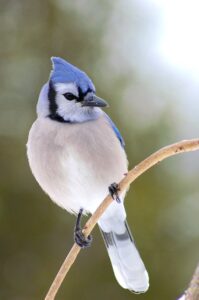
- Photo by Terry LeBaron Blue jays are known to cache food.
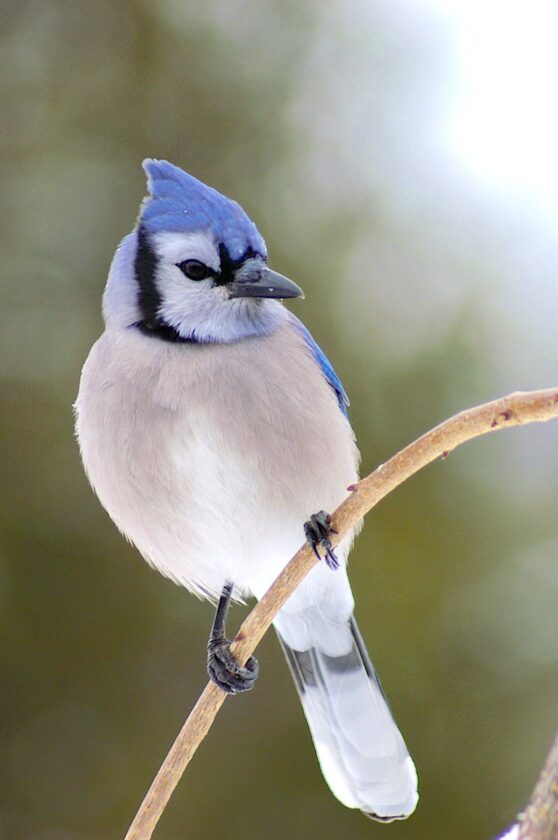
Photo by Terry LeBaron Blue jays are known to cache food.
Community
‘Caching’ when times are lean
Winter is in full swing, but despite the cold and snow there are still animals that are active. Lately when I ...
Youngsville Life
Youngsville sledding party scheduled Editor’s Note: Please email community news to Colette Nelson at ...
Hospice receives December contributions
Hospice of Warren County received contributions during the month of December 2025. They include contributions in ...
Nature Art Showcase, Sale is Feb. 6

Sugar Grove Library welcomes new director
Conservation District to hold art contest
The Warren County Conservation District is holding its art contest with entries accepted through March 13. The ...