
Trending
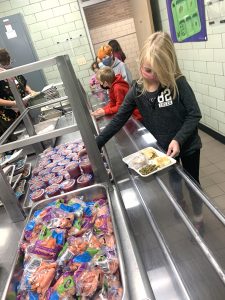
Ring Elementary School third grader, Paiytynn Person, chooses strawberries for her lunch.
School lunches are an important part of every school districts' everyday operations – however, recent supply shortages have impacted food service programs across the area.
The U.S. supply chain has been disrupted for quite some time, impacting every industry and facet of the economy imaginable. While the school cafeteria isn't top of mind when it comes to these issues, area districts have reported that these issues have been impacting students' lunch trays.
Jamestown Public Schools District Superintendent Kevin Whitaker said the district is encountering challenges "getting all the things that we want to get."
"One part is that we order way ahead," Whitaker said. "Our orders are in queue right at the front of the queue. We've been fortunate to get the things that we've asked for. However, there are things we can't get as much as we want. I know that Mr. Smith, our food service director, has been doing a great job and the cafeteria staff's been doing a great job to make sure that what we are able to get is being served to kids and it still meets the federal guidelines for school lunches."
Warren County School District has also been impacted by this issue, according to District Director of Business Services James Grosch. The district has been having issues getting various items such as pizza crust, breakfast foods, paper products such as trays and plates.
"We are getting our USDA commodities in favorable quantities delivered to the district, so that's helped us," Grosch said. "We were having trouble getting prepaid items like French fries and tater tots, but we do have a company that we're using now that is covering us. They're working not only to not only cover orders but also supply us with enough food to put into freezers. We've let our patens know that our menus are not going to be done on a monthly basis right now, and we're having to cut down choices."
Grosch said the district is "trying to make the best of everything we have." He said students may not be offered their favorite food choices, however, all students are being fed and the district has "plenty of food for all the kids."
He added that the prices of fruit, including canned fruit, "are skyrocketing." He said the district is also seeing shortages in mozzarella cheese and products containing cheese blends. Previously, the district had issues getting bread products, but has now found that the bread products are in good supply.
"It's kind of a touch and go thing," he said.
Gorsuch said the district appreciates parents' understanding of the issues the district is facing when it comes to foodservice at the moment.
"We're trying o do everything we can to make sure that kids are all fed, and fed nutritious foods that are the best tasting possible," he said. "It's a challenge. It's taxing on the staff from a menu planning and also a serving (standpoint). I would be remiss if I didn't say how dedicated and hardworking the staff is here that works in our food service. It's the teamwork that they're doing, along with the nutrition group whom we use as a food service management company, that's keeping everything held together. We appreciate the diligence that they're doing and the care that they're taking in feeding the kids."
Fredonia Central School District Food Service Director Colleen Kubera said her district has also encountered similar issues.
"When we make our menu, we have to do it two weeks before, and before the next month, on the 15th of the month, I have to make a menu out for the next month. We're thinking we have our stuff, and then when I got to order it from our suppliers or the government sends me things, it's not coming in. THen, we have to change things for this day or change things for those days. It has impacted us to a certain extent. It's just changing this and making sure everybody knows. Sometimes it's a little confusing."
Kubera said she and her team do the best they can to get through the shortages and delays.
"We try and make it work," she said. "It's just kind of throw and juggles things up in the air – you know, whatever you have to do. Sometimes, it might be the same thing two days in a row, but it seems to work out."
Due to the extension of free lunch programs due to COVID-19 and the pandemic, Kubera said more students are eating meals in the school district. Whether or not the free meals will continue has yet to be seen, she added.
Kubera said she is not sure when the supply chain issues will get sorted out.
"That question should be asked to the distributors," she said. "I got a message this morning from my government order where I thought three things on the order weren't coming in until February, but I'm getting them now. Certain things are ok and other things are still just backlogged. We just take what we can get."
At this point, Kubera urges patients when it comes to these matters. She said everyone is attempting to make things work with what they have at this time.
"We deal with what we can do and do what we can with what we have," she said. "We can't really get upset about it because what are you going to do?"
Bemus Point Central School District Superintendent Joseph Reyda said his district has not been as impacted by shortages in food services, however, they have been impacted in other areas.
"The capital project at Bemus Point Elementary School has taken longer than expected because we've had to wait for classroom unit ventilators and door hardware," Reyda said. "They eventually arrived, but it took much longer than expected."
Local school districts are not the only district feeling the strain. The Associated Press reported recently that schools in Denver, Colo. have also had issues with the matter and have had to "reduce food options during lunchtime" due to supply chain issues.