
‘Horror of horrors’
Fred Windsor and Co. I respond to Johnstown in the wake of devastating 1889 flood
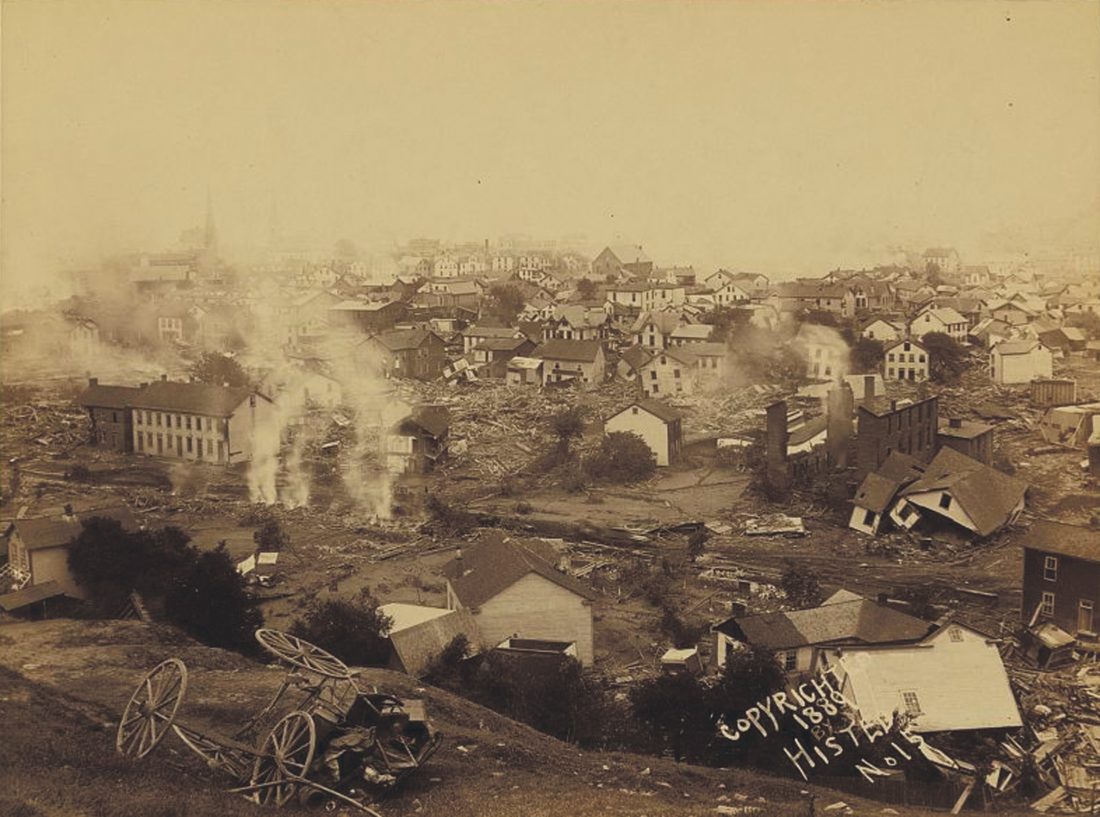
Library of Congress image Windsor, Prince and the rest of Company I responded to Johnstown in the wake of the 1889 flood to perform disaster relief functions. This image, taken on May 31, 1889, is described as a “general view of Johnstown.”
-
- Library of Congress image Windsor, Prince and the rest of Company I responded to Johnstown in the wake of the 1889 flood to perform disaster relief functions. This image, taken on May 31, 1889, is described as a “general view of Johnstown.”
-
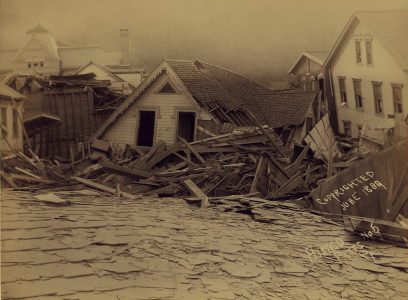
- Library of Congress image This Johnstown photo was taken on May 31, 1889, and was Cambria Iron Works employee housing.
Their report came first-hand.
“W.N. Hays has just returned from Johnstown. He says the place is annihilated. Conemaugh is wrecked and Cambria City swept way. Fully 1,200 lives have been lost; 100 bodies have been recovered at Nineveh. Seventy persons are reported to have been burned to death in a fire at Johnstown Bridge.”
Hays was right that Johnstown was annihilated.
But the cost in lives was double what he had estimated.
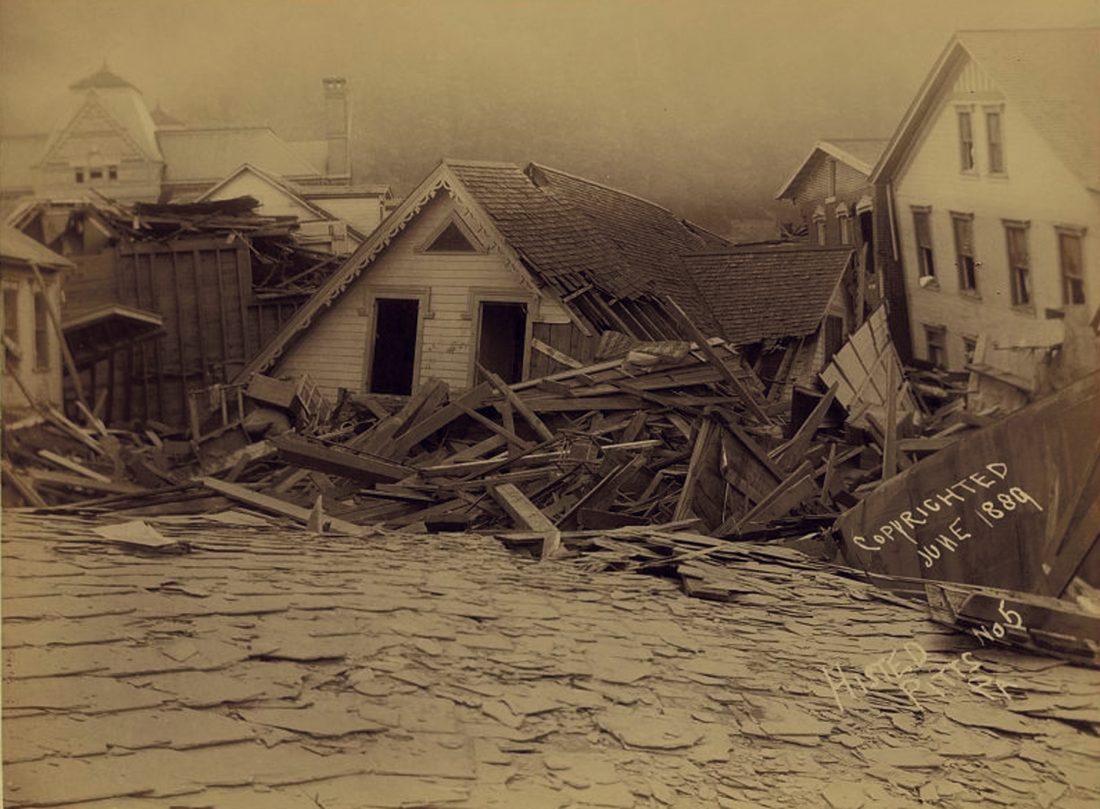
Library of Congress image This Johnstown photo was taken on May 31, 1889, and was Cambria Iron Works employee housing.
On Friday, May 31, 1899, the South Fork Dam failed, unleashing 20,000,000 tons of water or 3,600,000,000 gallons of water “hurtling toward Johnstown,” according to information from the National Park service.
2,209 fatalities and over $17 million in damages were the results.
Adjusting that total for inflation to 2018 dollars? $464,001,757.
We don’t know much about Windsor and Co. I’s specific experience but we do know that Pa. National Guard was activated to respond to the disaster and the Windsor and the rest of Co. I responded.
According to the Historical Society, he had only been married a few months when the Guard was activated and sent to Johnstown, which described Co. I’s work as a “grim but rewarding assignment.”
Perhaps the best source on the Guard’s work at Johnstown comes from a Pitt doctoral dissertation by Steven Patrick Schroeder, which examined the history of the Guard.
“Those units deployed in Johnstown performed outstanding service in a relief effort that was unprecedented in American history,” he wrote. “As Pennsylvania had no disaster relief agency or program, the National Guard mounted an unprecedented and heroic campaign that was praised for its energy or efficiency.”
In the wake of the annihilation of the town, reports started to emerge of looting and other threats to public safety and property. Those rumors are what prompted the call of the National Guard, whose tasks went “far beyond the maintenance of security and order,” Schroeder wrote.
The Guard quickly assumed responsibility for relief efforts and, per Schroeder, the Guard “mobilized the commissary and subsistence sections through the Pennsylvania National Guard.
“The excellent results in Johnstown were proof of the knowledge, experience and organizational abilities of the Guard’s commissary and subsistence efforts. They were able to set up several relief depots throughout the city and equitably distribute the thousands of tons of supplies that flowed through the Pennsylvania Railroad Company’s central depot. One historian of the flood noted that the key to the success of the National Guard’s effort was the systemization of the relief work that was instituted by the officers, a rational organizational scheme that yielded immediate results for the flood victims. Within a week of the start of the relief effort, local men had taken over many of the administrative tasks of the Guard officers…
“By November 1889, the civil authorities in Cambria County had assumed complete control of rebuilding efforts and the last contingent of the National Guard officers left the Conemaugh Valley.”