
Who’s smarter? A buck or a doe?
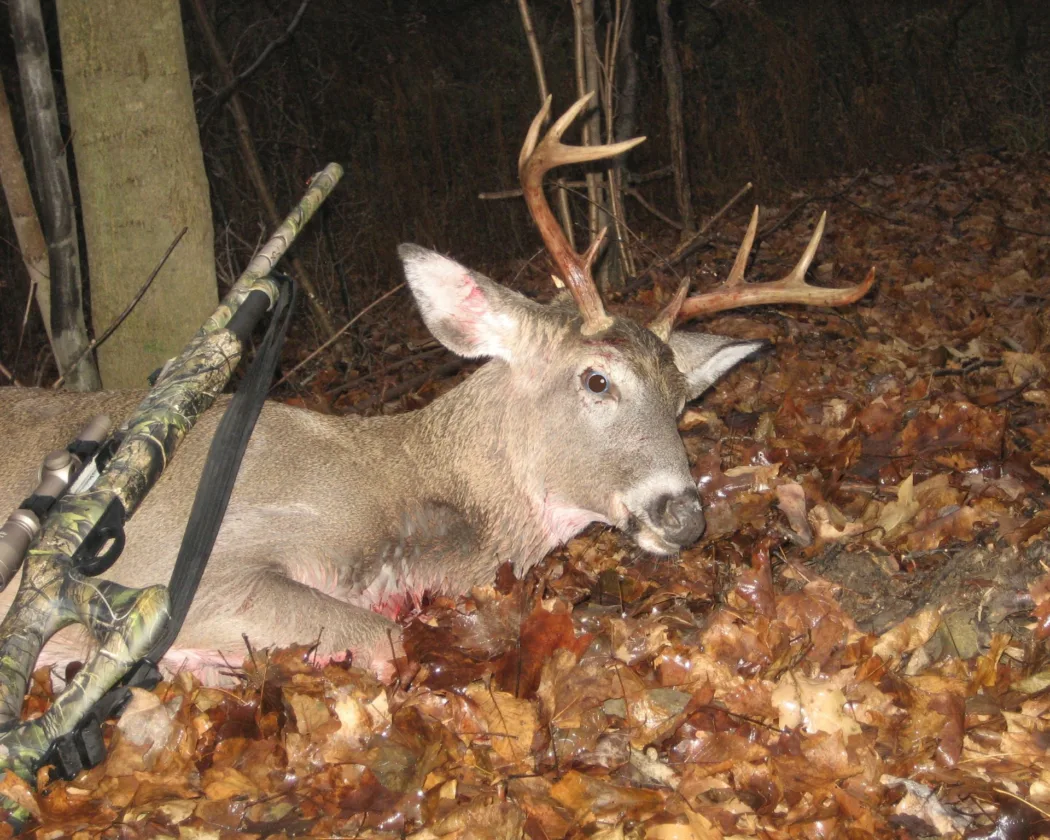
Photo courtesy of Steve Sorensen This New York buck came to his end while following a sweet-smelling doe.
Photo courtesy of Steve Sorensen This New York buck came to his end while following a sweet-smelling doe.
Trending
"Before a buck steps out into the open timber, he sends the doe out first to make sure it's safe." Many old-time deer hunters were sure that was true. You shouldn't believe it.
For a long time, hunters believed bucks were smarter than does. In the human world, it seemed obvious that men were smarter than women because that's what people thought they observed when they looked at society. Men were the captains of industry. Men were the political bosses. Men were the doctors, the bankers, the lawyers.
What people were really observing was that men had more access to education, resources, and leadership. Ironically, even many unaccomplished men (and women) at lower socio-economic tiers were convinced men were smarter. That shows our presuppositions can color our conclusions. No gender, race, culture, education, or political theory grants immunity to the flaw of generalizing from our own point of view.
Down through history almost every hunting mentor was a man, so it was men who transmitted the idea that bucks would gain forest intel by sending a doe out to survey the area. And even though this buck strategy wasn't true, it is true that bucks are ultimately self-serving. We can forget about chivalry, altruism, and self-sacrifice in the world of the buck.
It's also not true that the buck is hoping the hunter takes his shot at the doe. It's not true that the buck will position the doe to sacrifice herself for him. Nor is the buck simply making sure he avoids getting shot. He doesn't reason to such conclusions. If he did, we'd see the mature buck in a bachelor group assigning surveillance to a young buck.
The buck does not know better than the doe that deer season is on. Neither do deer realize that the two-leggers they may safely ignore the rest of the year are now carrying bang-sticks that can make thunder and make them dead. (Never mind that deer don't fear real thunder.)
The buck is not capable of the kind of strategic thinking that says, "If I send her into the open timber first, and a two-legger with a bang stick sees her, he'll kill her and not me."
None of that is true, and none of it can be true. The truth is that any time you see an adult doe and buck together, the doe is almost surely the smarter one. If both have been roaming the woods for roughly the same amount of time, that doesn't mean their survival skills are equal.
Why not? Because looking out for Numero Uno is natural to the buck. Sometimes he's a loner and sometimes he runs with other guys, but he is responsible only for himself. The doe is different. She travels in family groups, and motherhood opens the door to a survival school no buck will ever qualify to enter. She'll be enrolled for the rest of her life.
Once she has fawns, she is instinctively aware of their vulnerability. Even if she keeps them well-fed, they will die without her watchful eye. She spends all her time protecting them. She always knows where they are. She is alert to anything that is a threat, and removes them from danger.
By the time she's just two and a half years old, she is an able protector not only of herself, but of the deer around her. By learning to protect both herself and her little ones, she becomes a better survivalist than a buck that faces fewer threats and goes about his business taking care of only himself. Becoming a mother teaches the doe what her male counterpart has no opportunity to learn. This is not a model for human society; it's just the way it is for deer, and for most wildlife.
If you're hunting for an antlered buck, don't assume the does you see aren't very smart or are inconsequential to your success. The deer world is a matriarchy, not a patriarchy, and that makes does the smartest deer in the woods.
So, why does the buck follow the doe, if not for safety? It's simply because bucks and does spend more time together in the fall, and that's when she produces a smell he finds irresistible. If he was as smart as some hunters think he is, he'd know that sweet scent will lead him to disaster and he'd stop following her. But he can't.
***
When "The Everyday Hunter" isn't hunting, he's thinking about hunting, talking about hunting, dreaming about hunting, writing about hunting, or wishing he were hunting. If you want to tell Steve exactly where your favorite hunting spot is, contact him through his website, www.EverydayHunter.com. He writes for top outdoor magazines, and won the 2015, 2018, and 2023 national "Pinnacle Award" for outdoor writing.