Don’t feed deer to death
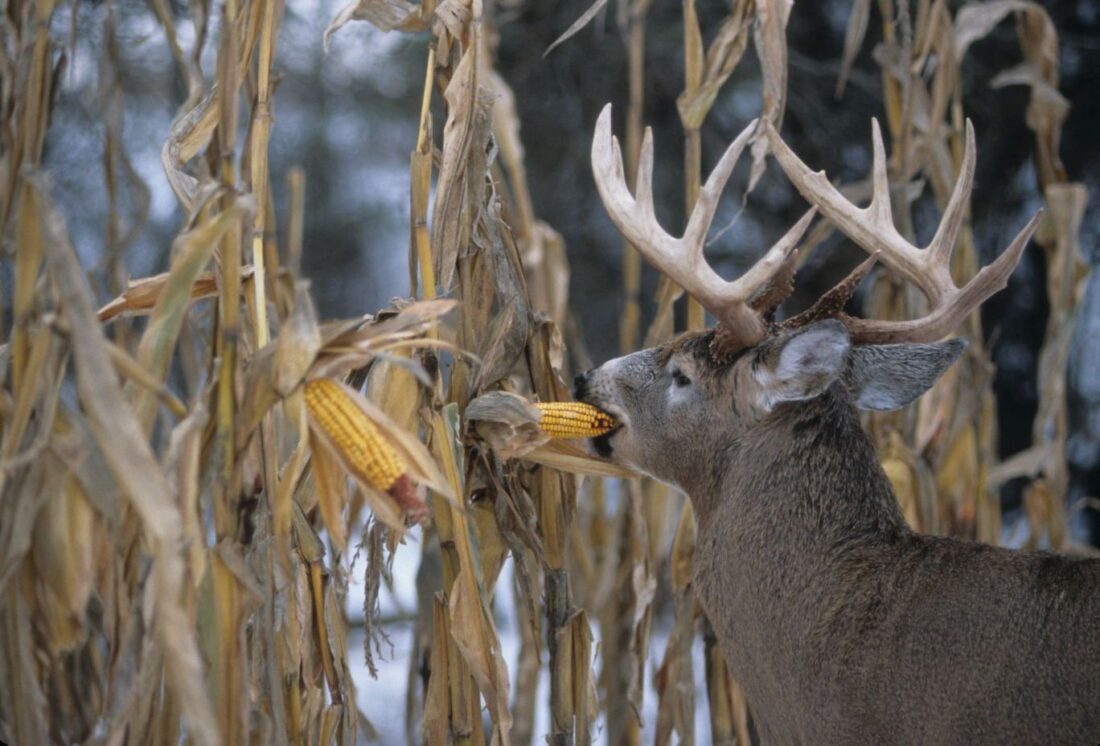
Photo courtesy of Charles Alsheimer Feeding from stalks of standing corn in winter and scavenging kernels from a harvested field isn’t usually enough to harm deer.
Winter is winding down. Spring is gaining steam. Daylight is more than an hour longer than it was a month ago. And deer are up and about.
Deer no longer face the boredom of staying bedded to conserve energy, versus the worse alternative of moving around at a time when frigid weather costs them more energy than they can take in. In winter, nutritional economics and energy economics work in tandem.
Many people feel pity for deer in a dead cold winter like we’ve been having. If your mind drifts back to summer when you watched deer feeding in a lush clover field, you might think Mother Nature is playing a cruel winter trick on them.
Rest assured that deer are better off without your pity. Yes, that’s counterintuitive. People enjoy filling bird feeders and watching their feathered friends through frosty windows, so it seems natural to extend that charity to deer by pouring out 50-pound bags of corn. Why is that counterintuitive? You’ve helped songbirds thrive and you think you’re saving the deer, but your well-intentioned corn dump can kill them.
How and why does that happen? The nutritional needs of northern deer vary throughout the year which enables them to survive without high value food in winter. Generally speaking, nature provides what deer need for nourishment in every season, including winter. If deer can survive a northern Alberta winter, they’ll do just fine here without your bags of corn.
The diet of deer changes with the seasons. During the growing season their habitat provides a rich diet to meet high nutritional needs. Deer focus on food that’s high in protein and high in carbohydrates. The deer’s digestive system also hosts the bacteria necessary to digest it. The bacteria in the deer’s complex four-chambered stomach adapts seasonally for clover, then corn, then acorns in sequence. That’s an oversimplification to make the point that once deer are prepared for winter, they can’t digest the gourmet stuff.
With high value food sources are depleted, deer stomachs now host bacteria more suited to digesting woody material — sticks and leaves. You might think deer nip off the buds and tips of low growing shrubs and limbs because they can’t find anything better. Nope. The truth is they’re eating that because it’s what they’re equipped to digest. If necessary, and if deer are healthy, they can go weeks eating almost nothing.
Since winter survival depends on balancing the energy deer consume with the energy they spend, hard winters force them to gather in places we call “deer yards.” Travel to food sources is minimal, which also reduces their exposure to predators.
Deer don’t find corn in deer yards. That doesn’t mean deer never eat corn in winter. If they find it, they’ll eat it. But deer stomachs are poorly adapted to sudden changes in diet, so if we make it too easy to find too much corn, deer are in danger.
When the bacteria in a winter deer’s stomach does not break down the corn, it stays in the stomach without being digested. Lactic acid increases and the pH levels in the stomach decrease to cause inflammation and dehydration. It’s called rumen acidosis. A deer might survive a mild case with lingering cramps and bloating, but in the worst-case scenario deer will die in as little as 72 hours.
So if you’re feeding corn to deer, please stop. If you’re wondering whether you should, please don’t. You might feel as though you’re being unkind, but that will pass, because now you know what’s really happening. The kindest thing you can do is let deer find their own winter food.
***
When “The Everyday Hunter” isn’t hunting, he’s thinking about hunting, talking about hunting, dreaming about hunting, writing about hunting, or wishing he were hunting. If you want to tell Steve exactly where your favorite hunting spot is, contact him through his website, www.EverydayHunter.com. He writes for top outdoor magazines, and won the 2015, 2018, and 2023 national “Pinnacle Award” for outdoor writing.
Local Sports
HIGH SCHOOL SCHEDULE
Monday Softball Corry at Eisenhower, 4 p.m. Baseball Erie High at Warren, 4 p.m. Tennis Warren at ...

Myers wins high jump at invitational

Warren unified track team preps for season

Eisenhower downs Dragons for first softball win

Warren suffers setback to Fort LeBoeuf