
Editor’s corner: Subpar renewables jolt electric costs
Trending
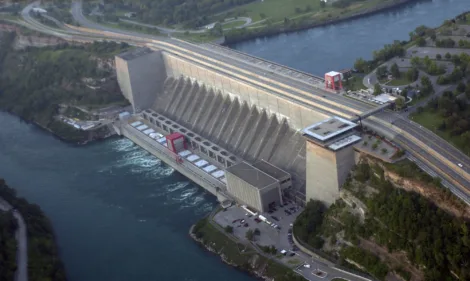
Long before wind turbines and solar panels began engulfing upstate and the Southern Tier, New York had a healthy power supply. It was built upon generating stations that were near the shores of Lake Erie and the New York Power Authority based in Niagara Falls that produces renewable hydropower.
Once clean-burning coal plants were shuttered in 2015, including the former NRG Energy site in Dunkirk, there came some celebration from those rightly concerned about the environment. From the 1950s to late 1970s, Lake Erie became a toxic dumping site for manufacturing entities.
More than four decades later, there is unquestionable improvement. As the Lake Erie Foundation notes on its website, "because of phosphorus reductions (during the 1980s), our lake became much more clear and clean. Fish flourished and Lake Erie became known as the 'Walleye Capital of the World.' Tourists once again flocked to Lake Erie. Lake Erie became the greatest ecosystem recovery in the world."
Bodies of water will forever face challenges, even if the power stations are not operating. The most recent Lake Erie concerns are algal blooms that are found in the shallower sections of the western basin in Ohio as well as the growing perfluorooctanesulfonic acid -- PFOs - that run rampant. This has led to an advisory by the New York state Health Department for residents to decrease fish consumption.
Other troubled waters at home can be found in the rising cost of electricity -- that is tied to an over-reliance on renewable energy. Those sources are barely a blip currently in the energy mix on the New York Independent Operator System in New York state.
On Wednesday afternoon -- during a cloudy spell over Chautauqua County -- wind and solar was contributing 4% to the grid. Hydropower was 18% with fossil fuels, natural gas and nuclear making up 78%.
Even after a 10-year push, wind and solar contributions often remain invisible when it comes to generating power on the state grid even if towering turbines are in your face while viewing the hills of Arkwright and Charlotte. By shutting down reliable power plants a decade ago, New York forced itself out of producing power to importing it.
That means New York relies on neighboring states -- and in some instances Canada -- to keep the lights on. That also comes at a greater cost that shows no sign of slowing.
Granted, it is not on an island like Hawaii that pays 52 cents per kilowatt hour. But the cost to residential consumers here is near the top in the nation at 29.93 cents per kilowatt hour.
Here in Pennsylvania, in the meantime, we could learn from New York's recent mistakes. Currently paying 23.27 cents per kilowatt hour, the Commonwealth is pushing for more renewables as well.
That could negatively impact its rate payers over the border greatly. In June, the Center Square reported a new Commonwealth Foundation report said users have paid more than $3.3 billion in costs tied to Pennsylvania's alternative energy mandates and warns that parts of Gov. Josh Shapiro's energy proposals could drive residential electricity bills higher. The report says despite the high and rising price tag, these green energy mandates fail to increase renewable generation or drive emissions reductions.
"Pennsylvania does not need energy mandates - it needs affordable, reliable energy that comes only through competition in the marketplace," Elizabeth Stelle, vice president of policy for the Commonwealth Foundation, told Center Square. “If lawmakers are truly concerned about rising Everyone is feeling the pinch of inflation. A lot of the attention in the last six months has been on fuel prices. But consistently rising monthly bills keep offering plenty of pain -- and shock value.
John D'Agostino is editor of the Times Observer, The Post-Journal and OBSERVER in Dunkirk, N.Y. Send comments to jdagostino@observertoday.com or call 814-723-8200, ext. 253.