
Scratching the surface with poison ivy
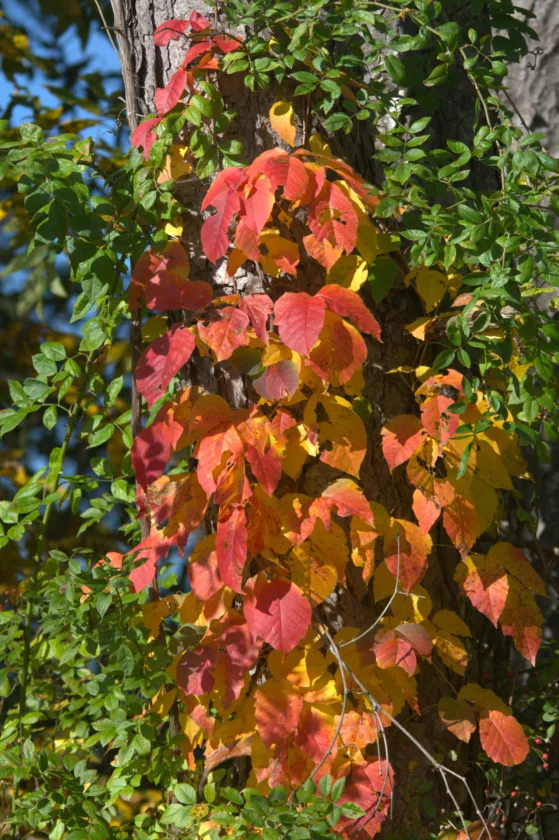
Photo by Charlotte Schmaltz Poison ivy leaves are beautiful in the fall
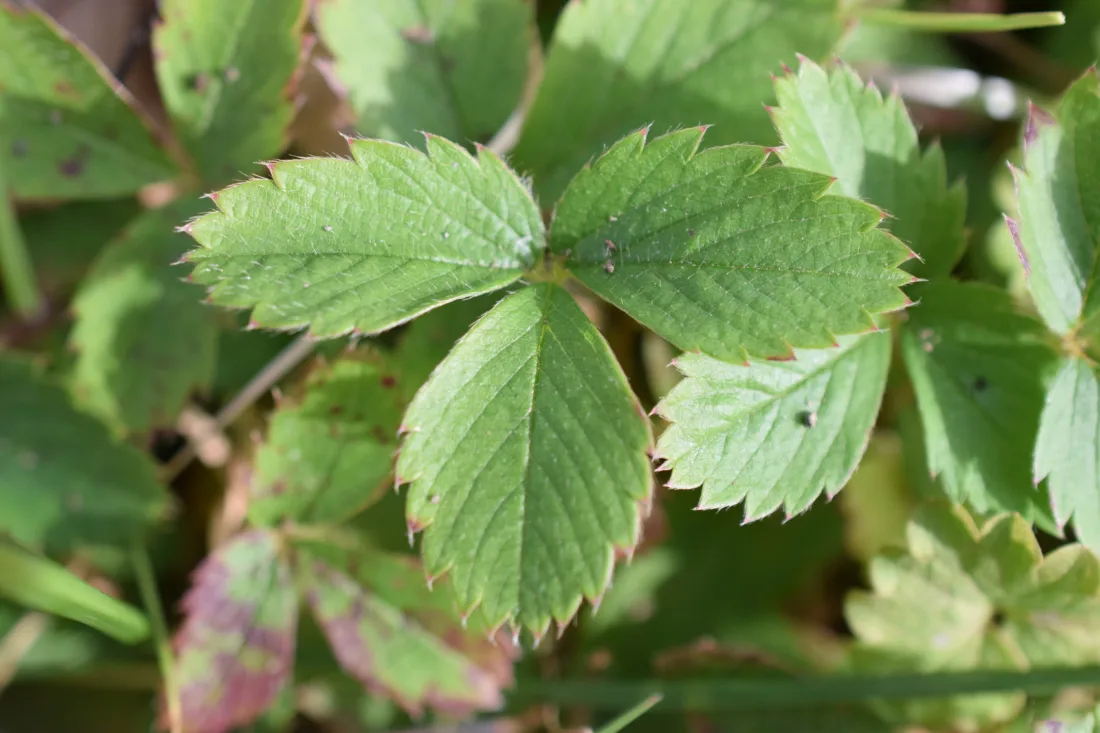
Photo by Charlotte Schmaltz Often mistaken as poison ivy, a strawberry leaf like this one has many small serrations that poison ivy does not have.
Photo by Charlotte Schmaltz Poison ivy leaves are beautiful in the fall
Photo by Charlotte Schmaltz Often mistaken as poison ivy, a strawberry leaf like this one has many small serrations that poison ivy does not have.
Trending
Poison ivy is almost universally disliked for its unfortunate itchy side effects; however, it is an important part of the local ecosystem and quite an interesting plant. Soon after I started working at Audubon, I became an expert at identifying poison ivy because we have a lot of it, especially off the trails.
I considered poison ivy in a more positive light this fall, when I noticed that among the fall colors, a poison ivy vine curled around a tree was particularly vibrant and beautiful. The fiery red leaves almost glowed in the morning sunlight. That was the first time I really thought of poison ivy as beautiful and not dangerous or a nuisance.
The truth is, humans are one of only a handful of animals negatively affected by poison ivy, or more specifically, the oil it produces. This oil, called urushiol, usually results in contact dermatitis, in the form of an itchy rash or even blisters in bad cases. A small percentage of the population may be unaffected by the oil, but the more you are exposed to it the more likely a subsequent reaction will happen.
It's hypothesized that the oil originally evolved as an antimicrobial agent, helping to keep pathogens away from the leaves, ensuring a healthy plant. Despite this reaction in humans, most other animals are immune. Deer will even eat poison ivy, using it as a food source, while other animals may just ignore it completely.
Birds are completely immune to poison ivy, but the berries they produce are very important for migrating birds, because they are packed full of fats and proteins to fuel their flight south. One time on a walk I even found a bird nest at the top of a tangle of poison ivy in a shrub--a clever way to ward off humans and be near food at the same time.
There are a few sayings that can help you avoid contact with poison ivy, the most well-known being "Leaves of three, let it be." There are many other plants with three leaves, but if you would rather be better safe than sorry, it's an easy rule to remember and follow. A less well-known phrase is "Vines with hair, beware". When poison ivy grows as a vine it has many hairlike tendrils that grow out of the main stem and give it a fuzzy appearance. This is especially useful to know in the winter when the leaves have fallen, because even touching the stem can result in a reaction. This is possible because all parts of the poison ivy plant produce urushiol oil, not just the leaves.
Although these sayings are helpful, they are not perfect. Many other harmless plants have sets of three leaves, which can be confusing. It takes a bit of extra discerning to separate the poison ivy from the other non-poisonous three-leaved plants. Poison ivy has two leaves directly across from each other, while the third leaflet has a bit of stem separating it from the others. Many other plants with three leaves have all three leaves connected to the same spot on the stem, so finding that extra bit of stem can help to distinguish poison ivy.
In addition, the leaves of poison ivy are usually smooth on the edges, sometimes with a few large "teeth" or serrated edges. Strawberry leaves are often confused for poison ivy, but the edges are covered in small, serrated edges that go all the way around the leaf. If in doubt, you can leave the plant alone. Raspberry and blackberry leaves also are fully serrated, and their stems usually have thorns, which poison ivy will never have--a neat shortcut for differentiating them at a glance.
The way in which poison ivy grows can also be a clue. It usually grows along the ground, but not always. Poison ivy lives up to its name. It can also be found as a climbing vine that easily wraps around other plants. Unlike many other climbing plants, poison ivy has a very distinct hairy appearance, with little tendrils constantly growing out from the main stem and seeking purchase. Newer growths may have fewer of these "hairs", but a well-established vine is usually easy to identify.
Learning to identify poison ivy is especially useful when bringing groups of children into the woods. When bringing kids into the woods I usually lay down a few basic guidelines, like staying on the trail, to help them avoid stepping in poison ivy. Other times, if there's more exploration I will ask them to stay where the ground is brown with no understory, because it's usually clear of poison ivy, unlike the green ground that is sometimes covered in it.
Interestingly, during my research for this article, I learned that the same compound that causes skin reactions was also used for thousands of years in making Japanese lacquerware, called urushi, hence the name urushiol for the oil. After curing, the chemical composition changes, making the lacquerware safe to use and unable to cause a skin reaction. Urushiol is harvested from trees in the same family as poison ivy, where the oil can be found in the sap.
If there's one plant you should learn how to identify before exploring the outdoors, especially in this area, it is poison ivy. Although it may be bad for humans to touch, hopefully it can also open up new curiosity about our native plants.
Audubon Community Nature Center builds and nurtures connections between people and nature. ACNC is located just east of Route 62 between Warren and Jamestown. The trails are open from dawn to dusk and birds of prey can be viewed anytime the trails are open. The Nature Center is open from 10 a.m. until 4:30 p.m. daily except Sunday when it opens at 1 p.m. More information can be found online at auduboncnc.org or by calling (716) 569-2345.