
Partisan energy fight takes shape
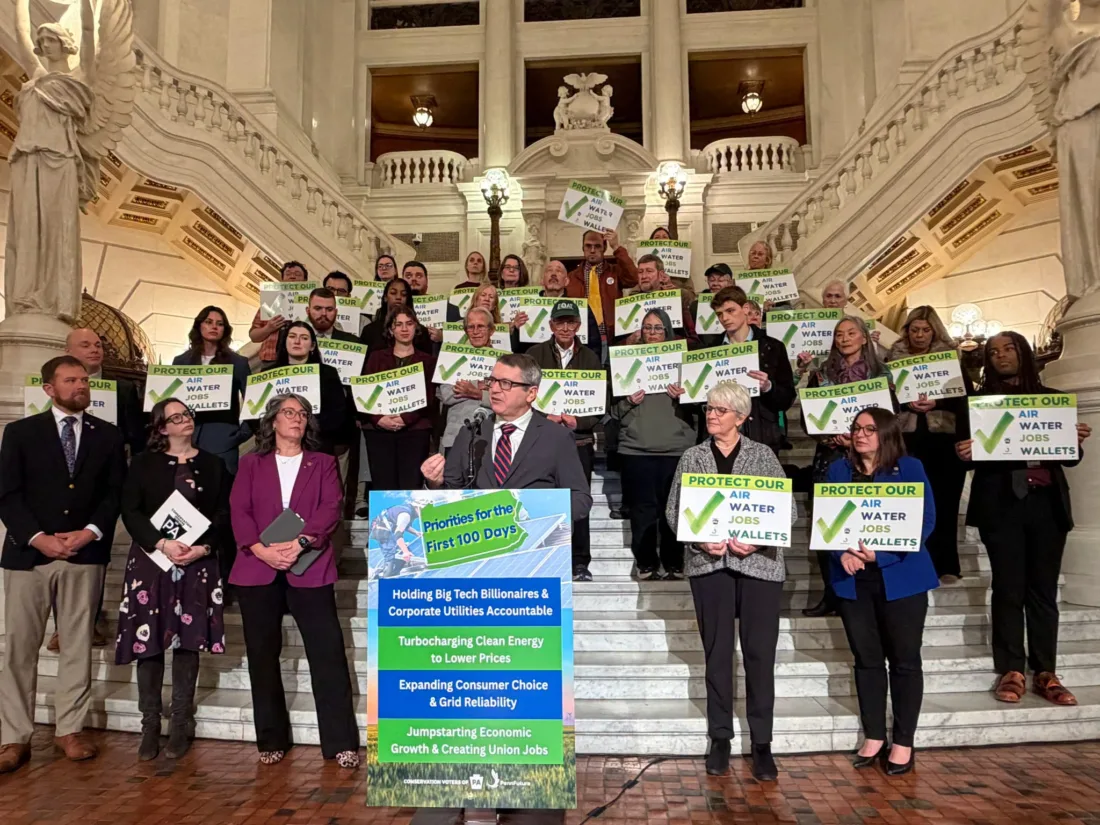
Environmental advocates and some state lawmakers are pictured during a news conference recently launching "Unleashing Pennsylvania Power," a 100-day legislative blueprint that would begin when Democrats take control of the state Senate in January.
Environmental advocates and some state lawmakers are pictured during a news conference recently launching "Unleashing Pennsylvania Power," a 100-day legislative blueprint that would begin when Democrats take control of the state Senate in January.
Trending
A new Democratic Party majority in the state Legislature is going to bring a new wave of state energy policy legislation – and at least one Republican senator is already raising questions as that agenda takes shape.
The Conservation Voters of Pennsylvania, PennFuture and a group of state legislators gathered in the Main Capitol Rotunda to launch “Unleashing Pennsylvania Power,” a comprehensive 100-day legislative blueprint. The 100-day agenda focuses on two immediate tracks: establishing strict guardrails on power-hungry AI data centers to prevent massive utility rate spikes and rapidly expanding union-built clean energy projects to drive down electricity costs.
"Pennsylvania has long been an energy leader, yet we rank 47th in the country for renewable energy -- unleashing Pennsylvania power has to mean the build-out of solar, wind, and battery storage to stay competitive, meet demand, and get costs under control," said state Rep. Elizabeth Fiedler, D-Philadelphia and current chair of the House Energy Committee. "I'm hopeful about the first 100 days because so many of these measures passed the House already with bipartisan support. We have to get energy affordability policy over the line while we have the chance."
Unleashing Pennsylvania Power includes four items aimed at data centers, including the "Developer-Pays" Standard that would require tech developers to pay for 100% of their own grid interconnects, substations and transmission line upgrades; bans non-disclosure agreements between tech developers and government officials while creating a 180-day local planning pause to allow municipalities time to update zoning ordinances and safeguard residents' quality of life; requirements that data centers bring new, in-state clean power and battery storage online to meet their energy demand; and giving the Public Utility Commission expanded authority to enforce ratepayer protections and collect developer fees to shield local communities from negative impacts.
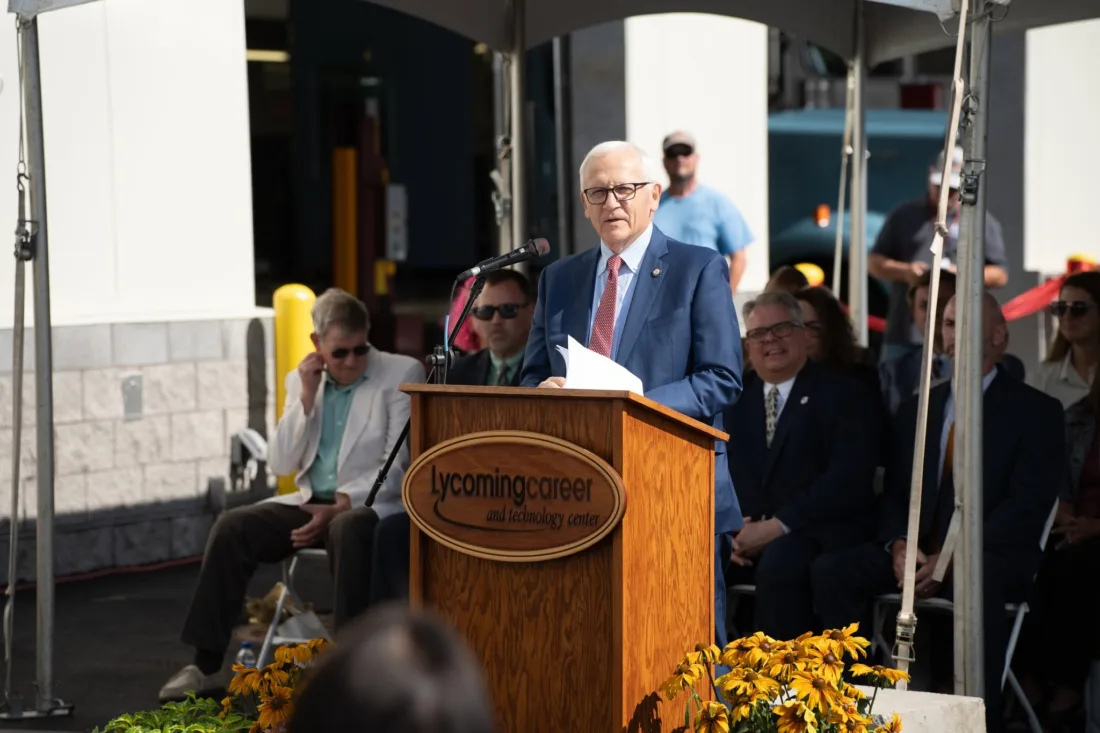
""The agenda calls for strict guardrails so data centers are powered by wind and solar," said Sen. Gene Yaw, R-Williamsport and Senate Energy Committee chair. "In practice, this would be a moratorium on new data centers in Pennsylvania. If that’s the case and the only acceptable supply is intermittent generation, then companies would be more inclined to locate to West Virginia or Ohio, where reliable, round-the-clock generation remains welcome. Pennsylvania would lose out on major employment and economic opportunities and its position as a major net electricity exporter would be threatened."
Unleashing Pennsylvania Power also includes passage of The agenda also calls for the passage of Gov. Josh Shapiro's PRESS proposal, which would increase the Alternative Energy Portfolio Standards (AEPS) Tier I mandate from requiring 8% of electricity retail sales to come from intermittent sources like solar and wind to 35%. It also calls for required new logistics facilities and warehouses to be constructed solar-ready, turning industrial rooftops into clean power generators; grid-scale battery storage targets; passing legislation allowing community solar power; enabling virtual power plants through smart-grid networks that link residential batteries, smart thermostats, and electric vehicles to supply power back to the grid during extreme heat waves or winter storms; clean energy manufacturing tax credits with a 30% tax credit on eligible production costs for businesses manufacturing clean energy products in Pennsylvania; and legislation to rein in excessive profits from monopoly utility companies and institute critical consumer protections to curb unnecessary rate hikes and expand assistance to low-income and working families.
"It's a new day in Pennsylvania. For far too long, the Republican majority focused our energy policies single-mindedly on fossil fuels," said Sen. Carolyn Comitta, D-Chester and state Senate Environment Committee chair. "Now, for the first time in decades, we have an opportunity to explore, pursue, and enact sustainable alternatives to make our environment cleaner, our communities healthier and our energy bills more affordable. The voters delivered a mandate for change, and we have a responsibility to make it happen. I'm excited to work with our environmental organizations, stakeholders, legislative colleagues, and the governor to cut emissions, reduce costs and boost renewables in the Commonwealth."
Yaw, said
raising the annual cost on Pennsylvanians from $350 million last year to roughly $1.5 billion. Unlike Tier I, Tier II, which includes waste coal, hydropower and more, at least delivers reliable, baseload-capable generation that can help protect the grid. Expanding a mandate forcing Pennsylvania to purchase large volumes of out-of-state intermittent power transfers money to our neighbors for resources that are unreliable when demand is highest.
Yaw said nuclear, natural gas and coal together supply roughly 95% of the commonwealth's electricity. In-state wind and solar generate only about 2%, and expanding use of intermittent resources will create temporary installation work at best. He also said battery storage is not a reliable source of baseline power while community solar and rooftop solar programs without changes to net metering systems will shift costs from higher-income suburban households to everyone else.
"Pennsylvania's existing nuclear, natural gas and coal fleet is the reason the commonwealth remains a major net exporter of electricity," Yaw said. "Policies that raise costs, reduce capacity, discriminate against that fleet and shift expenses from wealthy suburban solar owners to lower-income households will not deliver the affordable, reliable power Pennsylvania needs."