
Warren County Prison chaplain discusses post-jail life
Warren County Prison chaplain discusses post-jail life
Trending
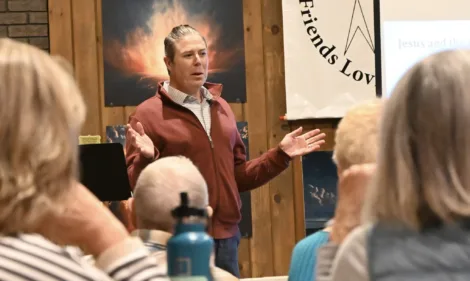
A conversation involving gathered community members guided by Pastor Zach Wolfe, who serves as chaplain at the Warren County Jail, was presented last week at the First Lutheran’s Diversity & Inclusion Educational Speaker Program.
Titled “Beyond the Walls,” the discussion explored understanding incarceration, including discrimination within the prison system, the challenges and barriers as well as re-entry and the power of community involvement.
Wolfe started by inviting everyone to raise a hand if they knew someone who had been jailed or imprisoned. Almost every one of the 30 participants lifted a hand. From there, Wolfe shifted to the bigger picture, explaining that on a typical day nearly two million people are incarcerated nationwide, with over 400,000 held in local jails before their cases even reach trial.
Barriers in poverty, housing and employment are of the highest concern. For a person earning an average salary, a $10,000 bail amounts to nearly eight months of work, underscoring how burdensome such a cost can be. Formerly incarcerated individuals face severe "prison penalty" with the Brookings Institution analysis (referenced in the Prison Policy Initiative report) finding that most employed people recently released from prison earn incomes well below the poverty line. Formerly incarcerated people can face economic hardship and low earnings.
Beyond the poverty rate, the biggest challenge is housing. Wolfe said if a person does not have an address, there is no parole. Home plans can be denied if the host has a record or is on supervision, ruling out some relatives and friends. Pennsylvania has no statewide fair-chance housing law, and some federal public housing bans are lifetime. Supervision requires finding and keeping a job and paying all court costs, which is hard with a record, Wolfe said. Added conditions can cut people off from family or work.
Wolfe shared the average daily population in the Warren County Prison from an October 2025 snapshot was 113 inmates with 63 unsentenced, 33 sentenced to serve time in the county prison and nine who have been sentenced to state prison. Supervision fees and court costs often pile up on people who are more likely to be poor. Falling behind can lead to a violation. In Warren County, additional barriers include few jobs, transportation and lack of treatment options.
Locally, Wolfe said more than 125 Bibles had been passed out in the county jail, more than 500 devotionals had been distributed and more than 30 volunteers had served. Children of the incarcerated are accounted for by the ministry with 62 children at a Christmas party, 84 children with an Easter celebration and 43 children with school supplies.
Wolfe suggested that small towns organize ways to help reintegrate people back into society such as forming a reentry coalition of jail, probation, employers, churches, and people with lived experience. The Pennsylvania Commission on Crime and Delinquency offers planning support. To assist with housing, landlords could pledge to judge each person individually, offer transitional rooms, help with deposits, and prepping homes for parole visits. Jobs could include second-chance hiring, asking about records only after an interview, and training in GED, trades, and licensing. Help with transportation could include volunteer driver pools, ride vouchers, and help with license reinstatement fees and payment plans.Records and legal help could come from volunteer lawyers and legal aid clinics to check Clean Slate eligibility and file petitions. Care and connection includes setting up treatment and Medicaid before release, meanwhile trained mentors and church support teams could be set in place to provide rides or calls to keep families close.