
Senator wants to bring Rural Emergency Hospital status to PA
Trending
Pennsylvania currently has no Rural Emergency Hospitals. Sen. Lisa Baker wants to change that.
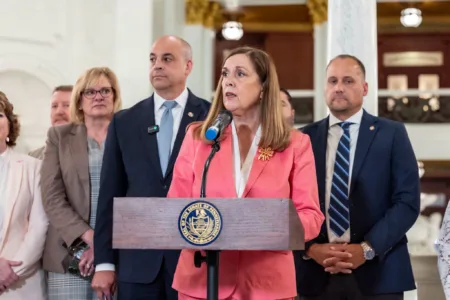
Baker has introduced legislation (Senate Bill 1454) that would create a new state license category for Rural Emergency Hospitals, giving eligible rural hospitals in Pennsylvania another option to sustain emergency and outpatient care. Baker, R-Dallas, would allow a Critical Access Hospital or a rural hospital with 50 or fewer beds to convert to a federally designated Rural Emergency Hospital.
"Rural hospitals are critical infrastructure for the communities they serve, but financial pressures, workforce shortages and other challenges continue to threaten their ability to maintain inpatient services," Baker said. "We cannot wait until a hospital is on the verge of closing to start looking for solutions. We need to give rural providers options that allow them to adapt while keeping essential healthcare services available close to home."
The Rural Emergency Hospital designation was created to provide eligible rural hospitals with an alternative to closure while continuing to provide emergency, observation and outpatient services. Under the federal model, Rural Emergency Hospitals receive Medicare reimbursement for covered services, as well as an additional monthly facility payment.
According to the Hospital and Healthsystem Association of Pennsylvania (HAP), more than 50 rural hospitals across 22 states have converted to REH status. The designation is currently not available to Pennsylvania hospitals.Among those hospitals is AHN Westfield Memorial Hospital across the state line in Westfield, N.Y. The hospital has transitioned from a small inpatient hospital to a 24/7 emergency, observation, and outpatient care facility. AHN Westfield Memorial Hospital officials say the designation will ensure Westfield Memorial’s long-term financial and operational stability going forward and protect care access for its patients in Westfield and the surrounding area. Designated rural emergency hospitals are eligible for additional federal funding and higher Medicare reimbursement rates.
"Pennsylvania's rural hospitals are continuing to face significant challenges, from workforce shortages to inadequate reimbursement and growing financial pressures," said Nicole Stallings, president and CEO of the Hospital and Healthcare Association of Pennsylvania. "Communities cannot afford to lose the essential services these hospitals provide. The REH model offers a pathway for hospitals that may no longer be able to sustain inpatient services to continue providing emergency and outpatient care close to home. We appreciate Sen. Baker for championing legislation that keeps care local."
HAP notes that six Pennsylvania rural hospitals have closed since 2005, while nearly 200 rural hospitals have closed nationally during that period. Earlier this year, it was announced that the Bradford Regional Medical Center had submitted a formal closure notice to the state Health Department of inpatient and emergency services due to ongoing and escalating financial pressures.The center is keeping its outpatient health center open, including services in primary care, pediatrics, women's health, general surgery, cardiology, cardiac and pulmonary rehabilitation, urology, orthopaedics & sports medicine, certain imaging/radiology services, medical oncology, pain management and physical medicine rehab, occupational health and lab draw station
"Every rural hospital closure has consequences that extend far beyond the hospital itself," Baker said. "When a hospital closes, patients may have to travel farther for care, communities can lose healthcare providers and local economies can be affected. Senate Bill 1454 provides another pathway for rural hospitals to consider and could help preserve access to care for the Pennsylvanians who depend on these facilities."