
Lawmaker proposes gas, diesel fuel tax cut
Trending
A new bill introduced recently would cut Pennsylvania's gasoline and diesel fuel tax rates to bring them closer to neighboring states.
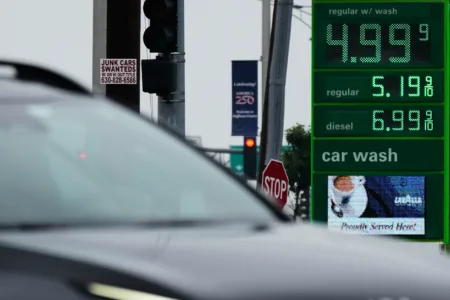
Rep. Ryan Warner, R-Fayette, introduced House Bill 2841 to cut the state's gas taxes to be in line with taxes in New York, New Jersey, Delaware, Maryland, Ohio and West Virginia. Gas prices are six cents lower in Western Pennsylvania this week at $4.577 per gallon — and around $4.68 in Warren County, according to AAA East Central’s Gas Price Report.
Despite the downturn, prices remain the highest they’ve ever been for this time of year. Even though the national average dropped a penny this past week to $4.35, pump prices remain at record highs for autumn. This is the first year the national average has been above $4 per gallon in October. After dipping into the $80 per barrel range for several days, crude oil is back above $90 per barrel. The national average was four cents more than a month ago and $1.27 more than a year ago.
Pennsylvania currently imposes the highest state fuel taxes at 57.6 cents per gallon on gasoline and 74.1 cents per gallon on diesel. Warner proposes to decrease the state's gas tax to 35.5 cents per gallon and the diesel tax to 37.4 cents per gallon.
"Pennsylvanians should not have to shoulder an excessive fuel tax burden simply because they live and work in this Commonwealth," said Warner. "Our neighboring states provide a regional benchmark for what drivers and businesses are paying. It is time for Pennsylvania to take a serious look at its fuel taxes and bring them in line with the average of the states around us."
Warner said high fuel costs increase operating costs for trucking companies, farmers, manufacturers, contractors and small businesses. Those added expenses can ultimately be passed along to consumers through higher prices for groceries, goods and services.
"This is about fairness, affordability and keeping Pennsylvania competitive," Warner said. "Our residents work hard for their money. We should be looking for ways to make life more affordable, not placing an unnecessary burden on the people and businesses that keep our economy moving."
House Bill 2841 was referred to the House Transportation Committee for review.
Earlier this year, state Sen. Lisa M. Boscola, D-Bethlehem, said she was drafting legislation that would temporarily suspend Pennsylvania’s gasoline and diesel taxes for 60 days to provide relief for consumers and businesses facing rising fuel costs. The bills were introduced in April, but as of October, they have not advanced.
State Rep. Ryan Bizarro, D-Erie, introduced legislation earlier this year to prevent what he described as price gouging by oil companies in the wake of the attacks on Iran. House Bill 2383 has not moved out of committee since it was introduced.
The Associated Press reported Thursday on increases to the government’s producer price index, which measures costs before they reach the consumer, jumped 6.3% in September from a year earlier, the biggest increase in nearly four years. On a monthly basis, prices soared 1.3% from August to September, powered by a 20% rise in gas prices.
Higher diesel prices have made shipping more expensive because long-haul trucks and freight trains rely on the fuel. Higher transportation costs may have helped push up food costs, which rose 1.2% from August to September, the biggest monthly gain since February. The wholesale price report followed the latest consumer price figures, released Wednesday, which showed inflation rising to 3.7% in September, far above the Federal Reserve’s 2% target.
"The jolt to transportation prices affects every good in the economy, since inputs to manufacturing move to factories and goods at all stages of production move from producer to wholesaler to retailer by truck, train or rail," wrote Carl Weinberg, chief economist at High Frequency Economics. "This is how increases in energy prices 'bleed through' to prices of core goods."
Farmers also rely on diesel to power most of their equipment, which could further push up food prices. Diesel prices averaged $6.32 a gallon nationwide Thursday, according to AAA, up from just $3.66 a year ago.