
Two House Dems propose AI guardrails for PA
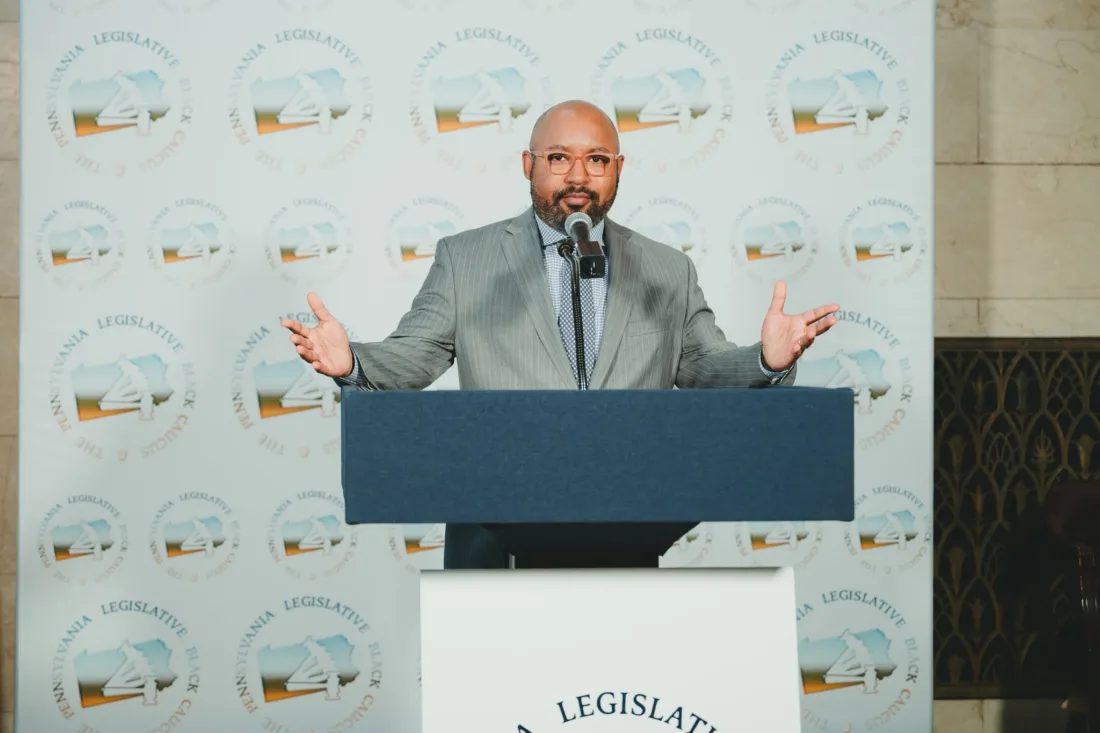
Rep. Greg Scott, D-Montgomery, is pictured at the annual K. Leroy Irvis Conference in Harrisburg earlier this year.
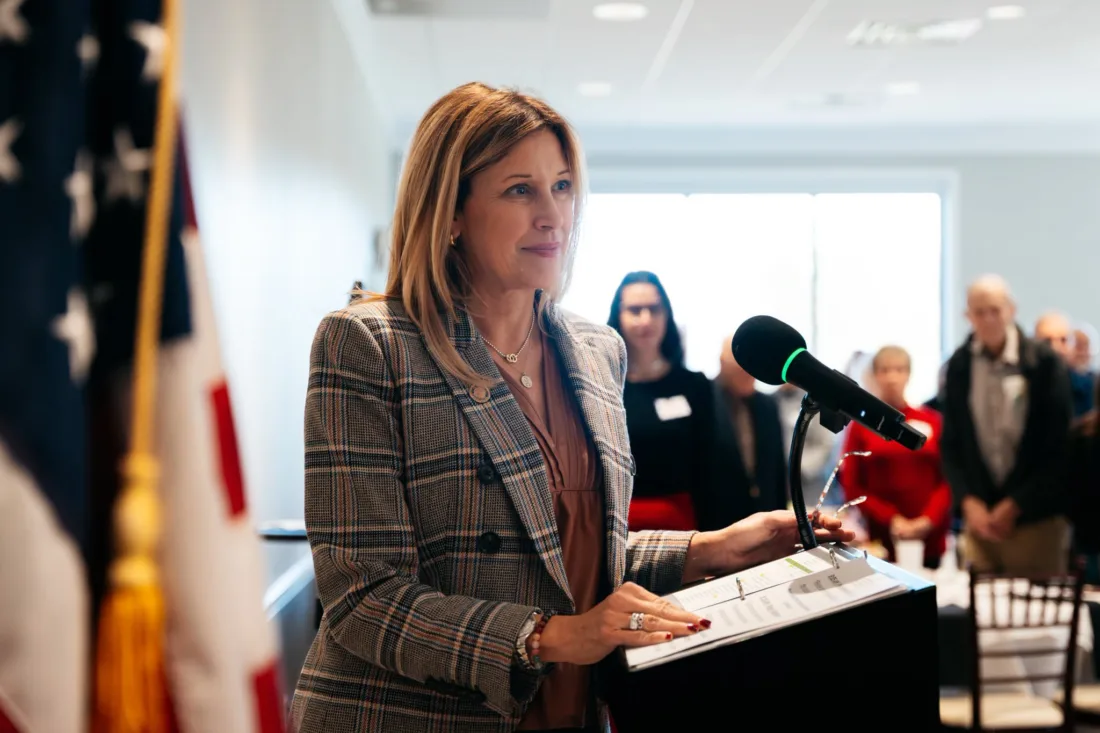
Rep. Melissa Shusterman is pictured before a speaking engagement over the summer.
Rep. Greg Scott, D-Montgomery, is pictured at the annual K. Leroy Irvis Conference in Harrisburg earlier this year.
Rep. Melissa Shusterman is pictured before a speaking engagement over the summer.
Trending
A pair of state House members are wading into the national artificial intelligence debate, with legislation to be introduced in the coming days proposing safeguards in Pennsylvania.
Rep. Melissa Shusterman, D-Chester, and Greg Scott, D-Montgomery, said Monday they are going to introduce legislation to guard against what they term "potential catastrophic risks" of frontier artificial intelligence models. The announcement comes after AI made headlines over the weekend as CEO's of major AI companies discussed potential risks posed by the largest and most advanced AI models.
"AI has the potential for technological advancements and benefits," Shusterman said. "However, government must ensure frontier models are not causing catastrophic harm to society. This is my bare minimum expectation. Currently, AI has no federal regulatory standards. Every other industry has governmental safeguards for good reasons — AI requires the same level, or more. The possibility of rogue AI agents is not acceptable to me, and I urge my fellow legislators of our Commonwealth, as well as officials at every level of government, to take these risks seriously and act quickly. Our citizens are counting on us."
Anthropic said Thursday it has blocked efforts by bad actors to use its artificial intelligence models for malicious activity such as cyberattacks, surveillance, and research that could have led to biological weapons.As AI models grow more powerful, elaborate cyberattacks no longer require sophisticated skills and even lone individuals can create threats that would not have been possible even a year ago, Anthropic said. The company said it has added stronger safeguards in its latest models to restrict biological research that could also be used to make weapons.
The lengthy report by the AI startup, which is planning an initial public offering this fall, was published two days after one of its researchers announced he’s resigning over concerns that Anthropic and its competitors are not acting responsibly in AI development. He echoed concerns raised inside and outside of the industry about the technology's potential to elude human control.
Between December 2025 and August 2026, researchers at Anthropic found misuse by actors ranging from spyware vendors and "politically motivated individuals" to state-sponsored groups spreading propaganda.
In the absence of action at the federal level, Shusterman and Scott said Pennsylvania needs to be proactive in mitigating catastrophic risks related to AI. Their legislation would establish appropriate measures to do so and would be based on language from laws already passed with bipartisan support in other states, including California, Illinois and New York.
These measures would include requirements for developing and adhering to AI safety frameworks; creating a mechanism for reporting critical safety incidents; protecting whistleblowers who report catastrophic risks; and requiring third parties to conduct independent audits for compliance.
"Ensuring strong safeguards around advanced AI systems is essential to protecting the wellbeing of our communities and the stability of our critical infrastructure," Scott said. "By acting now, Pennsylvania can take a responsible, forward-looking approach that matches the urgency of this rapidly evolving technology and aligns with efforts already underway in other states."
President Donald Trump said Monday that he would be a sufficient guardrail against rogue artificial intelligence, claiming that any efforts to limit the technology is part of a "SICK conspiracy," according to an Associated Press report. Trump was pushing back against calls by tech leaders such as Anthropic’s Dario Amodei, OpenAI’s Sam Altman and Elon Musk to have greater government oversight of AI. Many tech leaders generally say their goal is to develop the technology in ways that promote safety, address legal liability, feed economic growth, advance science and preserve national security.
The president maintained that his presence in the Oval Office should assuage any fears about AI, which has become a source of controversy after a series of hacks in recent months that showed AI agents could be working to deceive humans.
"The only control or 'guardrails' that AI needs is a STRONG AND SMART (High IQ!) PRESIDENT, and the U.S.A. has that, in spades!" Trump posted on social media.
Amodei, the Anthropic CEO, published a 3,800-word essay on Saturday that called for slower development of AI. Microsoft on Monday published its own code of conduct to ensure that humans control AI. The actions come after a series of warnings by AI experts about the technologies’ capabilities and the July 2026 cyberattack by OpenAI models on the AI company Hugging Face.
Amodei cited "AI's growing ability to build the next generation of AI" and the cyberattack by the swarm of OpenAI agents as reasons to slow the pace of development.
"Given the accelerating rate of AI capability development, it's my worry that in 6-12 months such a swarm could be capable of taking over the entire internet," Amodei wrote, adding that the damages could be in the hundreds of billions of dollars or more "without the necessary guardrails."
Altman of OpenAI seconded that perspective in a weekend post on social media.
"Pacing will be well worth this cost; no amount of American competitive pressure should justify recklessness, or let capabilities get ahead of alignment and monitoring," Altman said. "Where we will need the help of our government is for international coordination."
China’s Ministry of Foreign Affairs on Monday bristled at the Anthropic CEO’s call for the U.S. to curb China’s artificial intelligence capabilities as part of a wider argument for a global slowdown on AI development.
A spokesperson for China's Ministry of Foreign Affairs said Amodei’s dire warnings about China were counterproductive and that all parties should work together on AI.
"Fearmongering, confrontation and vicious competition will only disrupt the process of global AI governance — which serves no one's interest," spokesperson Guo Jiakun said at a press conference in response to a question about Amodei's essay.
The Associated Press contributed to this report.