
Meeting ‘challenges’
Hi-Ed Council, local businesses and organizations tackle workforce gaps
Trending
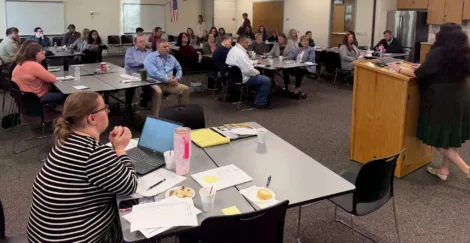
Representatives from education, local businesses, community organizations, and other partners in the region were invited to engage at the Hi-Ed's advisory meeting last week to discuss the School-to-Work and Adult Education programs and the pressing workforce development challenges.
Executive Director John Papalia opened the meeting by framing the Hi-Ed Council as a significant bridge connecting educators, learners, community members and key partners. Aligning community programs, targeted education and workforce training is what drives a clear path toward personal and professional advancement. Ultimately, these build a stronger workforce and long-term economic growth within Warren and Forest counties.
"Meetings like this is how we learn how to help identify challenges, strengths and weaknesses in order to improve," expressed Papalia.
Discussions focused on how to better help the community at the kindergarten to grade 12 level as well as adult learning. While technology has driven much of the change, both positive and negative - with it comes a critical deficit in essential life and career skills especially among those entering the workforce. Urgent gaps are found in basic communication, personal accountability, financial literacy and career readiness, alongside basic workplace etiquette. Opportunities for more hands-on experiences and job shadowing were brought up as well as exposure to skilled trades and resources for parents to help their children with these essential skills.
The meeting called attention to how local industries are facing critical shortages of skilled labor, stating the need to bridge the gap through targeted workforce development. The group identified a need for customized industrial training programs that should be tailored to meet employers' requirements. Soft skills such as communication, problem solving, work ethic and career advancement strategies are at the forefront.
Identifying the barriers for adult learners such as transportation, child care, and affordable housing are top concerns. Hi-Ed Assistant Director Angela Bigelow stressed the importance of community partnerships and their roles in breaking these barriers by working together. Recognizing that access to education and resources is not equal for everyone, pointing out the need for developing programs that break down these barriers by delivering practical knowledge in an environment that is welcoming, accessible and free of judgment.
As technology continues to reshape how we learn and work, educators of all institutions find it necessary to evolve in order to meet the changing needs of learners. Hi-Ed strongly believes that in-person learning is of great value while realizing it may be out of reach for many. The goal is to meet people where they are while making education and training easier to access.
Emphasizing that community growth hinges on deep collaboration, Papalia issued a call to action to close the meeting. Attendees were urged to join newly formed committees dedicated to school-to-work transitions, workforce development, and community partnerships. By keeping these vital lines of communication open, organizers aim to turn the discussions into measurable, long-term improvements for Warren County.