
State Supreme Court decision will limit game warden searches
Trending
The state Supreme Court has overturned more than a century of precedent by limiting state game wardens' warrantless searches on private property.
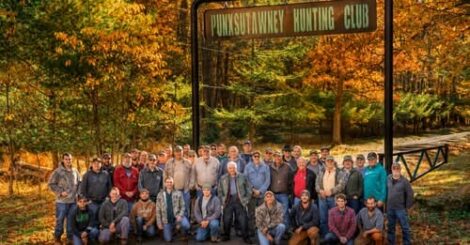
In a 7-0 unanimous decision, the Pennsylvania Supreme Court, in Punxsutawney Hunting Club v. Pennsylvania Game Commission, sided with Pennsylvania landowners and ruled against warrantless searches on open fields.
Previous case law reaffirmed as recently as 2007 utilized what is known as the open fields doctrine that authorized unlawful searches of private property not immediately surrounding a private home. The state Supreme Court ruled this week that prior precedent was wrongly reasoned.
"For the reasons that follow, we conclude that slavish adherence to our decision in Russo must give way to the greater privacy and property protections afforded under ArticleI, Section 8 of our state charter," wrote Justice Kevin Brobson in the court's decision. "As our jurisprudence in this area has evolved, the court's reasoning and result in Russo have not aged well. In short, we hold that: Russo was wrongly decided; Article I, Section 8 of the Pennsylvania Constitution affords greater protection to land beyond the curtilage of a home or building; and most of the challenged Entry Statutes are, consequently, unconstitutional."
The open fields doctrine allowed Pennsylvania Game Commission personnel authority to enter private property and conduct surveillance without a warrant or probable cause even if landowners have clearly posted notices against trespassing.
Punxsutawney Hunting Club Inc. and Pitch Pine Hunting Club Inc. v. Pennsylvania Game Commission and Mark Gritzer, in his official capacity as an officer of the Pennsylvania Game Commission. An appellate court dismissed the hunting clubs' lawsuit against the Game Commission in May 2023. The clubs appealed to the state Supreme Court. The appeal didn't take a stance on the issues raised by the two hunting clubs because the clubs were directly challenging a 2007 state Supreme Court decision in Russo v. Commonwealth in which the state Supreme Court held that the state Game Commission could enter open fields in order to enforce state hunting regulations even if the land is posted with no trespassing signs. The open fields doctrine upheld in the Russo decision involves a rule dating back to 1924 that allows government officials to search private property, not homes, without a warrant.
Brobson wrote that the fact warrantless searches violate the state charter should not unreasonably impede the work of state game wardens. Wardens will still be able to conduct warrantless searches of private property that is not posted, fenced or otherwise marked to exclude intruders; observe evidence of violations that occur in plain view on private property that is posted, fenced, or otherwise marked to exclude intruders; obtain a warrant to search private property that is posted, fenced or otherwise marked to exclude intruders based upon their receipt of information that a Code violation has occurred; or apply a recognized exception to the warrant requirement as a means to search private property that is posted, fenced, or otherwise marked to exclude intruders.
"While this means that the current balance, as reflected in Russo, must shift toward affording greater protection to possessed land and limiting the reach of the federal open fields doctrine under our state charter, it is the weight and pull of our citizens' privacy rights under our state charter that demands the realignment, not a diminution of the importance of our citizens' right to the conservation, maintenance and protection of wildlife under the (Environmental Rights Act)."
The Commonwealth Foundation filed an amicus brief in support of the Punxsutawney and Pitch Pine hunting clubs and other Pennsylvania landowners against what the foundation described as state government overreach.
"
"This is a landmark victory for property rights in Pennsylvania. The court rightfully upheld the sanctity of private property ownership and privacy against government encroachment," said Megan Martin, chief operating officer and general counsel of the Commonwealth Foundation. "The court affirmed what Pennsylvanians knew all along: the government cannot sidestep constitutional safeguards. Private land does not mean public access. State government agents must obtain a warrant before stepping onto any privately owned land. ... Whether hunting, fishing, gardening, or lounging, every Pennsylvanian has a right to privacy when enjoying their private land."