
RDA counters Marketplace proposal, negotiations continue
Trending
Negotiations over the future of the long-vacant building at 231-237 Pennsylvania Ave. W. took another step forward Wednesday as the Warren Redevelopment Authority (RDA) unanimously rejected a revised proposal from the Warren Heritage Community Alliance (WHCA) before approving a counterproposal aimed at keeping redevelopment discussions alive.
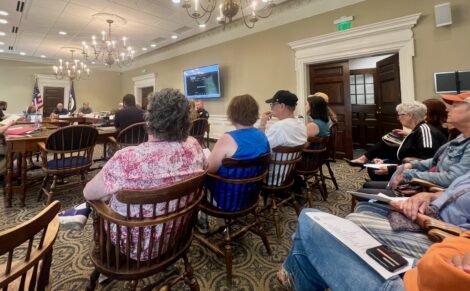
The action came after nearly an hour of public comment and discussion focused on whether the historic downtown building should be preserved and redeveloped into the proposed Warren Marketplace or demolished because of its deteriorating condition.
The meeting began with a public comment from Hank LeMeur, who urged the authority to demolish the building.
LeMeur said he supports the concept of the Warren Marketplace but believes the economics of rehabilitating the existing structure are unrealistic.
“I advocate demolishing the existing structure,” LeMeur said, citing construction costs, fundraising challenges and public health concerns related to the building’s condition.
Additional public comments reflected the divided opinions surrounding the property.
The authority also received correspondence from Allegheny College history professor Alyssa Ribeiro supporting the Warren Marketplace proposal. The letter argued that preserving and rehabilitating historic buildings aligns with Warren’s long-term revitalization goals and warned against replacing the structure with another vacant lot.
During public comment on the Pennsylvania Avenue property, Rivero reiterated her support for preserving the building.
“I think it’s really important that we preserve any historic character that we can,” she said, adding that rehabilitating the structure would strengthen downtown while preserving one of the city’s remaining historic buildings.
Ron Peterson, WHCA treasurer, challenged claims that demolition would be less expensive than rehabilitation, saying engineering reports previously commissioned for the building concluded it could be salvaged.
“It does cost more to demolish and rebuild than it does to rehab the property,” Peterson said.
Peterson also emphasized that the organization has already invested significant time and resources into planning the Warren Marketplace and has developed architectural concepts, legal work and fundraising strategies.
Sandra Blum, chair of the alliance, told the authority the nonprofit filed for federal 501(c)(3) status Tuesday after initially considering operating under a fiscal sponsor. She said the organization currently has about $40,000 available for planning expenses and intends to pursue grants and community fundraising if the project moves forward.
Board members questioned the organization’s financial capacity, timeline and governance, including the delay in filing for federal nonprofit status and the makeup of its board of directors.
The alliance’s revised proposal sought to replace the authority’s previously requested $200,000 developer’s bond with milestone-based project benchmarks.
RDA members said they remain concerned that the authority could eventually inherit a building requiring even more expensive demolition if the project stalled.
“The biggest concern is that we could be left with a property that requires a much more costly demolition than it does today,” said RDA member Rene Davis.
Peterson argued the organization has no intention of abandoning the project.
“I don’t like to lose, and we are going to work very hard to make this happen,” he said.
Following discussion, the authority unanimously rejected the WHCA’s revised proposal before considering a counteroffer.
The counterproposal would:
Transfer ownership of the property to the Warren Heritage Community Alliance.
Require the alliance to assume responsibility for all safety issues immediately upon transfer.
Provide up to $5,000 from the redevelopment authority to help offset the cost of obtaining a developer’s bond of at least $200,000.
Require drainage issues affecting neighboring properties to be resolved within one year.
Require sidewalks to be certified safe by an independent engineer within two years.
Require the building to be open to the public and code-compliant within five years.
Require the property transfer to occur by Oct. 31, 2026.
Allow the authority to reclaim the property if conditions are not met, with the developer’s bond helping offset future demolition costs.
The authority unanimously approved presenting the counterproposal to the alliance.
Alliance representatives indicated they were generally receptive to the framework but said their bylaws require a board vote before formally accepting the proposal. They also agreed to provide documentation regarding their pending federal nonprofit application.
Authority members noted that the property cannot be transferred until the Internal Revenue Service formally approves the organization’s 501(c)(3) status.