
Rapp criticizes Democrats for last-minute vote
Trending
Pennsylvania has missed a court-ordered July 24 deadline to pass new sentencing guidelines for those serving mandatory life sentences without parole for second-degree murder.
The stipulation comes four months after the state Supreme Court ruled the existing guidelines unconstitutional, giving the Legislature until July 24 to reconfigure a different sentencing structure. Sen. Lisa Baker, R-Dallas, co-sponsored by 13 fellow Republican senators, passed the state Senate in late June and would establish a new system of sentencing for second-degree murder convictions, providing discretion for courts when sentencing someone convicted of second-degree murder based on the degree of the defendant's culpability and the circumstances of the case.
Second-degree murder covers situations where someone takes part in inherently dangerous felonies, like robbery, rape, or arson, that result in a person's death. Under long-standing Pennsylvania law, even participants who did not directly inflict the fatal injury can be held fully accountable for the outcome because they willingly joined in the crime. Roughly 1,100 inmates are currently serving life sentences in Pennsylvania for second-degree murder convictions.
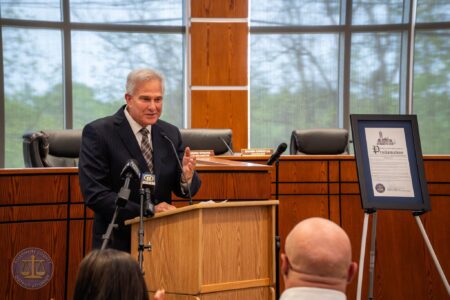
"The House majority had almost a month to amend the Senate bill on this issue, but they waited until the day before the deadline to make changes," Rep. Kathy Rapp, R-Warren, said in a statement. "This gives the Senate no time to look over the amendments and get something on the governor's desk."
Generally, Senate Bill 1400 will authorize a sentencing range of 35 years to up to life with the possibility of parole. Judges in cases Baker said are outliers - such as when someone is a getaway driver or wasn't actively involved in the death of another person - will have the ability to set a sentence less than the 35-year minimum but no less than 10 years when specific criteria are met. The bill also establishes a sentence of life in prison without parole if a jury determines a person charged with second-degree murder caused the death of the victim and one of four additional factors: if the victim was a law enforcement officer or a child under the age of 13, if rape or deviate sexual intercourse by force was involved in the crime, if the defendant was previously convicted of a violent crime or if the defendant caused serious bodily injury or death to another victim. Baker also proposes allowing those currently serving sentences for second-degree murder to become eligible for parole after serving at least 35 years incarceration or attaining the age of 70 and having served at least 20 years.
The state House of Representatives passed an amended version of Senate Bill 1400 that changed the medical release provisions of the law in a way that would expand the circumstances in which "violent" offenders could be released. The vote was along party lines with the exception of Democrat Frank Burns, who voted against the amended version of Senate Bill 1400, and Republican Tom Mehaffie voted in favor of the amended bill.
The amended bill would have to be approved by the state Senate, which isn't scheduled to return to session until September. Senate leadership said last week that the amended version of Senate Bill 1400 won't pass in the Senate – meaning there is a legislative standstill. Allegheny District Attorney Stephen Zappala filed a petition with the Supreme Court seeking to add another 120 days to the stay. A decision hasn't been made by the court as of Monday afternoon.
Rapp opposed the legislation because of the changes added by Democrats, including broad new medical parole options for inmates and revised sentencing guidelines that eliminate mandatory minimums, leaving sentencing entirely up to the judges.
"These sentences pertain to violent criminals - rapists, arsonists and others - who bear responsibility for someone's death," said Rapp. "Victims' families deserve some peace of mind that these criminals remain behind bars for a very long time."