
Legislator proposes ban on AI to regulate gas prices
Trending
No one has accused Pennsylvania gas station operators from using artificial intelligence to help set gas prices. A state lawmaker wants to keep it that way.
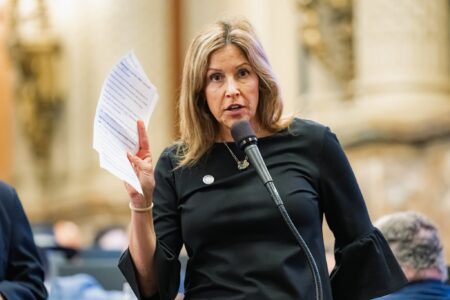
Rep. Melissa Shusterman, D-Paoli, is circulating a co-sponsorship memorandum for legislation that would prevent the use of artificial intelligence to coordinate and adjust gas prices. The bill has already attracted two co-sponsors.
Shusterman's proposal is based on a federal lawsuit filed in late June that accused gas station companies including BP, Marathon Petroleum, 7-Eleven, Circle K, Walmart, and Albertsons.of violating California's antitrust law through Kalibrate, a fuel-pricing software system used across the world. The lawsuit was filed by California residents in federal court.
The plaintiffs allege Kalibrate’s AI software pools confidential competitor data to automate pricing and enable stations to avoid undercutting each other. The suit specifically highlights a “restoration” tool that purportedly allows stations in an area to contemporaneously implement large price hikes. According to the Associated Press, the plaintiffs describe Kalibrate as the "central nervous system for a conspiracy to extinguish retail price competition among gas stations."
"Kalibrate promises that if gas stations surrender their pricing decisions and competitively sensitive cost and volume data to Kalibrate Fuel Pricing, the software will enable them to avoid competing with other area stations and to charge higher prices to consumers," the lawsuit said.
According to the lawsuit, research into algorithmic fuel-pricing software found average price increases of about 6 cents per gallon, rising to as much as 30 cents per gallon in markets where many stations use the technology.
The defendants in the lawsuit -- which also include BP, Speedway, EG America, Walmart and Albertsons -- collectively operate more than 1,700 gas stations in California, according to the lawsuit. None of them immediately responded to a request for comment.
The case is a major test of California’s Assembly Bill 325, which explicitly prohibits the use of shared pricing algorithms to restrain trade, according to a Los Angeles Times report. Shusterman's proposal would provide a similar protection under Pennsylvania law for commonwealth residents if it is approved by the General Assembly.
"If this type of collusion is possible, our General Assembly needs to take action to prevent this behavior in the commonwealth," Shusterman wrote in her co-sponsorship memorandum. "We must ensure that our laws are adequately improved to guard against technological advances that may benefit corporations at the expense of consumers. We should not permit AI-generated unfair trade practices and market manipulations to occur. For this reason, we plan to introduce legislation that would prevent businesses from utilizing artificial intelligence (AI) to coordinate and adjust fuel prices."
According to the lawsuit, research into algorithmic fuel-pricing software found average price increases of about 6 cents per gallon, rising to as much as 30 cents per gallon in markets where many stations use the technology, the AP reported. The lawsuit states a 1 cent increase in gas prices costs California drivers a collective $134 million over the course of a year.
"Increased costs for groceries, housing, utilities, and gas are already burdening many Pennsylvania families," Shusterman wrote. "Our gasoline marketplace should be free of technology-assisted manipulation. This bill will help to ensure that our fuel prices are not artificially inflated through the use of AI price fixing."