Lawmaker introduces response to penny’s elimination
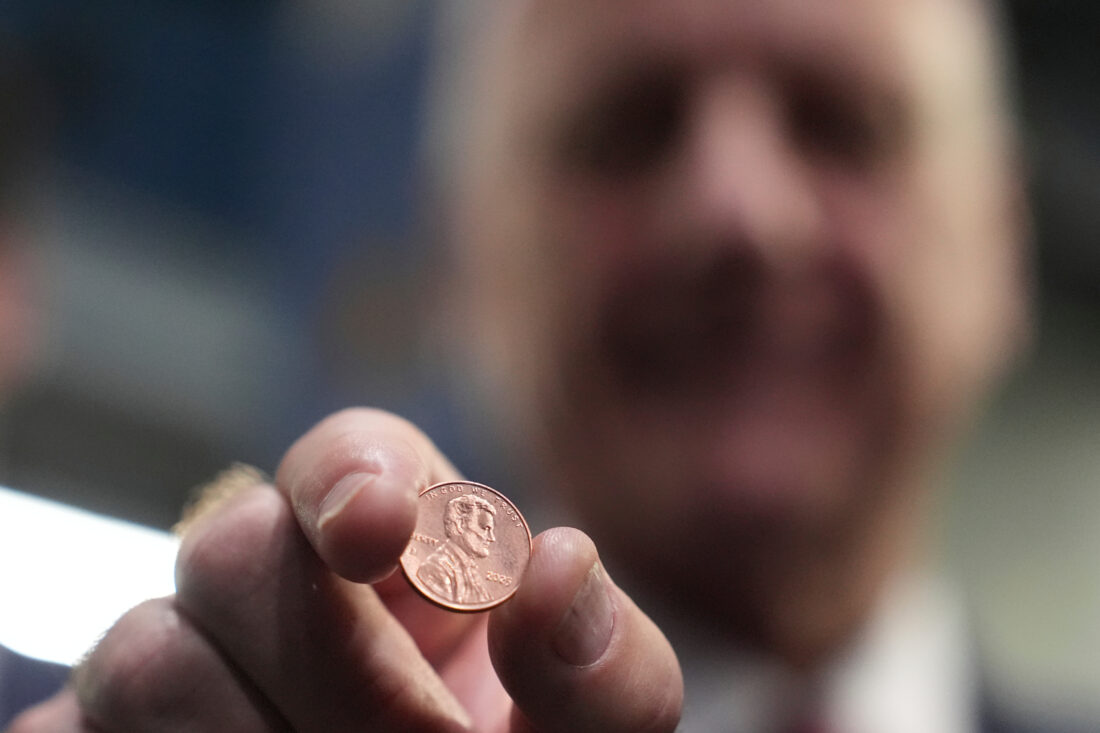
AP file photo U.S. Treasurer Brandon Beach holds one of the last pennies pressed at the U.S. Mint in Philadelphia, Wednesday, Nov. 12, 2025.
-
- AP file photo U.S. Treasurer Brandon Beach holds one of the last pennies pressed at the U.S. Mint in Philadelphia, Wednesday, Nov. 12, 2025.
-

- Rep. Nathan Davidson, D-Lemoyne, is pictured shaking hands with Gov. Josh Shapiro in February after Shapiro presented his budget address to the General Assembly.
Rep. Nate Davidson, D-Lemoyne, is circulating a co-sponsorship memorandum for legislation he is drafting in response. Bills like Davidson’s have been popping up in state legislatures across the country since November. While pennies are still in circulation, they are getting harder to come by.
“This has created a challenge for counties and local governments who collect a variety of fees and revenues across the Commonwealth,” Davidson wrote in his co-sponsorship memorandum. “Many Pennsylvanians prefer to pay in cash, and the penny shortage has made it difficult to provide change to the nearest cent. Since many of these fees are set in statute, counties and local governments have no flexibility and are left with no good choices. For this reason, I will be introducing legislation that would allow cash transactions to be rounded to the nearest nickel.”
Text for Davidson’s bill hasn’t yet been drafted, but he said it wouldn’t affect prices for electronic transfers, checks, debit card, or credit card transactions.
The last 1-cent coins were made in November at the mint in Philadelphia. When it was introduced in 1793, a penny could buy a biscuit, a candle or a piece of candy. Now most of them are cast aside to sit in jars or junk drawers, and each one costs nearly 4 cents to make.
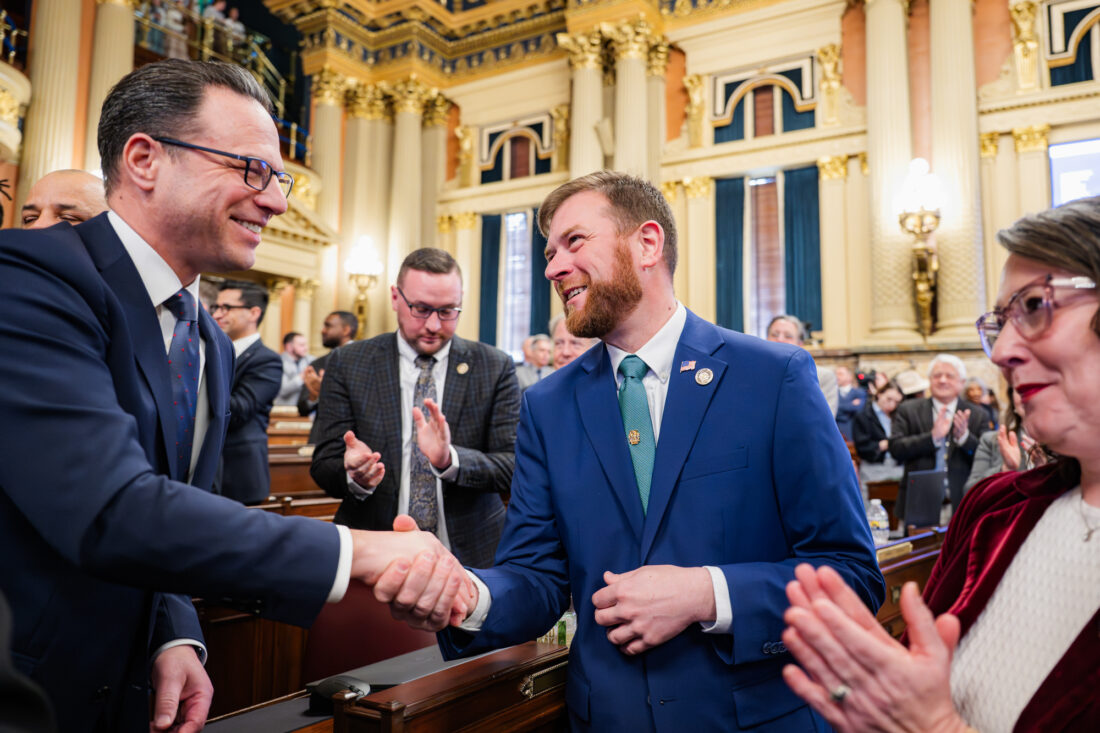
Rep. Nathan Davidson, D-Lemoyne, is pictured shaking hands with Gov. Josh Shapiro in February after Shapiro presented his budget address to the General Assembly.
Some retailers voiced concerns in recent weeks as supplies ran low and the end of production drew near, the Associated Press reported. They said the phaseout was abrupt and came with no government guidance on how to handle transactions. Some businesses rounded prices down to avoid shortchanging shoppers. Others pleaded with customers to bring exact change. The more creative among them gave out prizes, such as a free drink, in exchange for a pile of pennies.
Proponents of eliminating the coin cited cost savings, speedier checkouts at cash registers and the fact that some countries have already eliminated their 1-cent coins. Canada, for instance, stopped minting its penny in 2012.
Some banks began rationing supplies, a somewhat paradoxical result of the effort to address what many see as a glut of the coins. Over the last century, about half the coins made at mints in Philadelphia and Denver have been pennies.
But they cost far less to produce than the nickel, which costs nearly 14 cents to make. The diminutive dime, by comparison, costs less than 6 cents to produce, and the quarter nearly 15 cents.
The Associated Press contributed to this report.
Local News
Affidavit details rape allegations
Charges filed against a Warren man that include first-degree rape stemmed from four alleged incidents at a Pleasant ...

US sinks Iranian warship in Indian Ocean

Additional quilts added to Historical Society exhibit
Lawmaker introduces response to penny’s elimination
Gas prices skyrocket after Iran air strikes
NEW YORK (AP) — The average price for a gallon of gasoline jumped 11 cents overnight to about $3.11 in the U.S., ...