Shapiro, Senate GOP focus on housing
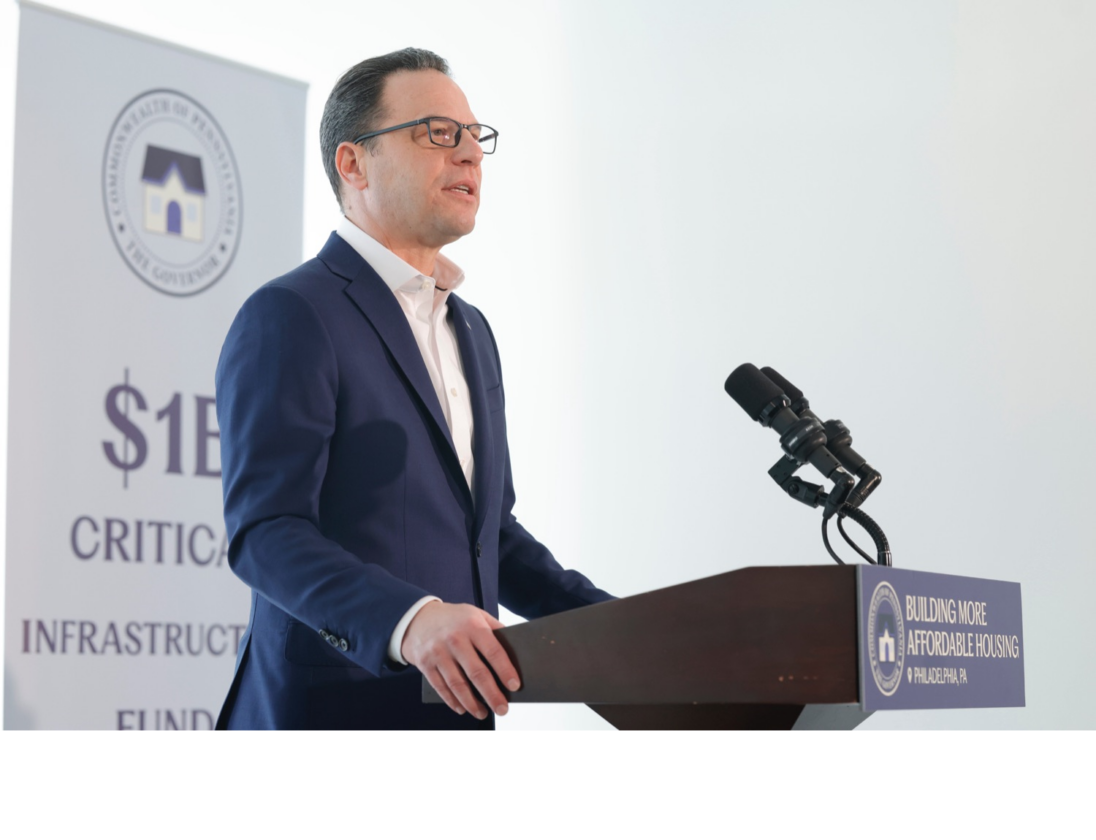
Gov. Josh Shapiro is pictured announcing his statewide Housing Action Plan
-
- Gov. Josh Shapiro is pictured announcing his statewide Housing Action Plan
-
- State Sen. Pat Stefano, R-Connellsville, is pictured during a recent Senate Majority Policy Committee public hearing on housing.
Increasing housing supplies throughout the state is something Republicans and Democrats agree needs to happen, though they will likely have different ways to do so.
Housing has been identified as an issue in Warren County. Increasing housing supply is a key piece of both the Warren County and the city of Warren comprehensive plans. The county is in the midst of a housing study that will shed light on how much housing is needed in the area, including short and long-term housing needs at various price points, unmet housing needs, whether or not the cost of undeveloped land hinder development, and how Warren County compares to similar counties. The plan will also assess availability of homes for first time home buyers and what first time homebuyers are looking for in a home and neighborhood, availability of homes for seniors, and an analysis of the prevalence of out-of-area property owners, specifically absentee landlords.
Part of the study includes strategies and recommendations to improve housing in the county. These strategies could range from suggestions on the housing that is needed and what amenities are needed in a community to changing regulations and looking at best practices that are successful in other communities.
Shapiro said workers struggle to find affordable homes near new job opportunities, housing costs continue to rise at a rate faster than wages, over one million households in Pennsylvania are spending more than 30 percent of their income on housing, and more than 50 percent of the Commonwealth’s housing stock is over 50 years old — making it increasingly more expensive to maintain. Under current projections, Pennsylvania will fall short by roughly 185,000 homes by 2035 without further action.
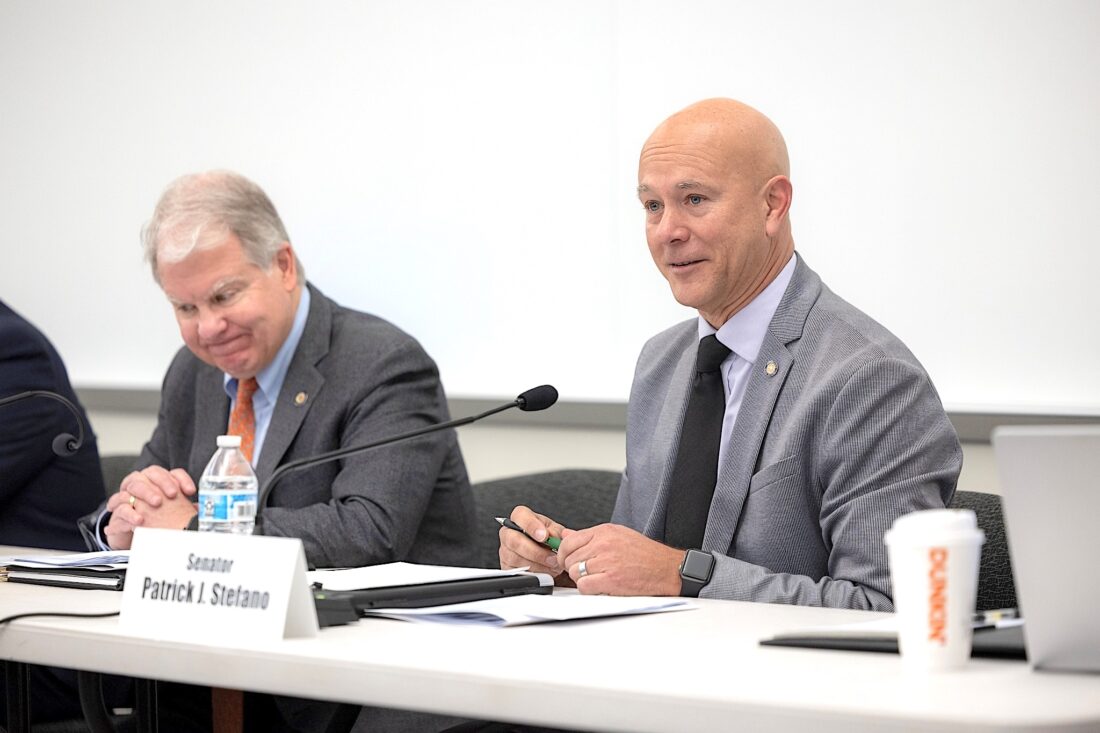
State Sen. Pat Stefano, R-Connellsville, is pictured during a recent Senate Majority Policy Committee public hearing on housing.
Shapiro’s housing plan includes appointing a deputy secretary for housing, reform and revamp state and local housing programs, make changes to low income housing tax credits to cut costs, increase use and boost the number of affordable homes. Shapiro also proposes modernizing the state’s housing development regulations to make it less expensive to build and preserve homes. That includes strengthening local land banks, curb private equity purchases of single-family homes and modernize local planning and regulatory processes for residential construction projects.
The governor also wants to align homeless support programs, expand statewide eviction, foreclosure and displacement prevention efforts, connect homeless Medicaid recipients to stable housing and services through investments in health care and reduce household energy burdens by strengthening consumer protections.
“For too many families in Pennsylvania, housing prices are rising faster than their paychecks and the American dream of owning a home no longer feels possible, but it doesn’t have to be this way,” said Governor Shapiro. “This plan meets Pennsylvania’s housing needs head-on — building more homes, cutting red tape, protecting renters and homeowners, and ensuring our Commonwealth remains the place for people to put down roots, live with the dignity they deserve, and build a future of real opportunity.”
Senate Republicans are working on their own ideas that included hosting a recent Majority Policy Committee public hearing to hear local officials, housing advocates, builders and developers about how state government could combat Pennsylvania’s statewide housing crisis.
“Affordable, attainable housing is essential for the future of Pennsylvania’s workforce and economy,” said state Sen. Pat Stefano, R-Connellsville. “Today’s discussion highlighted practical solutions that can help us meet this challenge head-on. By reducing regulatory hurdles and supporting responsible development, we can create opportunities for families to live where they work and strengthen communities across the commonwealth. I’m grateful to all the local officials and industry leaders who testified today. Their insight and expertise are invaluable as we work to craft solutions that truly meet the needs of Pennsylvania families.”
Earlier this year, Stefano proposed legislation focusing on property tax abatements for redevelopment projects by extending the maximum property tax abatement period from 10 to 20 years under the Local Economic Revitalization Tax Assistance (LERTA) program.
Robert Sleighter, president and founder of Sleighter Design, suggested that lawmakers should look at infrastructure partnership programs to help lower upfront development costs as well as allowing adaptive reuse projects, like vacant schools and industrial buildings, to have a more expeditious review. Mark Rafail, economic development coordinator for Fayette County, touched on how middle-class workforce housing is vital when discussing how to make housing more attainable in Pennsylvania and suggested the commonwealth look at providing state tax credits, development incentives and bond financing specifically targeted to middle-income housing development. Dana Kendrick, manager of business, community and economic operations for K2 Engineering, Inc., emphasized housing goes hand in hand with workforce development and economic growth, and the commonwealth must look at investing in attainable housing options.
“There is no issue I hear more about from employers and employees than the need for more quality housing options,” said Sen. David Argall, R-Mahanoy. “Addressing this crisis is going to take collaboration between officials from all levels of government and private partners in our communities. I look forward to sharing the strategies we reviewed today with communities in Schuylkill, Carbon and Luzerne counties.”
Local News
State’s minimum wage specifics still in play

Local nurse retires after career throughout the region
Crescent Park to have Arbor Day celebration
A significant portion of last week’s Parks, Recreation and Landscaping Commission meeting focused on preparations ...
Children’s Advocacy Center hosting April events

JC Warren welcomes new agent