Winter storm freezes activity, cold weather warnings issued
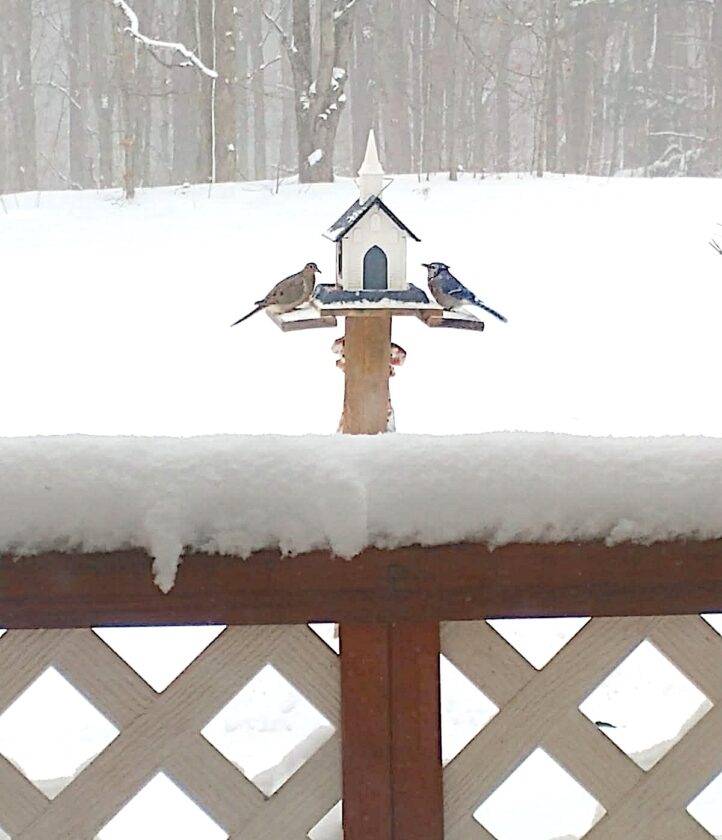
Submitted by Shelly Laurie of Lander Meeting at the bird feeding chapel, this Mourning Dove and Blue Jay agree that this weather is for the birds!
After nearly a foot of snow fell on Sunday and closed schools, the news doesn’t get much better for county residents for the rest of the week.
An extreme cold warning has been issued for all of the western part of the state through 11 a.m. today.
Monday’s report had the National Weather Service issuing a hazardous weather outlook for Warren and the nearby counties stretching east in the counties of McKean, Potter, Elk, Cameron, Northern Clinton, Tioga, Northern Lycoming and Sullivan. The cold weather advisory is in effect through 1 p.m. Tuesday. The outlook for the hazardous weather for central Pennsylvania from Tuesday through Sunday will continue with frigid temperatures with sub-zero to potentially dangerous wind chills.
Wind chills as low as 20 below are expected in the aforementioned counties. The wind chills could cause frostbite to any exposed skin, as quickly as in 30 minutes. Use caution while traveling and wear all appropriate winter gear. These frigid sub-zero temperatures are expected through Sunday, with dangerous wind chills.
The website weather.gov/StateCollege provides more information about those hazards.
The American Red Cross offers tips for safety during cold weather storms. This extreme cold will affect millions of people meaning that hundreds of thousands have no power or heat, with the American Red Cross responding across many states. Be sure to stay informed of the weather and stay in touch with loved ones, neighbors and care for pets. Those who need to leave home should have a go-kit filled with three days of supplies including backup batteries and chargers. Two weeks of food and water, and one month supply of medical supplies and medicines. Warm clothing and emergency supplies in your vehicle are recommended as well as a snow shovel and ice-meting products. Use flashlights over candles, don’t drive if not necessary. It is important to know to never use a generator inside, not even grills, camp stoves or other gasoline, propane, natural gas or charcoal burning devices. A generator should never be plugged into a wall outlet.
Outdoor pipelines are most likely to freeze as well as unheated interior areas so opening kitchen and bathroom cabinet doors allows the warmer air to circulate around the plumbing.
If using a space heater, never leave it unattended and be sure it is set on a level surface away from rugs, bedding and curtains. Never use extension cords and turn space heaters off if leaving the room as well as when asleep.
The first areas on the body that are affected by the cold are the nose, ears, cheeks, chin, fingers and toes; with pain and numbness or skin color changes are all signs of frostbite. Hypothermia can be deadly and is characteristic of shivering, confusion, drowsiness and slurred speech.
The American Red Cross has a free app that includes where the open Red Cross shelter locations are located and also provides additional safety steps for various emergencies. The app address is redcross.org/apps.
AAA recommends the following tips for driving starting with vehicle maintenance starting with the battery and it is recommended to test the health of it and see if it needs replacing. Next, your tires should have a tread of at least 4/32 of an inch for best stopping power and prevention of hydroplaning. The tire pressure should remain within the recommended range, with consideration to upgrade to snow tires. Fluids such as washer fluid, oil,coolant and brake fluid should be checked as temperatures affect these. Keep gas tanks at least half full and keep a roadside emergency kit in your car. This kit should include jumper cables, snow scraper and brush, shovel, traction material (salt, sand, kitty litter), road flares, flashlight, first-aid kit, bottled water and non-perishable snacks. Blankets and phone charging cables are also highly recommended. Clear ice and snow after your car has been turned on with the heat. Never leave your car unattended but while it’s warming clear all the lights, license plate and the roof. Be sure that your wipers are not frozen to the glass and never use hot water to remove snow or ice because rapid temperature change can crack or shatter the glass. De-icing sprays work well for stubborn ice on locks. With reduced visibility, reaction times can be slow so be sure to drive defensively. Use headlights to improve visibility yet avoid high beams in heavy snow as it actually reduces visibility. If ever found in a situation where your vehicle slides, calmly control your movements with braking and steering in a gentle fashion so that as the tires regain traction, your car will follow.
For more information about vehicle safety and AAA Roadside Assistance, visit the American Automobile Association at their website: aaa.com
Local News
City crews push through snow cleanup

Northeast sees more snow from the tail end of a colossal winter storm, at least 25 deaths reported
Winter storm freezes activity, cold weather warnings issued

Tougher gun store theft penalties proposed

America250 kickoff to be held today in county