Senator eyes study of Medicaid fraud
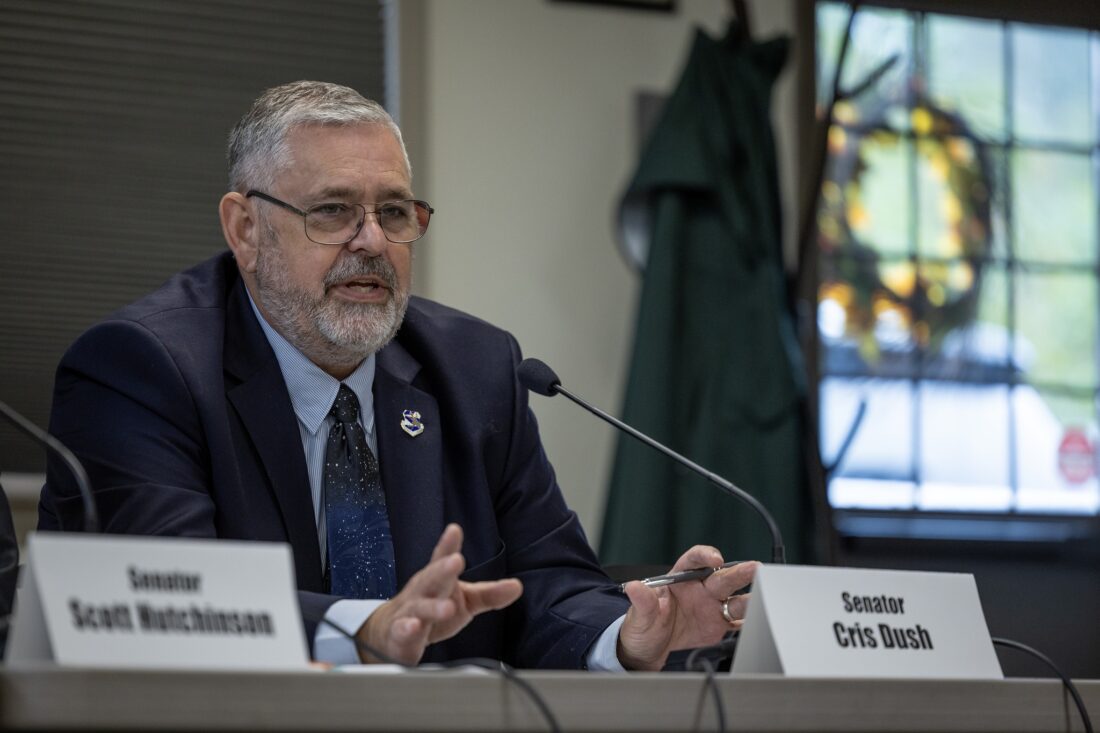
State Sen. Cris Dush, R-Brookville, is pictured during a September hearing.
The Commonwealth Foundation report shined a spotlight on Medicaid fraud in Pennsylvania earlier this week.
Now, two days after the report’s release, state Sen. Cris Dush, R-Brookville, is proposing a study of the Medicaid program with an eye toward reducing fraud in the program.
“In the near future, I will be introducing a resolution directing LBFC to conduct a study of our state’s medical assistance programs, also known as Medicaid,” Dush said in his co-sponsorship memorandum. “Medicaid is a crucial service that helps our state’s vulnerable populations obtain and maintain health care. When Medicaid is exploited or mismanaged, the healthcare of our state’s vulnerable populations is put at risk.”
The Commonwealth Foundation report said Pennsylvania charged more Medicaid fraud cases than any other state in 2024, with the state Attorney General’s office reporting $11.3 million in Medicaid fraud recoveries and $44 million in fraudulent charges. That same year, Medicaid spending ballooned to nearly $50 billion (including state and federal funds). Since 2018, Medicaid spending has grown by 80%, from $30 billion to $54 billion.
Dush also cites within the past 10 years that found issues with Medicaid in Pennsylvania. A 2017 report claimed that Pennsylvania could have saved millions of dollars if the state held contracts to certain standards, and a 2024 report found $551 million in Medicaid funds were improperly claimed.
Half or more of the roughly $18 billion in federal funds that supported 14 Minnesota-run programs since 2018 may have been stolen, a federal prosecutor said Thursday, describing the massive and multilayered fraud schemes as staggering. While prosecutors typically see fraud manifest as providers overbilling, Joe Thompson, first assistant U.S. attorney prosecuting the Minnesota case, said during a news conference in December that in Minneapolis, companies were allegedly created to provide zero services while submitting claims to Medicaid and pocketing federal funds for international travel, luxury vehicles and lavish lifestyles.
Dush said his study should include an examination of Pennsylvania programs to make sure such abuse isn’t happening in the commonwealth as well.
“Beyond what is happening in Pennsylvania, there are things being brought to light in other states that suggest state Medicaid programs may be vulnerable to fraud from malicious actors,” Dush wrote. “In light of these past reports finding issues with our state’s Medicaid program and the questions raised by events elsewhere, I believe it is prudent that we study our state’s Medicaid program. … Medicaid is once again in the national spotlight. And as recent events in Minnesota have revealed, the program’s size and complexity make it ripe for waste, fraud, and abuse. Unfortunately for Pennsylvanians, the Keystone State is no exception.”
The Commonwealth Foundation said that in July 2025, the Office of Inspector General, housed within the U.S. Department of Health and Human Services, reported that Pennsylvania made more than $8.7 million in “unallowable capitation payments for enrollees with multiple Medicaid Identification numbers.” In March 2025, Pennsylvania’s Auditor General announced that reporting delays from one Medicaid provider, University of Pittsburgh Medical Center Community HealthChoices, cost taxpayers more than $350,00 – $120,000 of which the state couldn’t recover. Paperwork delays lead to taxpayers paying the provider for four individuals after they died.
In spring 2024, another audit revealed that Pennsylvania’s school-based program improperly claimed over $550 million in Medicaid funds.
Other instances of Medicaid fraud, according to the Commonwealth Foundation include a woman who allegedly stole the identities of overseas Pennsylvanians to bill for nearly $1 million in home care services, a case manager allegedly stole $72,000 by billing for child clients he didn’t see for a year, and an unlicensed therapist who allegedly billed $7,000 for sessions where he sexually exploited patients.
“With 27% of Pennsylvanians dependent on Medicaid for health care, the ‘pay and chase’ method must stop,” the foundation wrote in its report on Jan. 26. “Even Gov. Shapiro, during his time as Attorney General, noted that Pennsylvania is likely losing $3 billion a year to Medicaid fraud. With a pending $5 billion deficit, Pennsylvania cannot afford to ignore this issue.”
Local News

Family Affair: Local racer continues tradition, hosts benefit to support racing season
Here’s when you’ll get your tax refund from the IRS
Senator eyes study of Medicaid fraud
Warren man sentenced to prison
A Warren man has been sentenced to 30 to 60 months of confinement after pleading no contest to three of the 138 ...

‘Stability, not stop gaps’ asked for school funding