Local hospitals, lawmakers respond to loss of WGH maternity services
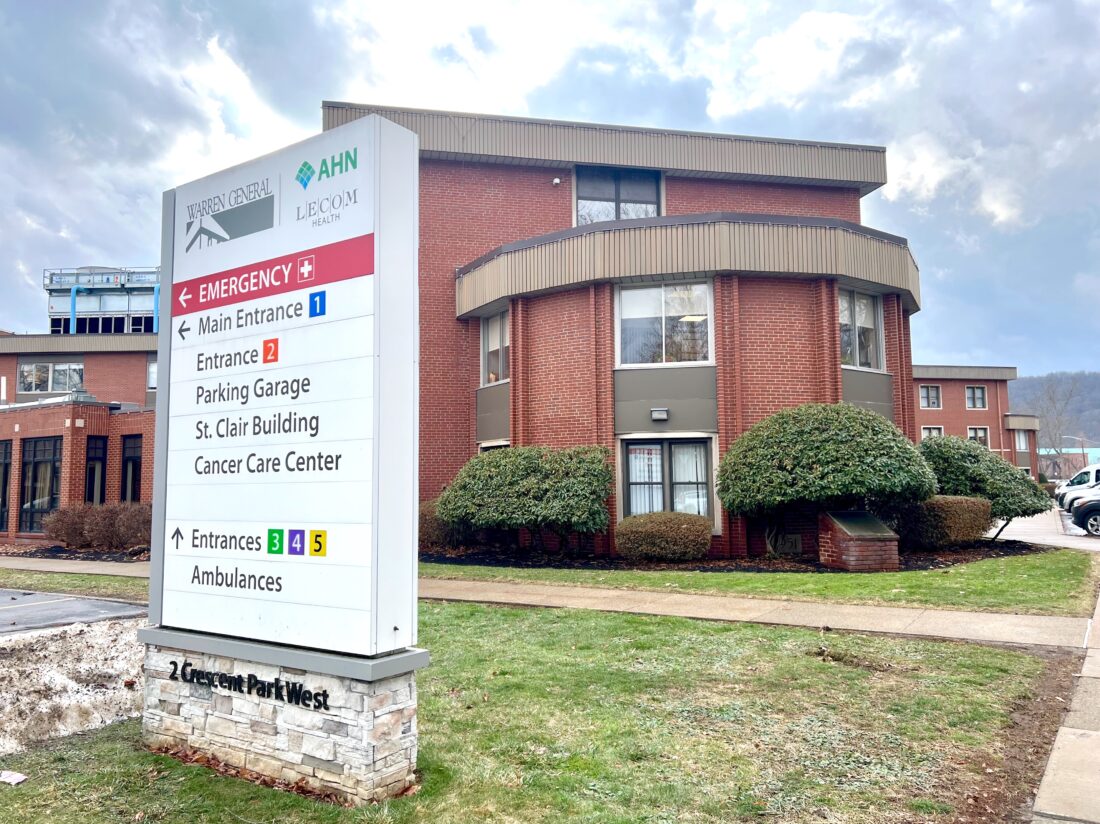
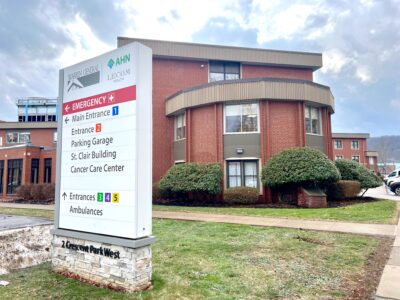
Pictured is Warren General Hospital.
Many labor and delivery patients are expected to seek care at UPMC Chautauqua following the closure of Warren General Hospital’s program that takes effect Tuesday.
This change has the potential to raise concern among expecting families and residents throughout Warren County.
However, UMPC Chautauqua President Tracy Gates remains committed to providing the highest quality care and easing concerns within the Warren community.
UMPC Chautauqua uses a 24/7 laborist model, meaning an OB/GYN physician and anesthesia provider are always on site.
UMPC Chautauqua currently has nine OB/GYN providers and delivers about 625 babies each year. Gates said the facility is prepared to absorb patients from WGH.
“We feel very well positioned to manage whatever comes to us,” Gates said. “As any emergent moms come to the hospital, we are here and we are ready to take care of them right away.” According to WGH, 175 babies are delivered there each year.
Gates said UMPC Chautauqua is working closely with WGH leadership to coordinate referrals, exchange medical records, and ensure expectant mothers feel comfortable with the transition, including meeting physicians in advance and offering tours.
“We are really working collaboratively with Warren to make sure we have good information between us and patients are being accommodated,” Gates said.
She added the hospital participates with most insurance plans and does not anticipate insurance coverage being a major barrier for most patients.
“Our focus at UPMC Chautauqua is taking care of our community,” Gates said. “They are going through something that is difficult, and we want to be there to support them in their time of need.”
UPMC Chautauqua has also established a dedicated phone line at (716) 664-8100 for patients with questions or those looking to establish care. “Locally, we’ve got them covered,” Gates said. “We are here to support Warren General Hospital and their community the same way we support our own.”
Meanwhile, state lawmakers are urging federal officials to release funding and expand workforce programs following the closure of labor and delivery services at WGH.
A letter signed by State Reps. Kathy Rapp and Martin Causer and State Sen. Scott Hutchinson was recently sent to Dr. Mehmet Oz, Administrator of the Centers for Medicare and Medicaid Services.
The letter highlights the closure of WGH’s labor and delivery unit and calls for immediate action to address statewide health care workforce shortages. “The OB/GYN shortage at WGH adds to the rapidly expanding maternity care desert in northwestern and northcentral Pennsylvania,” the letter states.
The lawmakers pointed to nearly $200 million awarded to Pennsylvania through the Rural Health Transformation Program, urging CMS to release the approved funding as soon as possible.
Rapp said funding alone would not solve the problem, pointing to a long-standing physician shortage across the state.
The closure at WGH is part of a broader trend across the region. Other nearby hospitals that have closed labor and delivery services include UPMC Cole, as well as hospitals in Cameron, Clarion, Clinton, Elk, Forest, McKean and Potter counties.
According to data from the Center for Rural Pennsylvania, 22 of the state’s 67 counties do not have a hospital offering labor and delivery services, all of which are rural. Statewide, 77 hospitals provide labor and delivery care, but only 26, or less than 35 percent, are located in rural counties.
The impact on patients is significant. In counties without labor and delivery services, the average distance from the county to the nearest hospital offering those services is 27 miles. Approximately 3.5 million Pennsylvanians, 27 percent of the state’s population, live outside a 20-minute drive to a hospital with labor and delivery care.
“The federal government already knows this is an issue,” Rapp said. She noted that she and Hutchinson wrote letters of support for grant funding to Warren General Hospital and met with hospital leadership as the situation unfolded.
Rapp said that the hospital made extensive efforts to recruit providers but faced challenges beyond its control.
Physicians aren’t apples. We can’t pick them out of a tree,” she said. “There is a real physician shortage in Pennsylvania.”
Lawmakers are also calling for changes to federal workforce programs. One of these is the Conrad 30 waiver, which allows international medical graduates on J-1 visas to remain in the U.S. if they practice for three years in a Health Professional Shortage Area or Medically Underserved Area. Currently, each state can sponsor only 30 physicians per year.
“For a state the size of Pennsylvania, 30 physicians do not go far enough to address some of the shortages facing the Commonwealth,” the lawmakers said in their letter, adding that additional residency slots are needed.
Local News
Warren man faces 3 felony sex crime charges
A Warren man has been jailed on $50,000 bail after city police filed three felony sex crime charges against him. ...
Community Foundation receives donations
The Community Foundation received $155,953.13 in contributions from these donors in November to the following funds ...
Ban on neonic insecticides being proposed

High area gas prices start slow decline

Pine Grove PPT & 2-Gun donates to Second Harvest Food Bank